
I’ll never forget the day I moved into my first apartment with a home office that had exactly zero windows. As someone who’d always surrounded myself with plants, staring at those four blank walls felt suffocating. I assumed my plant-loving days were over—how could anything green possibly survive in a room with literally no natural sunlight?
That assumption lasted exactly three weeks before I got desperate enough to research “plants for rooms with no windows.” What I discovered changed everything. Not only can certain plants survive without direct sunlight, but some actually prefer the low-light conditions of windowless spaces. My once-sterile office is now home to eight thriving plants that have transformed the space from a depressing cave into a productive, oxygen-rich sanctuary.
The truth is, “zero sunlight” doesn’t mean zero light. It means no natural sunlight—but with the right plant choices and minimal supplemental lighting, you can grow a beautiful indoor garden in even the darkest corners of your home. Let me show you exactly how.
Understanding “Zero Sunlight” Plants
Before we dive into specific plants, let’s clarify what “zero sunlight” actually means, because this distinction is crucial for success.
No plant on Earth can grow in complete darkness. Plants need light for photosynthesis—it’s fundamental biology. However, some plants have evolved to thrive in the deep shade of forest floors where direct sunlight never reaches. These are the plants we’re talking about when we say “zero sunlight indoor plants.”
These shade-loving species can survive and even thrive with artificial lighting from regular LED or fluorescent bulbs, extremely dim natural light from distant windows, reflected light from walls and mirrors, or minimal exposure to any light source.
The key is providing some form of light, even if it’s just ambient room lighting. I keep my windowless office plants alive using overhead fluorescent office lights that stay on 8-10 hours daily while I work. That’s literally it—no windows, no special grow lights, just standard office lighting.
Understanding this distinction saved me from making expensive mistakes. I almost bought a massive fiddle leaf fig for my windowless bathroom before learning it needs bright indirect light. Instead, I chose a cast iron plant that’s thrived for two years under a single LED vanity bulb.
Best Plants for Zero Sunlight Conditions
After two years of trial and error (and killing a few plants along the way), these are the proven survivors that actually thrive in my windowless spaces.
Snake Plant (Sansevieria)
This is the ultimate zero-sunlight champion. Snake plants tolerate neglect like no other—infrequent watering, low humidity, and minimal light. Mine lives in my windowless bathroom under a single LED ceiling fixture, and it’s produced three new shoots in a year.
Snake plants come in various patterns and sizes. I keep a tall variety in a large decorative ceramic plant pot on the floor of my office and a compact variety on my desk. Both thrive identically despite being in different locations with different light exposures.
The waxy leaves store water, meaning you can forget to water for weeks without consequences. In fact, overwatering kills more snake plants than neglect ever does. I water mine once every 3-4 weeks, and they’re perfectly happy.
ZZ Plant (Zamioculcas zamiifolia)
ZZ plants are nearly indestructible. The glossy, waxy leaves look almost artificial—guests regularly ask if my ZZ plant is fake. It tolerates extremely low light, dry air, and sporadic watering. I’ve left mine unwatered for six weeks while traveling, and it looked identical when I returned.
The rhizomes store water underground, giving ZZ plants drought superpowers. Place one in a self-watering planter and you can essentially ignore it for months. My ZZ plant sits in a corner of my windowless guest bedroom with only ambient light from the hallway when the door opens. It’s thriving.
One caution: ZZ plants are toxic to pets and humans if ingested, so keep them away from curious cats, dogs, or small children.
Pothos (Epipremnum aureum)
Pothos might be the most popular houseplant in the world, and for good reason. These trailing vines tolerate an incredible range of conditions, including very low light. I have pothos growing in my windowless bathroom, my dark hallway, and my office—all with just artificial lighting.
Pothos comes in several varieties—golden pothos has yellow variegation, marble queen has white patterns, and jade pothos is solid green. Choose darker varieties (like jade) for the lowest light conditions, as variegated types need slightly more light to maintain their patterns.
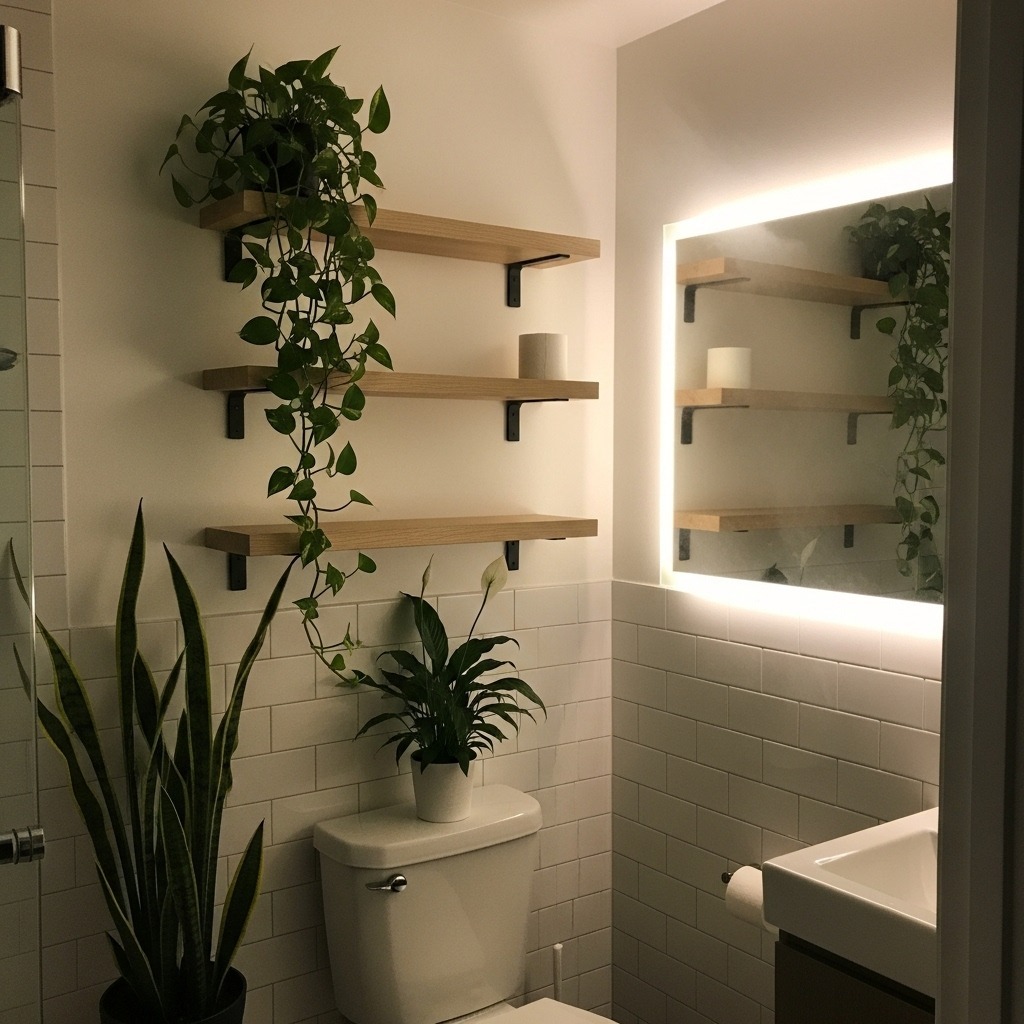
The trailing vines look stunning in hanging plant baskets or cascading from high shelves. My bathroom pothos cascades from a shelf above the toilet, its vines now over four feet long. Train pothos around doorframes, along shelves, or let them trail naturally—they’re incredibly versatile.
Peace Lily (Spathiphyllum)
Peace lilies are drama queens in the best way. When they need water, they droop dramatically, then perk up within an hour of watering. This makes them foolproof for beginners—the plant literally tells you when it’s thirsty.
Peace lilies tolerate very low light and actually bloom in these conditions, producing beautiful white flowers. I keep one in my windowless powder room, and it blooms 3-4 times per year under a single LED bulb. The dark green foliage creates a spa-like atmosphere.
Bonus: NASA studies show peace lilies are excellent air purifiers, removing toxins like formaldehyde and benzene from indoor air. Pretty and functional.
Chinese Evergreen (Aglaonema)
Chinese evergreens might be the most underrated low-light plant. They tolerate extremely dim conditions and come in stunning varieties with pink, red, or silver markings. The darker the leaf variety, the lower the light it tolerates—choose solid green varieties for the darkest spaces.
I have a red aglaonema in my office that adds a pop of color without needing any natural light. It’s slower-growing than some plants on this list, but that’s actually an advantage in small spaces where you don’t want aggressive growth.
Chinese evergreens prefer consistent moisture but tolerate occasional drying. A watering spray mister keeps the leaves dust-free and happy.
Cast Iron Plant (Aspidistra elatior)
The name says it all—cast iron plants are virtually indestructible. Victorian-era homes used these because they tolerated gas lamp fumes, low light, and neglect. Modern windowless rooms are a breeze in comparison.
Cast iron plants grow slowly, which some people see as a disadvantage but I consider perfect for small spaces. Mine has added maybe six new leaves in two years, maintaining a compact footprint in my office corner.
These plants actually suffer from too much attention. Overwatering and repotting stress them unnecessarily. I water mine every 2-3 weeks and haven’t repotted in two years. It’s perfectly content.
Read more: Indoor Plant Styling: Transform Any Room Fast
Supplemental Lighting for Zero-Sunlight Spaces
While the plants above survive with minimal light, supplemental lighting helps them thrive rather than just survive.
Regular LED Bulbs Work Fine:
You don’t need expensive grow lights for most low-light plants. Standard LED or fluorescent bulbs provide enough light spectrum for these shade-tolerant species. My office uses regular overhead fluorescent tubes, and my plants grow beautifully.
Keep lights on 8-12 hours daily to mimic natural day length. I use a simple timer on my bathroom light so my plants get consistent lighting even when I’m not home. This consistency matters more than light intensity for low-light plants.
When to Invest in Grow Lights:
If you want faster growth or plan to grow slightly more light-demanding plants in windowless spaces, invest in indoor-plant LED grow lights. Modern grow lights are energy-efficient, cool-running, and many look like attractive lamps rather than industrial fixtures.
I added a decorative grow light to my guest bedroom, disguised as a regular floor lamp. It provides supplemental lighting for my ZZ plant and two pothos without looking utilitarian.
Position grow lights 12-24 inches above plants for optimal results. Too close and you risk burning leaves; too far and plants won’t get enough benefit.
Natural Light from Distant Windows:
If your “windowless” room has a window in an adjacent room or hallway, keep doors open to allow ambient light to reach your plants. My office connects to a living room with large windows. Keeping the office door open during the day provides minimal indirect light that supplements my artificial lighting.
Position plants closer to the light source (doorway or hallway) for maximum benefit. Even dim, filtered light from a distant window helps plants photosynthesize more efficiently.
Room-by-Room Plant Placement Guide
Different windowless or very low-light spaces have different conditions. Here’s how I’ve successfully planted various rooms.
Windowless Bathrooms:
Bathrooms offer unique advantages—high humidity that tropical plants love. I keep snake plants, pothos, and peace lilies in my windowless bathroom. The steam from showers creates a humid microclimate they adore.
Place plants on shelves, the back of the toilet, or in hanging plant baskets suspended from ceiling hooks. Ensure adequate ventilation to prevent mold. My bathroom has an exhaust fan I run after showers to prevent excessive moisture buildup.
Dark Hallways:
Hallways rarely have windows but often have overhead lighting. Use hallways as plant galleries with multiple specimens on indoor plant stands at varying heights. I lined one side of my hallway with pothos, philodendrons, and snake plants in coordinated decorative ceramic pots.
Hallway plants get walked past frequently, making watering checks easy and natural. Every time I walk by, I do a quick visual check.
Windowless Home Offices:
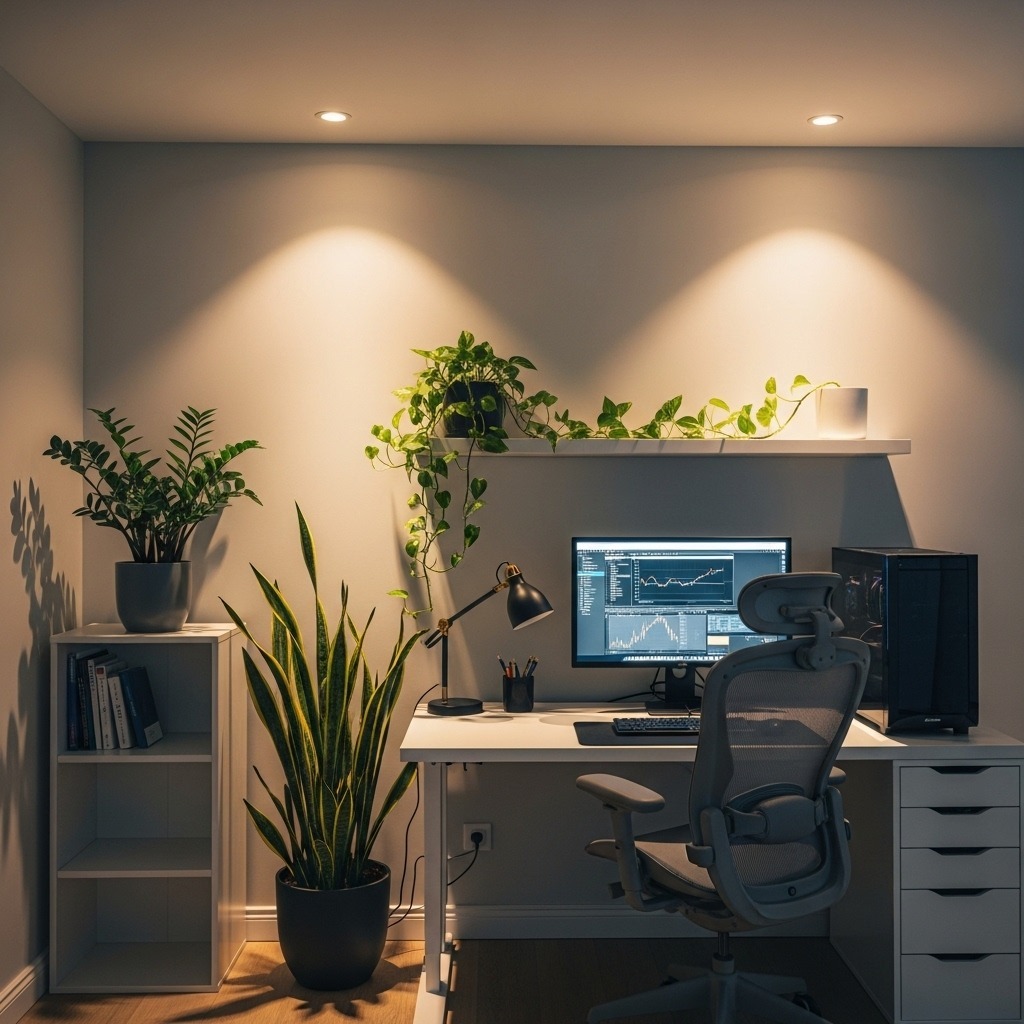
As someone working from a windowless office, plants transformed my workspace from sterile to productive. I keep a large snake plant on the floor beside my desk, a ZZ plant on a bookshelf, and trailing pothos cascading from a high shelf.
The psychological benefits are real. Having living plants in my workspace reduces stress during intense work periods. Even on video calls, the greenery in my background looks professional and inviting.
Basements:
Basements often lack natural light but make great plant spaces with supplemental lighting. I use my basement storage room to “rotate” plants, giving heavily-used display plants a break by swapping them with basement plants every few months. This rotation keeps all my plants healthy.
Use grow bags in basements for easy moving. I group several plants together under one grow light, creating an efficient low-light growing station.
Dark Bedrooms:
Not all bedrooms get great light, especially lower-floor or north-facing rooms. Snake plants and peace lilies work beautifully in dark bedrooms, providing air purification while you sleep. I keep a peace lily on my nightstand—the dark green foliage creates a calming atmosphere.
Watering and Maintenance Tips
Low-light plants require different care than their sun-loving cousins. Here’s what I’ve learned through trial and error.
Water Less, Not More:
The biggest mistake people make with low-light plants is overwatering. Plants in low light photosynthesize less, meaning they use less water and grow more slowly. I killed my first ZZ plant by watering on the same schedule as my sunny window plants.
Check soil moisture before watering. Stick your finger two inches into the soil—if it’s dry, water thoroughly. If it’s moist, wait several more days. I water my windowless bathroom plants half as frequently as plants in bright rooms.
Use a soil pH/moisture meter to take guesswork out of watering. These inexpensive tools tell you exactly when soil needs moisture.
Fertilize Sparingly:
Low-light plants grow slowly and need less fertilization than fast-growing plants. I fertilize my zero-sunlight plants once every 2-3 months during spring and summer, and not at all during fall and winter when growth slows further.
Use a balanced liquid organic fertilizer diluted to half strength. Over-fertilizing causes salt buildup in soil and can damage roots.
Dust Leaves Regularly:
Dusty leaves can’t photosynthesize efficiently, which is especially problematic for plants already getting minimal light. I wipe large leaves with a damp cloth monthly. For smaller-leaved plants like pothos, I occasionally shower them in my bathtub.
Clean leaves also look better aesthetically. My snake plant’s glossy leaves stay vibrant and attractive with minimal maintenance.
Rotate Plants:
Plants grow toward light sources, even artificial ones. Rotate pots 180 degrees monthly to encourage even growth. This is especially important for plants under directional lighting rather than overhead fixtures.
Prune Strategically:
Low-light plants grow slowly, so they need minimal pruning. I only trim dead or damaged leaves and occasionally trim pothos vines when they get excessively long. Use clean scissors from a garden tool set to prevent disease transmission.
Watch for Warning Signs:
Yellowing leaves usually indicate overwatering or poor drainage. Brown leaf tips often come from fluoride in tap water—use filtered water instead. Stretching growth means not enough light, so add supplemental lighting. No growth is normal in low light, but check for root binding if extreme.
Creating Beautiful Displays in Dark Spaces
Just because your space lacks natural light doesn’t mean plant displays can’t be stunning.
Use Light-Colored Planters:
Dark spaces benefit from light-colored or reflective planters that brighten the area. I use white decorative ceramic pots exclusively in my windowless spaces. They reflect available light and create a cohesive, bright aesthetic. Metallic or glossy finishes also work well, reflecting and amplifying whatever light exists.
Layer Different Heights:
Create visual interest using indoor plant stands to display plants at varying heights. My windowless bathroom has plants on three levels—floor, toilet back, and floating shelf—creating depth despite the small space.
Add Decorative Lighting:
String lights or small spotlights directed at plants add ambiance while providing supplemental light. I added battery-operated LED puck lights under my office shelves, illuminating plants from below for dramatic effect.
Mix Textures:
Combine plants with different leaf textures for visual interest. Pair glossy snake plant leaves with fuzzy peperomia and trailing pothos for varied textures that catch light differently.
Integrate with Décor:
Don’t isolate plants. Mix them with books, candles, artwork, and garden décor items for cohesive displays. My office bookshelf alternates books with small plant pots, creating an organic, lived-in look.
Common Mistakes to Avoid
I’ve made plenty of mistakes with windowless plant care. Learn from my failures.
Mistake #1: Choosing the Wrong Plants:
Not all plants tolerate zero sunlight conditions. I killed a beautiful calathea in my windowless bathroom before learning it needs more light than I could provide. Stick to proven low-light performers listed in this guide.
Mistake #2: Overwatering:
I cannot emphasize this enough—overwatering kills more low-light plants than anything else. When plants aren’t photosynthesizing actively due to low light, they use minimal water. Adjust your watering schedule accordingly.
Mistake #3: Using Poor Drainage:
Combine low light with water-logged soil, and you’ve created perfect conditions for root rot. Always use pots with drainage holes and well-draining potting mix. I learned this after losing three plants to root rot in my early windowless gardening days.
Mistake #4: Expecting Fast Growth:
Low-light plants grow slowly—that’s normal and healthy. Don’t interpret slow growth as failure. My cast iron plant adds maybe one leaf per month, and that’s exactly as it should be.
Mistake #5: Neglecting Light Entirely:
“Low light” doesn’t mean “no light.” Even shade-loving plants need some light source. I killed a pothos by placing it in a closet I rarely opened, thinking “low light” meant total darkness. Provide at least ambient artificial light for several hours daily.
Embracing Your Dark Space
Living or working in spaces without natural light doesn’t mean sacrificing the benefits of indoor plants. Some of my favorite rooms in my apartment are now the ones that initially seemed impossible for plants.
My windowless bathroom has become a spa-like sanctuary with lush greenery thriving under a single LED bulb. My office, once a depressing box, now feels vibrant and oxygen-rich with carefully chosen low-light plants. These transformations didn’t require expensive renovations or fancy equipment—just the right plant choices and basic care.
The key is working with your space rather than against it. Accept that growth will be slower, that flowering might be rare, and that not every plant will work. But with the proven performers listed in this guide, you can create beautiful, thriving green spaces even in the darkest corners of your home.
Start with one or two plants—a snake plant and a pothos are foolproof beginner choices. Position them under existing artificial lighting, water sparingly, and watch them thrive. As you gain confidence, expand your collection gradually.
Your windowless spaces have potential you haven’t tapped yet. Those plants you thought impossible? They’re not only possible—they’re waiting to transform your dark rooms into green sanctuaries.
FAQ: Your Zero Sunlight Indoor Plants Questions Answered
Q1: Can plants really grow with zero sunlight?
No plant grows in complete darkness, but many plants thrive with zero natural sunlight as long as they receive artificial light from regular LED or fluorescent bulbs. Plants like snake plants, ZZ plants, pothos, and peace lilies evolved to tolerate deep forest shade and adapt well to windowless rooms with standard lighting. Keep artificial lights on 8-12 hours daily to mimic natural day length. I successfully grow eight different plant species in completely windowless rooms using only overhead office lighting and bathroom fixtures.
Q2: What’s the easiest plant for a room with no windows?
Snake plants are hands-down the easiest zero-sunlight plants. They tolerate extreme neglect, low light, infrequent watering, and dry air. I’ve kept snake plants alive in windowless bathrooms, offices, and hallways with zero issues. ZZ plants are a close second—nearly as indestructible with glossy, attractive foliage. Start with either of these if you’re new to windowless plant care. Both can go 3-4 weeks between waterings and thrive under basic artificial lighting.
Q3: Do I need special grow lights for windowless rooms?
No, regular LED or fluorescent bulbs work fine for low-light plants. Specialized grow lights help plants grow faster and support slightly more light-demanding species, but shade-tolerant plants like snake plants, pothos, and ZZ plants thrive under standard lighting. I’ve used regular overhead office fluorescent tubes for two years with excellent results. If you want faster growth or more plant variety, invest in indoor-plant LED grow lights, but it’s not required for the plants listed in this guide.
Q4: How often should I water plants in windowless rooms?
Water significantly less than plants in bright locations—usually half as frequently. Low-light plants photosynthesize less, grow slower, and use less water. Check soil moisture before every watering by sticking your finger 2 inches into soil. If dry, water thoroughly until it drains from holes. If moist, wait several more days. I water my windowless bathroom plants every 3-4 weeks compared to weekly for plants in sunny windows. Overwatering is the number one killer of low-light plants.
Q5: Will plants in windowless rooms ever bloom?
Some low-light plants bloom even without natural sunlight. My peace lily blooms 3-4 times yearly in a windowless bathroom under a single LED bulb. However, most foliage plants (snake plants, pothos, ZZ plants) rarely bloom indoors regardless of light conditions. Choose plants for their attractive foliage rather than expecting flowers. If blooms are important, peace lilies are your best bet for windowless spaces.