
I used to think cacti were boring—just prickly green lumps that sat there doing nothing. Then I brought home a small golden barrel cactus on a whim, stuck it on my windowsill, and basically forgot about it for three weeks. When I finally remembered to check on it, the thing looked better than when I bought it. That’s when I realized: cacti are the perfect indoor plants for people who love greenery but don’t have time for high-maintenance care routines. Five years later, I have over a dozen cacti throughout my home, and they’ve genuinely changed how I think about indoor gardening.
Cactus indoor plants offer something unique in the houseplant world—they’re striking, sculptural, require minimal attention, and actually thrive on neglect. Whether you’re a complete beginner who’s killed every plant you’ve ever touched or an experienced gardener looking to diversify your collection, cacti deliver beauty and interest with remarkably little effort.
Why Cacti Make Perfect Indoor Plants
Before we get into specific varieties and care instructions, let’s talk about why cacti deserve a place in your home. The benefits go way beyond their low-maintenance reputation.
Forgiving Nature: Cacti evolved in harsh desert environments where water is scarce and conditions are extreme. This means they’re built to survive neglect. Forgot to water for two weeks? Your cactus probably didn’t even notice. Compare that to a fern that throws a fit if you’re a day late with watering.
Year-Round Interest: Unlike many houseplants that look their best only during growing season, cacti maintain their sculptural appearance all year. Many varieties even bloom with spectacular flowers, adding unexpected color to your space.
Space Efficient: Most indoor cacti stay relatively compact, making them perfect for apartments, small homes, or crowded windowsills. You can build an impressive collection without needing much square footage.
Unique Aesthetic: From the architectural lines of a columnar cactus to the whimsical appearance of bunny ears, cacti add sculptural interest that other houseplants can’t match. They work with virtually any decor style—modern, bohemian, minimalist, or eclectic.
Air Purification: Like other plants, cacti improve indoor air quality by absorbing carbon dioxide and releasing oxygen. Some studies suggest they may even reduce electromagnetic radiation from electronic devices, though more research is needed.
Low Water Consumption: In an era where water conservation matters, cacti align perfectly with sustainable living. They require a fraction of the water that tropical houseplants demand.
Pet and Child Safety: While the spines can be a concern, most cacti aren’t toxic if accidentally ingested. Their prickly nature also naturally deters curious pets and children from disturbing them, unlike soft-leafed plants that invite touching.
Understanding Desert vs. Jungle Cacti
Not all cacti are created equal, and understanding the two main categories helps you choose the right plants and care for them properly.
Desert Cacti
These are what most people picture when they think “cactus”—thick, spiny stems adapted to store water and survive in arid environments. Desert cacti include favorites like barrel cacti, prickly pear, saguaro, and bunny ears. They typically need:
- Lots of bright, direct sunlight (at least 6 hours daily)
- Infrequent watering (only when soil is completely dry)
- Very well-draining, gritty soil
- Warm temperatures year-round
- Low humidity
Desert cacti go dormant in winter, requiring even less water during cold months. This dormancy period is actually when many set buds for spring blooms.
Jungle Cacti
These cacti evolved in tropical forests rather than deserts. They grow as epiphytes on trees, similar to orchids. Jungle cacti include Christmas cactus, Thanksgiving cactus, Easter cactus, and fishbone cactus. They prefer:
- Bright, indirect light (not full sun)
- More frequent watering than desert cacti
- Richer, more organic soil with good drainage
- Moderate temperatures with cooler winter rest periods
- Higher humidity than desert varieties
The care requirements for jungle cacti are quite different from desert types, so knowing which category your cactus falls into is crucial.
Read more: Indoor Plant Decor: Transform Your Home with Greenery
Best Cactus Indoor Plants for Beginners
If you’re new to cacti, start with varieties known for being nearly indestructible. These forgiving plants tolerate beginner mistakes and thrive with minimal intervention.
Golden Barrel Cactus (Echinocactus grusonii)
This spherical beauty is probably the most popular indoor cactus, and for good reason. Its round shape and golden spines create striking visual interest, and it’s incredibly easy to care for. Golden barrels grow slowly, making them perfect for small spaces. They can eventually reach basketball size, but that takes many years. These cacti tolerate a wide range of conditions and are remarkably forgiving of neglect.
Bunny Ears Cactus (Opuntia microdasys)
Named for its flat, oval pads that resemble rabbit ears, this prickly pear relative is adorable and easy. The pads are covered in clusters of tiny glochids (small bristles) rather than large spines, giving them a soft, dotted appearance—though don’t be fooled, those glochids are annoying if they get in your skin. Bunny ears cacti grow relatively quickly and can be propagated easily by removing and rooting individual pads.
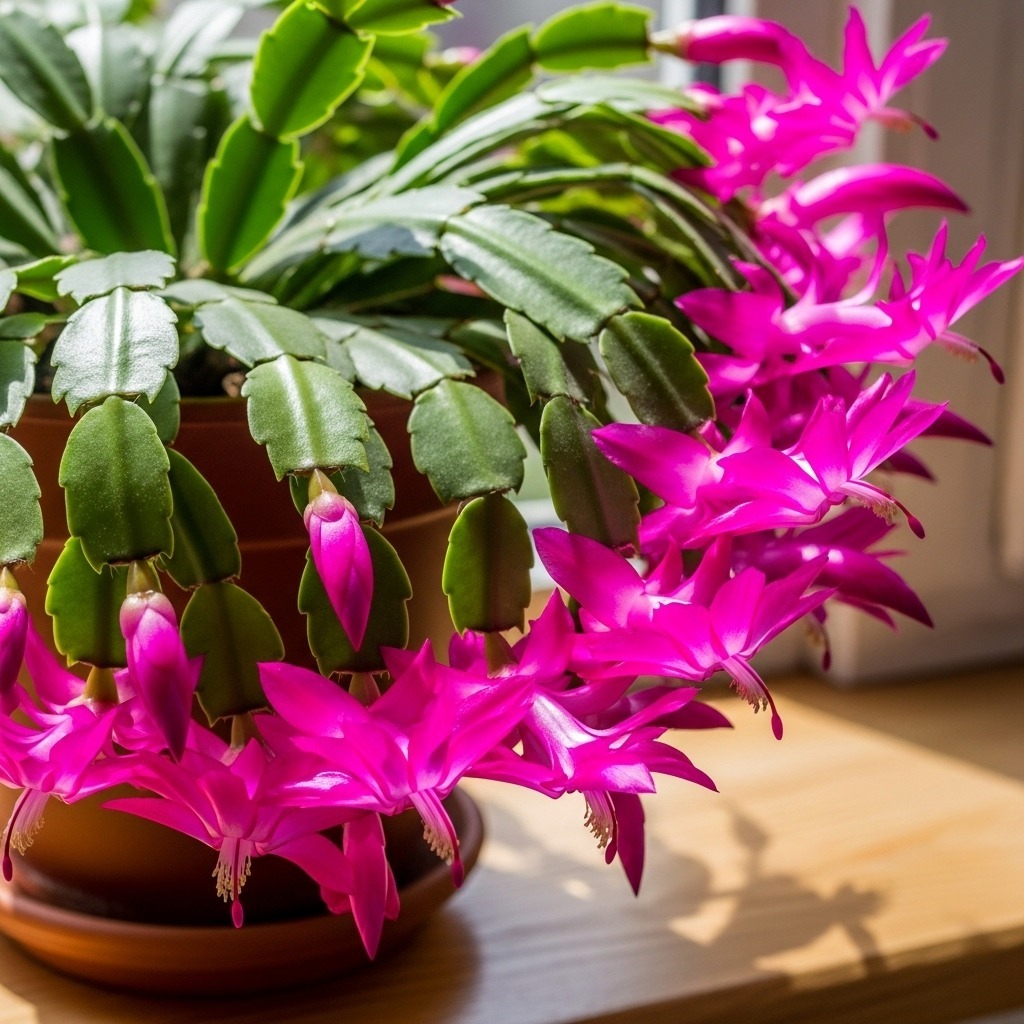
Christmas Cactus (Schlumbergera)
This jungle cactus is a holiday favorite that blooms reliably with stunning tubular flowers in red, pink, white, or orange. Unlike desert cacti, Christmas cacti prefer indirect light and more frequent watering. They’re long-lived plants that can be passed down through generations. The segmented, flattened stems cascade beautifully, making them ideal for hanging baskets or elevated shelves.
Barrel Cactus (Ferocactus)
These fierce-looking cacti feature prominent ribs and strong, colorful spines. They’re classic desert cacti that thrive on neglect and bright sun. Barrel cacti stay relatively compact indoors, typically growing to about 1-3 feet tall over many years. Their sculptural appearance makes them excellent focal points.
Pincushion Cactus (Mammillaria)
This genus includes hundreds of small, spherical cacti that form attractive clusters. They’re covered in radiating spines that can be white, yellow, red, or brown. Many varieties bloom readily with rings of small flowers circling the crown. Pincushion cacti are perfect for small spaces and look great grouped together in shallow containers.
Cereus Cactus
These columnar cacti have a stately, architectural presence. Many varieties stay relatively compact indoors but create strong vertical interest. Cereus peruvianus (Peruvian apple cactus) is particularly popular and can eventually produce large, fragrant white flowers that bloom at night. These cacti tolerate lower light than many other desert varieties, making them more versatile for placement.
Essential Cactus Care: The Basics
Caring for cactus indoor plants is straightforward once you understand their basic needs. The key is remembering that less is usually more—overcare kills more cacti than neglect.
Light Requirements
Most desert cacti need at least 6 hours of bright, direct sunlight daily. South-facing windows are ideal. If your cactus starts stretching or leaning toward light (a condition called etiolation), it’s not getting enough sun. The stem will become pale and thin rather than robust and colorful.
Jungle cacti prefer bright, indirect light. Direct sun can scorch their more delicate tissues. East or west-facing windows work well, or place them a few feet back from south-facing windows.
If you don’t have adequate natural light, supplement with LED grow lights. Position them 6-12 inches above your cacti and run them for 12-16 hours daily.
Watering: The Make-or-Break Factor
This is where most people go wrong. The number one killer of cacti is overwatering. These plants evolved to survive droughts, and their greatest weakness is sitting in wet soil.
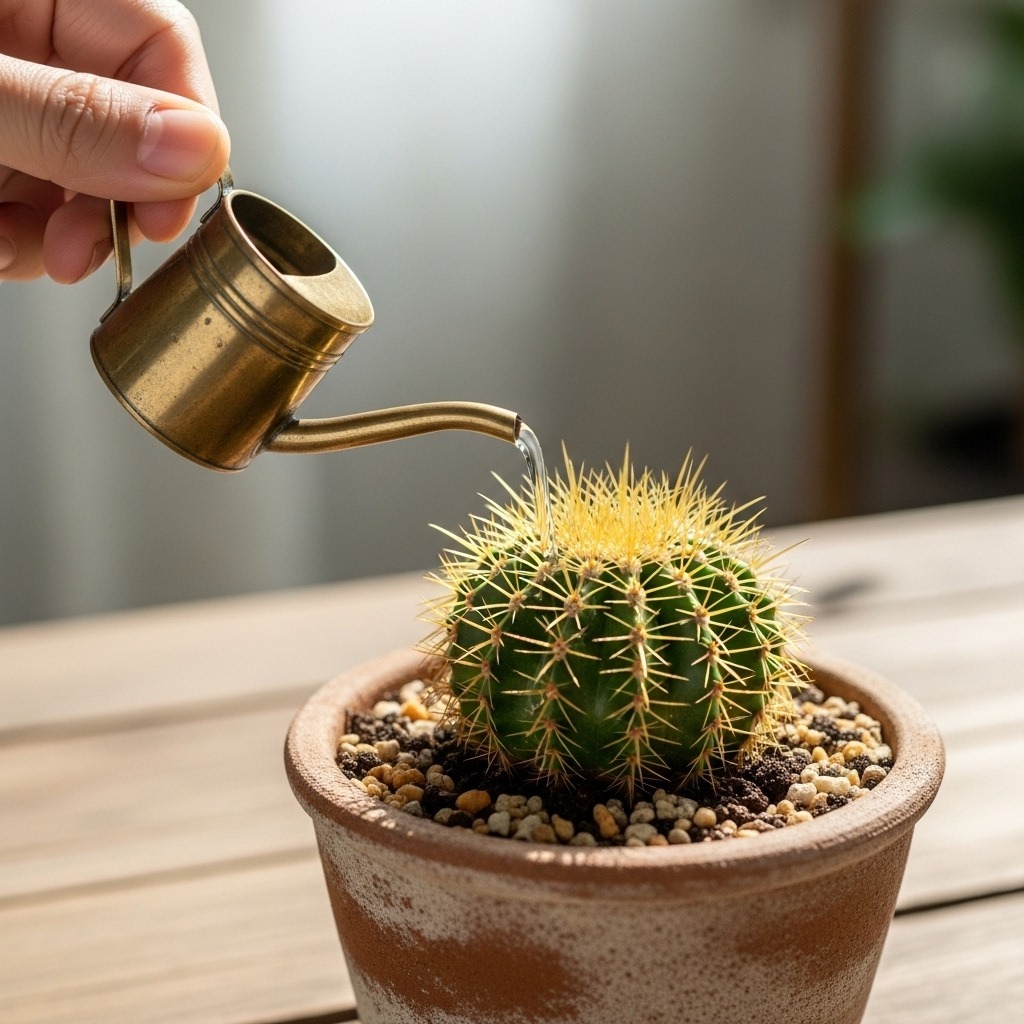
The Golden Rule: Water only when the soil is completely dry. For desert cacti, this might mean every 2-4 weeks during summer and monthly (or less) during winter. Jungle cacti need more frequent watering—about weekly in summer, every 2-3 weeks in winter.
How to Check: Stick your finger or a chopstick deep into the soil. If you feel any moisture, wait. If the soil is bone dry and pulls away from the pot sides, it’s time to water. You can also use a moisture meter for accuracy.
How to Water: When you do water, do it thoroughly. Water until excess drains from the bottom of the pot. This ensures the entire root system gets moisture. Then don’t water again until the soil completely dries out.
Seasonal Adjustments: Reduce watering dramatically in winter when cacti go dormant. Many desert cacti can go 6-8 weeks between waterings during their winter rest period. This dormancy is crucial for flower formation.
Soil and Potting
Regular potting soil is a death sentence for cacti. They need extremely well-draining, gritty mix that dries quickly and allows plenty of air circulation around roots.
Best Option: Use commercial cactus and succulent soil mix. These are formulated with the right balance of organic material and drainage components like sand, perlite, or pumice.
DIY Mix: Combine 2 parts regular potting soil, 2 parts coarse sand or perlite, and 1 part small gravel or pumice. The goal is a mix that water flows through quickly.
Container Choice: Drainage holes are non-negotiable. Without them, water accumulates at the bottom and rots roots. Terracotta or clay pots are ideal because they’re porous and wick moisture away from soil, helping prevent overwatering. Plastic pots work but retain moisture longer, so adjust watering accordingly.
Pot Size: Choose pots only slightly larger than the root ball. Cacti prefer being slightly rootbound. Too much soil means too much water retention and increases rot risk.
Temperature and Humidity
Most cacti tolerate a wide temperature range but prefer warm conditions. Ideal temperatures are 70-80°F during the day and 55-65°F at night. The drop in night temperature is actually beneficial and mimics desert conditions.
Protect cacti from cold drafts, which can cause stress or damage. Keep them away from air conditioning vents in summer and heating vents in winter.
Desert cacti prefer low humidity (30-50%), which is perfect since most homes naturally fall in this range. Jungle cacti tolerate higher humidity (50-60%) and do well in bathrooms or kitchens.
Fertilizing Your Cacti
Cacti are adapted to nutrient-poor soils, so they don’t need heavy feeding. In fact, over-fertilizing can cause weak, unnatural growth.
During Growing Season (Spring and Summer): Feed monthly with a diluted cactus and succulent fertilizer. Use half the recommended strength. You can also use a balanced organic fertilizer at quarter strength.
During Dormancy (Fall and Winter): Don’t fertilize at all. This rest period is natural and healthy for cacti.
Signs of Nutrient Deficiency: Slow growth, pale color, or failure to bloom might indicate need for feeding. However, these symptoms can also indicate inadequate light, so assess conditions carefully before adding fertilizer.
Common Problems and Solutions
Even low-maintenance cacti occasionally encounter issues. Here’s how to troubleshoot.
Overwatering and Root Rot
Symptoms: Soft, mushy stem base; yellowing or browning tissue; bad smell from soil; cactus feels squishy when gently squeezed.
Solution: Stop watering immediately. If rot is advanced, you may need to cut away affected tissue with a sterilized knife and let the healthy portion callus over before replanting in fresh, dry soil. Prevention is key—always let soil dry completely between waterings.
Etiolation (Stretching)
Symptoms: Pale green or yellowish color; thin, weak growth; stem growing tall and narrow rather than maintaining compact shape; leaning toward light source.
Solution: Increase light immediately. Move to a brighter location or add grow lights. The stretched growth won’t return to normal, but new growth will be healthy. You can cut off and root the healthy top portion to create a more compact plant.
Pests
Cacti are relatively pest-resistant, but occasionally encounter mealybugs, scale, or spider mites.
Symptoms: White cottony masses (mealybugs), brown bumps on stems (scale), fine webbing (spider mites), visible tiny insects.
Solution: Isolate the affected plant immediately. Remove pests with cotton swabs dipped in rubbing alcohol. For heavier infestations, spray with insecticidal soap or neem oil. Check all nearby plants, as pests spread quickly.
Failure to Bloom
Symptoms: Healthy cactus that simply doesn’t produce flowers.
Solution: Many cacti need a winter rest period with reduced watering and cooler temperatures (around 50-55°F) to set flower buds. Ensure adequate light, proper fertilization during growing season, and appropriate dormancy conditions in winter.
Propagating Cacti: Multiply Your Collection
One of the best things about cacti is how easily many varieties propagate, letting you create new plants from your existing collection.
Pad Propagation (Opuntia varieties)
Remove a pad from the mother plant with a clean, sharp knife. Let the cut end dry and callus over for several days to a week. Plant the calloused end 1-2 inches deep in cactus soil. Don’t water for the first week, then water sparingly. Roots should develop within a few weeks.
Offset Division (Pups)
Many cacti produce small offsets or “pups” around the base. Once these are a decent size (usually when they’re about 1/3 the size of the mother plant), gently twist them off or cut them away with a clean knife. Let them callus for a few days, then plant in their own pots.
Cutting Propagation
For columnar or segmented cacti, cut a section with a sterilized knife. Let it callus for several days in a dry location. Plant the cut end in dry cactus mix. Wait a week before the first light watering. This method works beautifully for Christmas cacti and other jungle varieties.
Displaying Cacti Creatively
Cacti’s architectural qualities make them perfect for creative displays that work as living art.
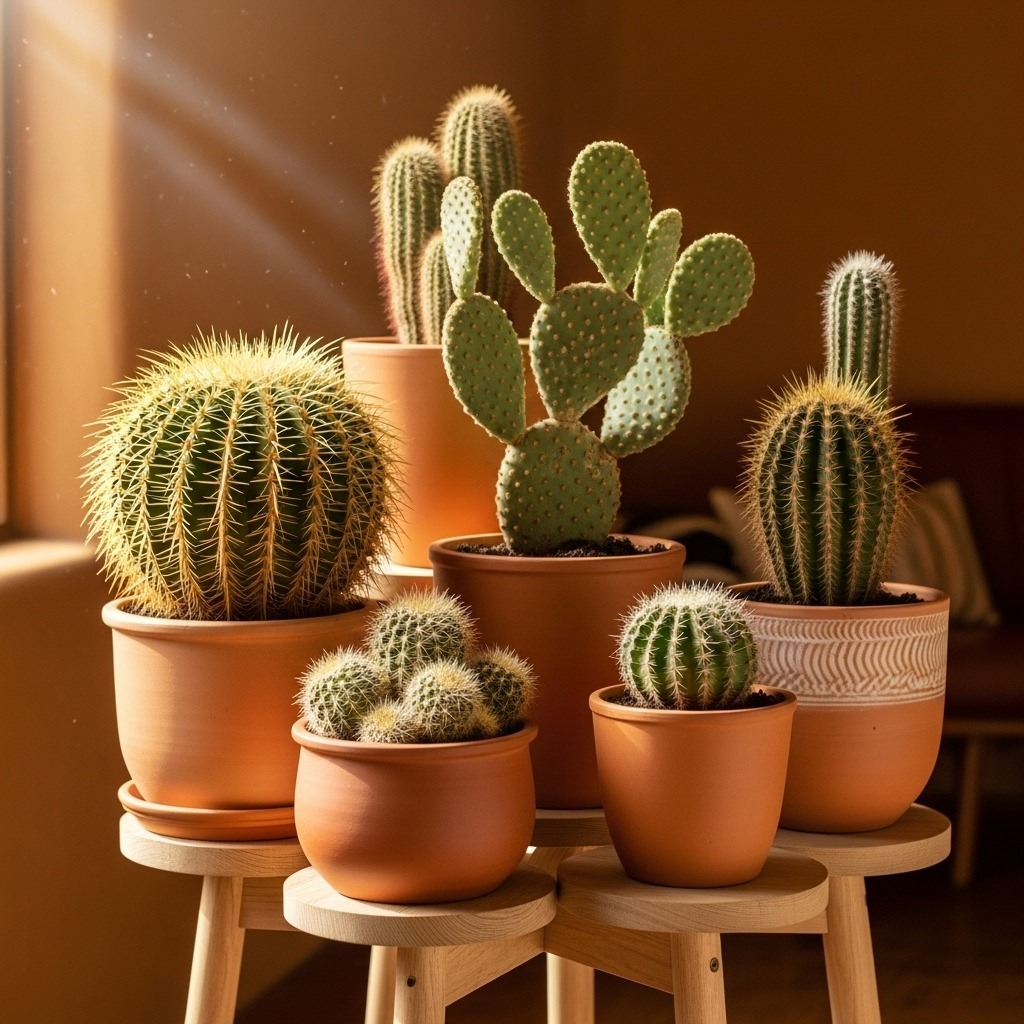
Grouping Different Varieties
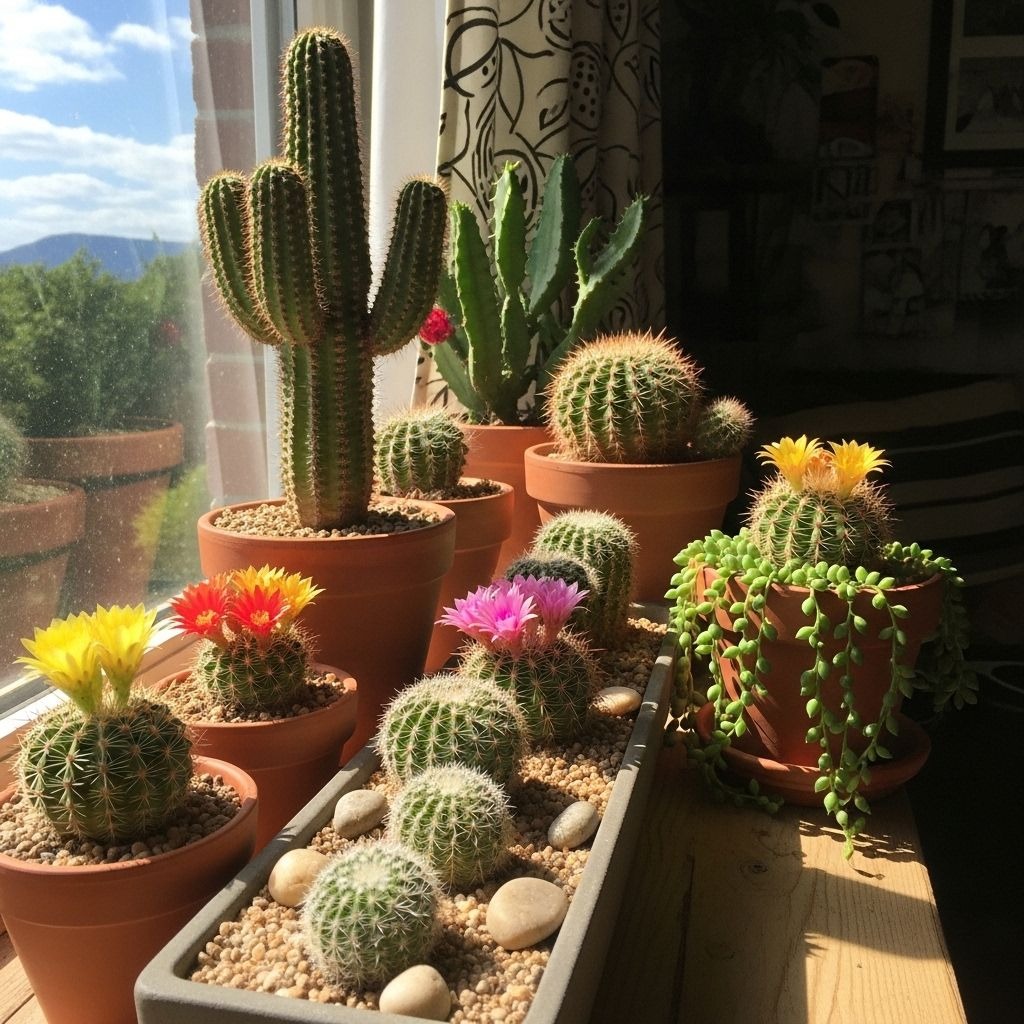
Create a desert landscape by grouping several cacti of different heights, shapes, and textures in a shallow container. This creates visual interest and allows you to showcase multiple specimens in limited space.
Minimalist Single Specimens
Feature one striking cactus as a sculptural focal point on a side table, desk, or shelf. The simplicity of a single beautiful cactus can make a powerful design statement.
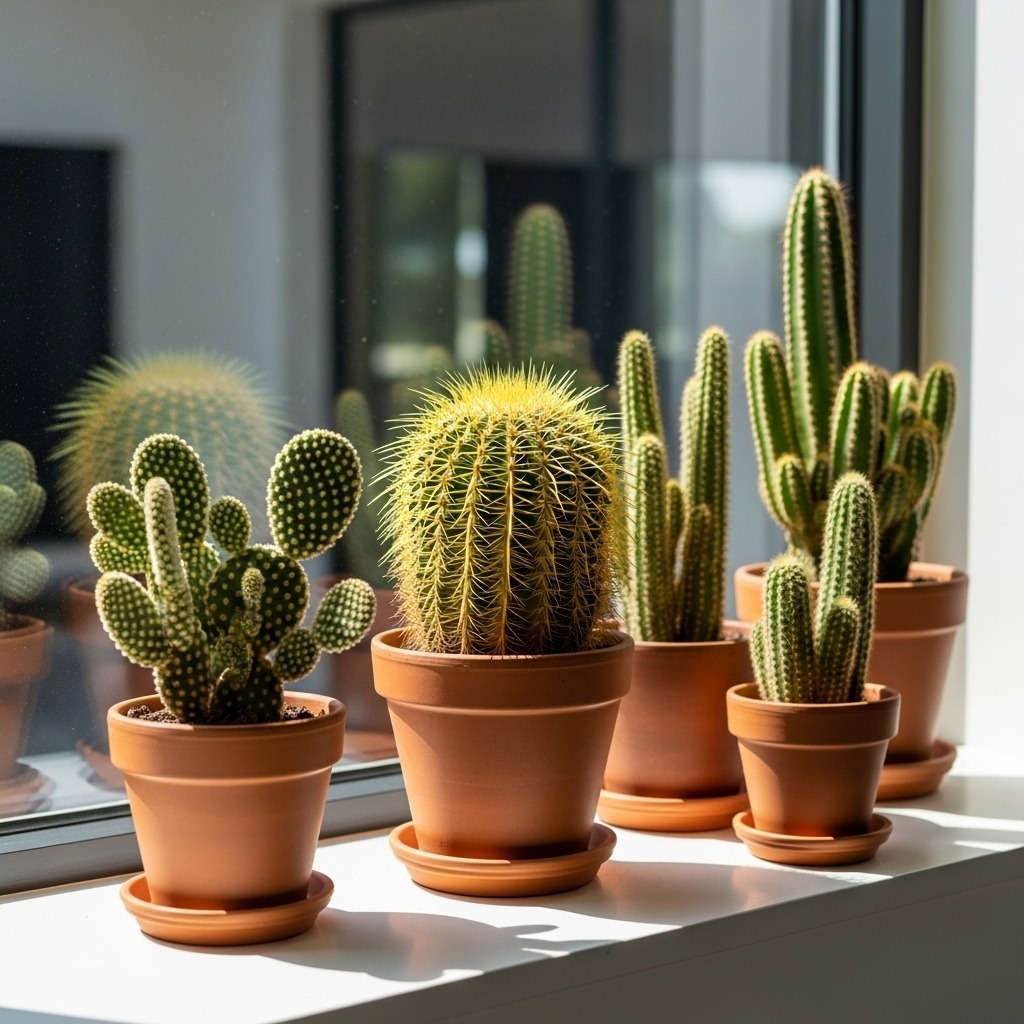
Windowsill Collections
Line a sunny windowsill with an array of small cacti in matching pots. The repetition creates impact while showcasing each plant’s unique character. This is perfect for building a collection in small spaces.
Outdoor Summer Vacation
Many indoor cacti benefit from spending summer outdoors. Gradually acclimate them to outdoor conditions, provide filtered sunlight (full sun can burn indoor-acclimated plants), and bring them back inside before temperatures drop below 50°F in fall. This outdoor time often triggers flowering and promotes robust growth.
Bringing It All Together
Cactus indoor plants offer something special for every home—sculptural beauty, minimal maintenance requirements, and the satisfaction of growing plants that actually thrive on the benign neglect that busy lives often require. Whether you’re starting with a single golden barrel cactus or building a diverse collection spanning desert and jungle varieties, these remarkable plants reward even novice gardeners with years of interest and enjoyment.
The key to success with cacti is embracing their natural rhythms rather than imposing conventional houseplant care routines. Let them dry out. Give them bright light. Resist the urge to fuss over them. Trust that they evolved to survive—even thrive—in challenging conditions, and your home is probably a cactus paradise compared to the harsh deserts they call home.
Start with one easy variety, learn its needs, and build from there. Before long, you’ll have a collection that transforms your space with living sculpture that asks almost nothing but gives endless visual interest. And unlike that high-maintenance fiddle leaf fig that died the moment you looked at it wrong, your cacti will be there for the long haul, growing slowly but steadily, occasionally surprising you with spectacular blooms that make the wait worthwhile.
Frequently Asked Questions
Q1: How often should I water my indoor cactus?
Water desert cacti only when soil is completely dry, typically every 2-4 weeks in summer and monthly or less in winter. Jungle cacti need more frequent watering—about weekly in summer, every 2-3 weeks in winter. Always check soil moisture before watering rather than following a rigid schedule. Overwatering is the leading cause of cactus death.
Q2: What’s the best soil for indoor cacti?
Use commercial cactus and succulent potting mix, or create your own by combining 2 parts regular potting soil, 2 parts coarse sand or perlite, and 1 part small gravel or pumice. The soil must drain extremely quickly and dry out completely between waterings. Regular potting soil retains too much moisture and will cause root rot.
Q3: How much light do cacti need indoors?
Most desert cacti need at least 6 hours of direct, bright sunlight daily. South-facing windows are ideal. Jungle cacti (like Christmas cactus) prefer bright, indirect light. If your cactus stretches, becomes pale, or leans heavily toward light, it needs more sun. Supplement with grow lights if natural light is insufficient.
Q4: Why won’t my cactus bloom?
Most cacti need a winter dormancy period with cooler temperatures (around 50-55°F), reduced watering, and shorter daylight hours to set flower buds. Inadequate light, over-watering during dormancy, or skipping fertilization during growing season can also prevent blooming. Young cacti may not be mature enough to flower yet.
Q5: Can I use tap water for my cacti?
Yes, most cacti tolerate tap water fine. Use room temperature water and let heavily chlorinated water sit overnight before using. Rainwater is ideal if available. Avoid softened water, which contains salts that can build up in soil over time.
Q6: Do cacti need humidity?
Desert cacti prefer low humidity (30-50%), which matches most homes naturally. Jungle cacti tolerate higher humidity (50-60%) and work well in bathrooms or kitchens. Don’t mist cacti—they don’t benefit from it and excess moisture can encourage fungal issues.
Q7: What’s the difference between desert and jungle cacti?
Desert cacti (like barrel cactus, golden barrel, bunny ears) evolved in arid environments and need bright direct sun, infrequent watering, and very well-draining soil. Jungle cacti (like Christmas cactus, fishbone cactus) evolved in tropical forests and prefer bright indirect light, more frequent watering, and richer soil. Understanding which type you have is crucial for proper care.
Q8: Are cacti safe for pets?
Most cacti aren’t toxic if ingested, but their spines can cause physical injury. Keep them out of reach of curious pets and children. Some varieties, like bunny ears cactus, have tiny glochids (hair-like spines) that are particularly irritating. If you’re concerned, choose spineless varieties like some Astrophytum species.
Ready to start your cactus collection? Pick up some terracotta pots, quality cactus soil, and a couple of beginner-friendly varieties like golden barrel or bunny ears. With minimal effort and the right conditions, you’ll soon have a thriving desert garden right in your home.