
When I moved into my first studio apartment after college, I thought my plant-loving days were over. My gear closet took up half the living space, my climbing equipment hung on every available wall hook, and my kayak paddle leaned in the corner. There was barely room for me, let alone a jungle of houseplants.
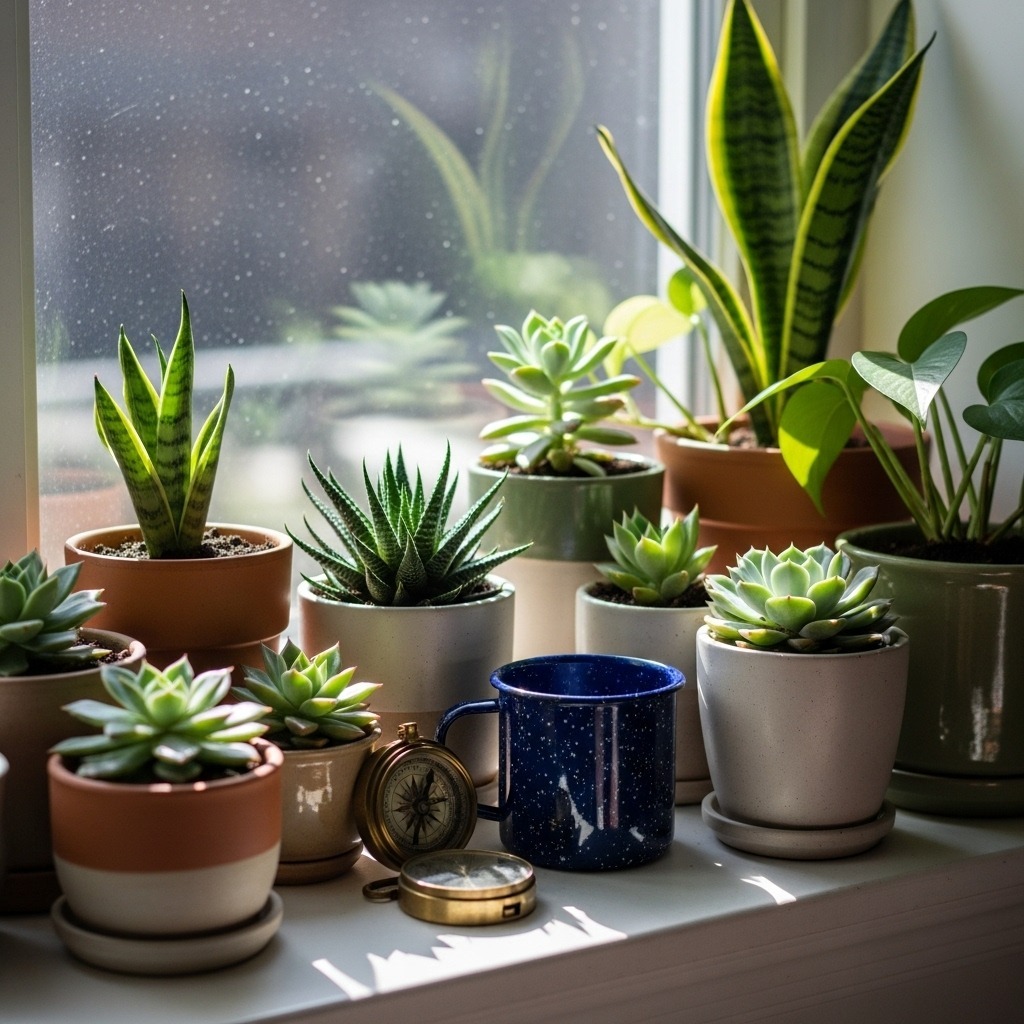
Then a friend gifted me a tiny succulent in a 2-inch pot. That little guy sat on my windowsill next to my camping mugs, thriving despite my chaotic outdoor lifestyle. Soon I added a trailing pothos above my gear shelf, then a miniature snake plant by the door. Before I knew it, I’d created a legitimate indoor garden without sacrificing a single square foot of precious floor space.
Small indoor plants are the perfect solution for outdoor enthusiasts living in compact spaces. They bring nature indoors without demanding room you don’t have, tolerate the neglect that comes with weekend adventures, and transform even the tiniest apartment into a green oasis.
What Makes a Plant “Small”?
Small indoor plants typically stay under 12 inches tall and wide at maturity, though some trailing varieties may grow longer vines. The key characteristic is they maintain a compact footprint—perfect for desks, shelves, windowsills, and tight corners.
Types of small plants:
- True miniatures that stay tiny forever
- Slow growers that take years to reach full size
- Prunable varieties kept small through regular trimming
- Trailing plants with compact root systems
- Succulents with minimal space requirements
The beauty of small plants is versatility. You can cluster multiple varieties together, rotate collections seasonally, or create layered displays using indoor plant stands without overwhelming your space.
Why Small Plants Are Perfect for Outdoor Enthusiasts
If your weekends involve trail running, rock climbing, or fishing rather than potting soil and pruning shears, small plants fit your lifestyle:
Space efficiency: They don’t compete with your gear storage. A dozen small plants occupy less space than one large fiddle leaf fig.
Portability: Easy to move when you rearrange for seasonal gear swaps. Small pots won’t break your back or require help.
Travel-friendly care: Smaller root systems dry out slower than you’d expect. Most survive your weekend camping trips without elaborate watering systems.
Budget-conscious: Small plants cost $5-15 compared to $30-100+ for mature specimens, making collection building affordable.
Experimentation: Try new varieties without major commitment. If something doesn’t work, you haven’t invested much space or money.
RV and van life compatible: Compact plants fit in tiny homes on wheels, secured in self-watering planters for mobile living.
Best Small Indoor Plants: Top Compact Performers
Succulents (Haworthia, Echeveria, Jade)
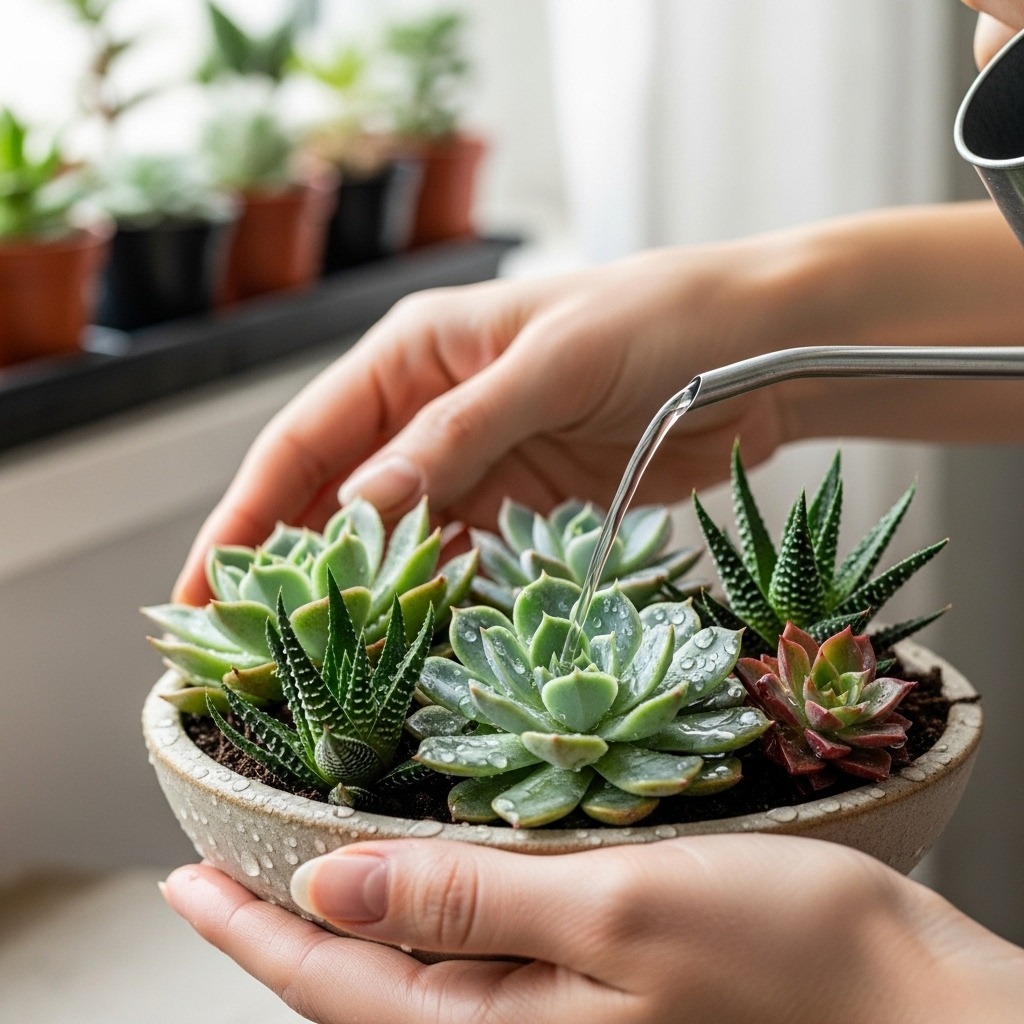
Succulents are the ultimate small space solution. These desert natives store water in thick leaves, creating architectural interest in incredibly compact forms. Haworthia stays under 4 inches, while jade plants and echeveria varieties offer endless shapes and colors.
Care tips:
- Water every 2-3 weeks when soil completely dries
- Need bright light (south or west windows)
- Use cactus soil mix for drainage
- Perfect for sunny windowsills
Group multiple succulents in shallow dishes or decorative ceramic plant pots for desktop gardens.
Pothos (Epipremnum aureum)
While pothos vines can grow long, their root systems stay compact in small pots. Train vines across shelves, let them cascade from hanging plant baskets, or trim them back to maintain tight growth.
Care tips:
- Water when top inch of soil dries
- Tolerates low to bright indirect light
- Trim regularly to control size
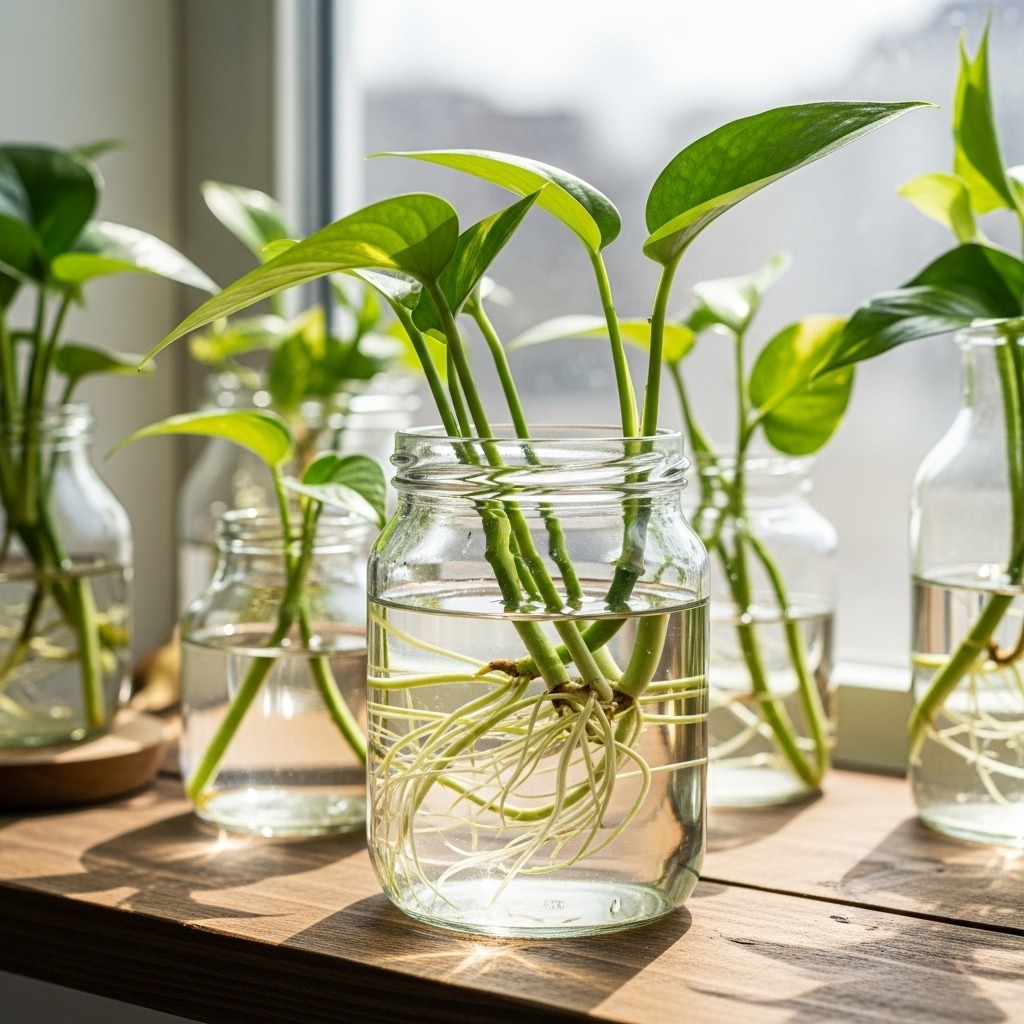
- Propagates easily in water
Air Plants (Tillandsia)
Air plants don’t even need soil. These tiny epiphytes absorb moisture and nutrients through their leaves, allowing creative displays on driftwood, in glass terrariums, or mounted on walls.
Care tips:
- Soak in water 20-30 minutes weekly
- Mist between soakings in dry climates
- Need bright indirect light
- Air circulation is essential
Peperomia
With dozens of varieties featuring different leaf shapes, colors, and patterns, peperomias pack visual punch into 6-8 inch packages. Watermelon peperomia, ripple peperomia, and baby rubber plants all stay delightfully compact.
Care tips:
- Water when top half of soil dries
- Prefer bright indirect light
- Slow-growing and low-maintenance
- Tolerate occasional neglect
Mini Snake Plants (Sansevieria)
While full-size snake plants can reach 3-4 feet, dwarf varieties like ‘Hahnii’ and ‘Cylindrica’ stay under 10 inches. They maintain all the toughness of their larger cousins in a fraction of the space.
Care tips:
- Water every 2-3 weeks
- Survive in low to bright light
- Extremely drought-tolerant
- Remove toxins from air
Spider Plant Babies
Mature spider plants get large, but their “babies” (spiderettes) start as adorable 2-3 inch plantlets. Propagate these in small pots for instant mini plants.
Care tips:
- Water when top inch of soil dries
- Tolerate various light levels
- Fast-growing but manageable
- Produce their own babies to share
Creative Ways to Display Small Plants
Maximize impact without wasting space:
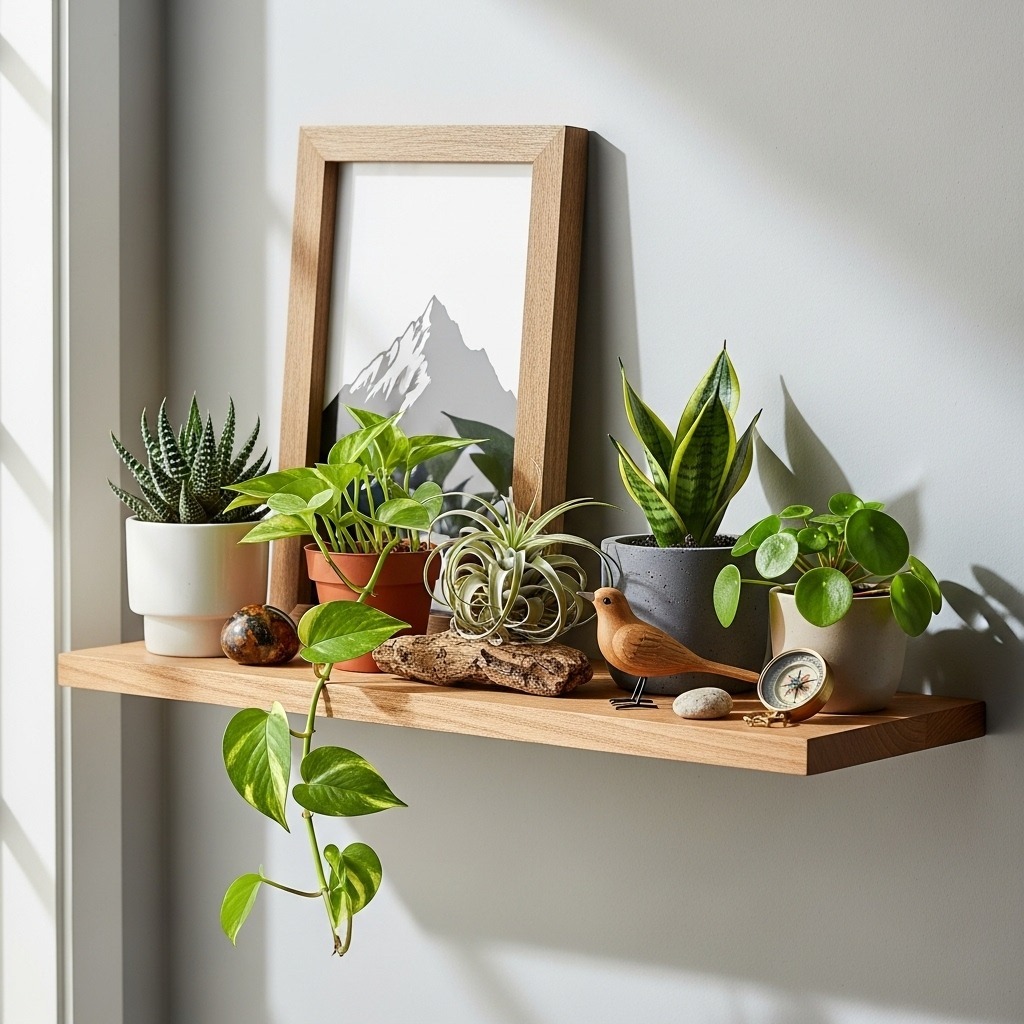
Vertical Gardening: Mount hanging plant baskets at different heights to create living walls. Trailing pothos and spider plants cascade beautifully without consuming floor space.
Shelf Styling: Integrate small plants throughout existing shelving between books and gear. Succulents and air plants fit perfectly on standard shelves.
Window Sill Gardens: Line sunny windowsills with small pots of succulents, herbs, or compact foliage plants.
Grouped Arrangements: Cluster multiple small plants in shallow trays or baskets for visual impact greater than individual plants.
Desktop Gardens: Transform work-from-home spaces with tiny plants that improve air quality and reduce stress.
Terrarium Gardens: Combine moisture-loving miniatures like ferns and moss in glass containers for self-contained ecosystems.
Read more: Low Light Indoor Plants: Bring Nature Into Every Corner
Basic Care for Small Indoor Plants
Watering
Small pots dry out faster than large containers, but overwatering is still the biggest killer. Check soil moisture regularly rather than following rigid schedules. A soil pH moisture meter eliminates guesswork.
General guidelines:
- Succulents and cacti: every 2-3 weeks
- Tropical foliage (pothos, peperomia): weekly
- Ferns and moisture-lovers: every 3-5 days
- Air plants: weekly soaking
Water until it drains from bottom holes, then empty saucers to prevent root rot.
Light Requirements
Most small plants adapt to various light levels, but matching plants to available light ensures success:
Bright indirect light (south/west windows): Succulents, air plants
Medium light (east windows): Pothos, peperomia, spider plants
Low light (north windows): Mini snake plants, small philodendrons
Rotate plants weekly so all sides receive equal light exposure.
Feeding
Small root systems need minimal fertilizer. Overfertilizing causes more problems than underfeeding.
- Use half-strength organic fertilizer monthly during spring and summer
- Skip fertilizing fall and winter when growth slows
- Succulents need feeding only 2-3 times yearly
Repotting
Small plants grow slowly and rarely need repotting. Signs it’s time:
- Roots growing through drainage holes
- Water running straight through without absorbing
- Plant becomes top-heavy and tips over
Most small plants thrive for 2-3 years in the same pot before needing larger homes.
Small Plants for Specific Lifestyles
For Frequent Travelers
Choose ultra-drought-tolerant varieties that survive 1-2 weeks without attention:
- Succulents (all varieties)
- ZZ plants (miniature varieties)
- Mini snake plants
- Air plants (soak before trips)
For RV and Van Life
Select compact, unbreakable plants that tolerate movement:
- Succulents in sturdy pots
- Pothos secured in hanging baskets
- Air plants mounted securely
Use museum putty or non-slip mats to secure pots during travel.
For Dark Apartments
Low-light tolerant small plants brighten dim spaces:
- Mini snake plants
- Pothos (golden varieties)
- Small philodendrons
Supplement natural light with indoor-plant LED grow lights if rooms lack windows.
For Offices and Workspaces
Desk-friendly plants improve focus and air quality:
- Small succulents in decorative pots
- Mini snake plants
- Pothos trailing from file cabinets
Studies show indoor plants reduce stress and increase productivity.
Propagating Small Plants for Free Greenery
Succulent Propagation
- Remove healthy leaves by gently twisting at the base
- Let leaves dry 2-3 days until cut ends callous
- Place on dry soil in bright indirect light
- Mist lightly when roots appear (2-3 weeks)
- Pot up once baby plants form
Pothos and Tradescantia Cuttings
- Cut 4-6 inch stem sections below nodes
- Remove lower leaves
- Place in water or directly in moist soil
- Roots develop in 1-2 weeks in water
- Transplant water-rooted cuttings once roots reach 2 inches
Spider Plant Babies
- Wait until spiderettes develop small roots
- Cut babies from mother plant
- Plant directly in small pots with potting mix
- Keep soil moist until established
Common Mistakes to Avoid
Overwatering: Small pots hold less soil, which means less water storage capacity. Always check soil moisture before watering.
Too-Large Pots: Plants in oversized pots sit in wet soil that roots can’t absorb fast enough, leading to root rot.
Ignoring Drainage: Even tiny pots need drainage holes. Without them, water accumulates and kills roots.
Insufficient Light: Even low-light plants need some light. Truly dark corners kill all plants eventually.
Overcrowding: Ensure adequate air circulation between grouped plants to prevent fungal issues.
Neglecting Pests: Check weekly for spider mites, mealybugs, and scale insects. Address infestations immediately.
Building Your Small Plant Collection
Start small and expand gradually:
Month 1-2: Begin with 2-3 bulletproof varieties like succulents and pothos. Learn their watering and light needs.
Month 3-4: Add complementary plants with different textures—perhaps a spider plant and mini snake plant.
Month 5-6: Experiment with slightly fussier varieties like peperomia or small ferns once you’ve built confidence.
Month 7+: Branch into specialty plants, propagate your favorites, and refine your collection based on what thrives.
The small plant hobby complements outdoor lifestyles perfectly. Between hiking trips and camping adventures, you maintain a living connection to nature without demanding daily attention.
Frequently Asked Questions About Small Indoor Plants
What’s the smallest indoor plant you can grow?
Air plants and miniature succulents like Haworthia cooperi are among the tiniest, staying under 2-3 inches. These work perfectly in micro terrariums or mounted displays.
How often should I water small indoor plants?
It varies by plant type. Succulents need water every 2-3 weeks, while tropical plants like pothos need weekly watering. Always check soil moisture rather than following rigid schedules.
Can small plants purify air effectively?
While small plants purify air, you’d need many of them to match the impact of larger plants. However, clustering multiple small plants creates cumulative air-cleaning benefits.
Do small plants stay small forever?
True miniatures like certain haworthia species stay small naturally. Other “small” plants eventually grow larger but can be kept compact through pruning or propagating new starts.
What’s the easiest small plant for beginners?
Succulents like jade plants or mini snake plants are virtually indestructible. They tolerate neglect, need infrequent watering, and clearly show when they need attention.
Are small plants cheaper than large ones?
Generally yes. Small plants cost $5-15 compared to $30-100+ for mature specimens, making building diverse collections affordable.
Can I grow small plants without natural light?
Not successfully long-term. All plants need light for photosynthesis. For windowless spaces, invest in quality LED grow lights providing full-spectrum light 12-14 hours daily.