
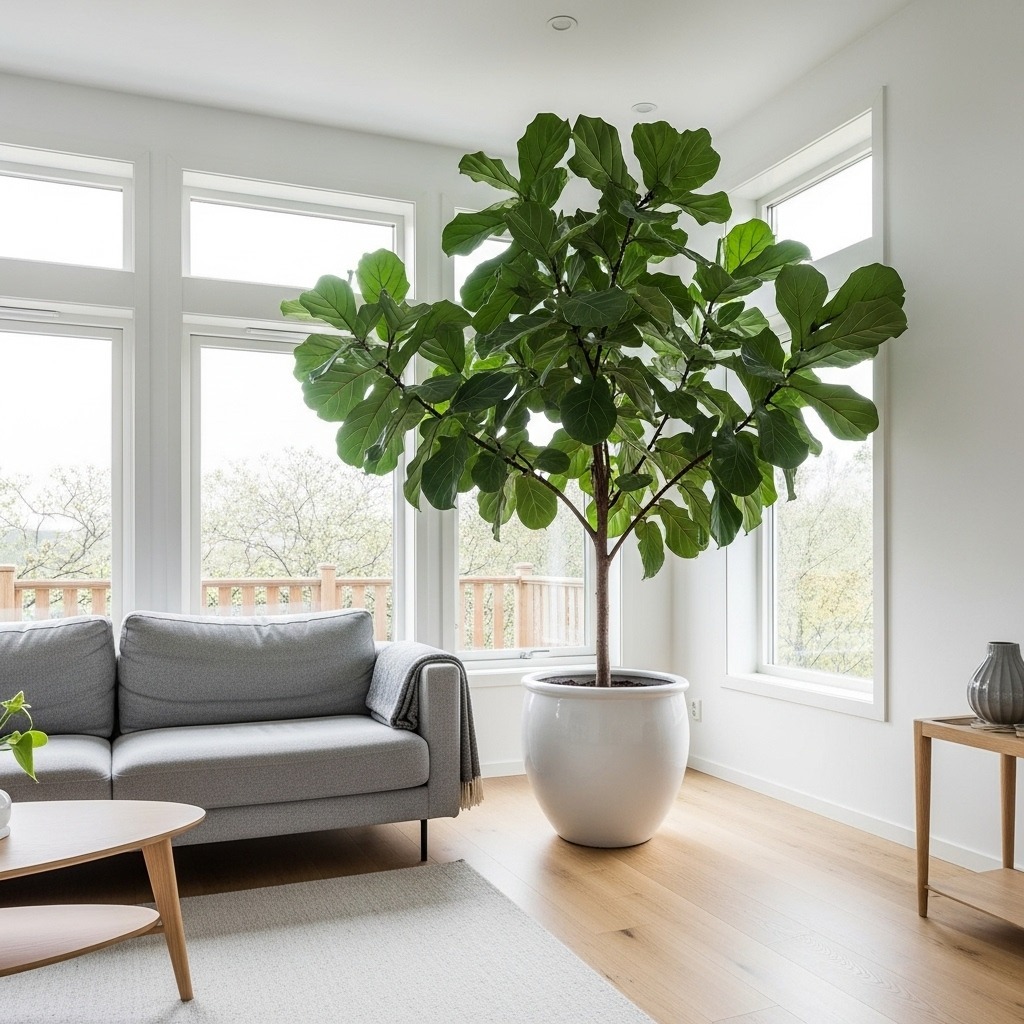
I’ll never forget the day I brought home my first large indoor plant. I’d been living in my apartment for two years, and something always felt off. The space was decorated, sure, but it felt flat—like a staged room in a furniture catalog rather than a home someone actually lived in. Then I saw a towering fiddle leaf fig at a local plant shop, and everything clicked.
That single plant changed my entire living room. It filled the awkward empty corner I’d never known what to do with, drew the eye upward and made my ceiling feel higher, and suddenly my apartment had personality. Friends who visited actually commented on how different the space felt. One plant—one large, dramatic, impossible-to-ignore plant—did what months of rearranging furniture couldn’t.
If you’ve been eyeing those massive statement plants at nurseries but weren’t sure if you could handle them or where you’d even put them, this guide is for you. Large indoor plants aren’t just for botanical experts with sprawling homes. They’re for anyone who wants to transform empty space into something striking, intentional, and alive.
What Makes a Plant “Large”?
When we talk about large indoor plants, we’re generally referring to plants that reach at least 3-4 feet tall when mature, though many can grow 6-10 feet or more indoors. These are floor plants—the kind you place in corners, beside furniture, or as room dividers rather than on tables or shelves.
Large plants make bold visual statements. They’re architectural elements as much as living organisms, filling vertical space and creating focal points that anchor entire rooms. Unlike collections of smaller plants that create busy, cluttered looks, one well-placed large plant delivers impact with restraint.
Why Large Indoor Plants Work
Instant Drama and Impact
A 6-foot bird of paradise or sprawling monstera commands attention in ways a dozen small succulents never will. Large plants create immediate visual interest, filling space dramatically while maintaining a sense of minimalism. One great large plant often looks more intentional than a dozen scattered small ones.
Make Rooms Feel Larger
Counterintuitively, large plants can make rooms feel bigger. By drawing the eye upward, they emphasize ceiling height. Their vertical presence creates dimension and depth, especially in corners or against bare walls that would otherwise fade into the background.
Natural Room Dividers
In open-concept homes or studio apartments, large plants create subtle separation between functional areas without the heaviness of furniture or walls. A tall palm or bamboo can define your living area from your dining space while maintaining light and airflow.
Superior Air Purification
The bigger the plant, the more air-purifying power it provides. Large plants with substantial leaf surface area process more carbon dioxide and filter more toxins than small plants, significantly improving indoor air quality.
Best Large Indoor Plants for Beginners
Not all large plants require expert care. These statement-makers are surprisingly forgiving.
Fiddle Leaf Fig (Ficus lyrata)
The fiddle leaf fig is the supermodel of the plant world—tall, dramatic, and everywhere on Instagram. It can reach 6-10 feet indoors with large, violin-shaped leaves that create stunning visual texture.
Light: Bright, indirect light for at least 6 hours daily. Place near south or west-facing windows but not in direct harsh sun.
Water: Let the top 1-2 inches of soil dry between waterings. Water thoroughly when dry, usually once per week in summer, less in winter.
Care Level: Medium. Fiddles are somewhat fussy about consistent conditions but thrive once you find their happy spot.
Monstera Deliciosa (Swiss Cheese Plant)
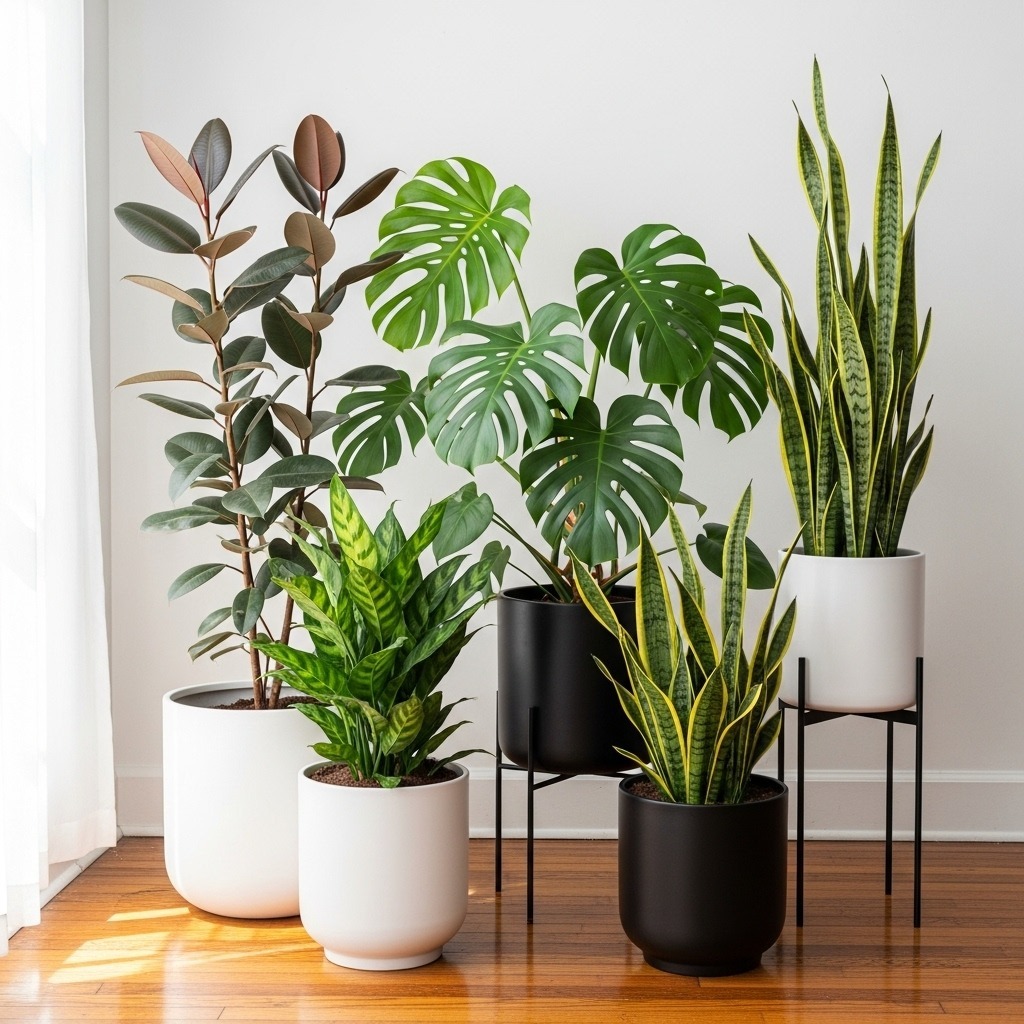
With its iconic split leaves and climbing nature, monstera can grow 6-10 feet tall indoors. The mature leaves develop dramatic fenestrations (splits and holes) that give this plant its unmistakable look.
Light: Medium to bright indirect light. More light means more leaf splits.
Water: Water when the top 2 inches of soil are dry, usually once every 1-2 weeks.
Care Level: Easy. Monstera is forgiving and adaptable, perfect for beginners wanting a statement plant.
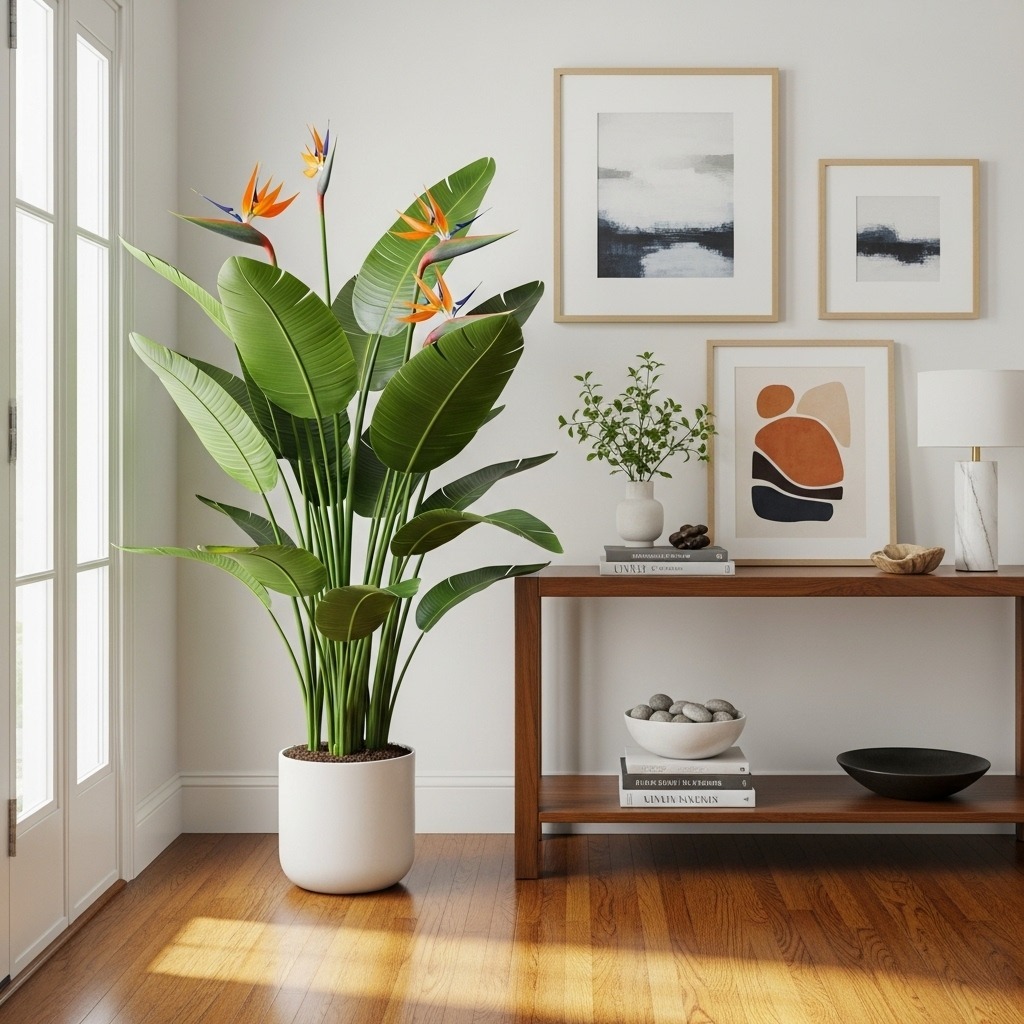
Bird of Paradise (Strelitzia nicolai)
Nothing says “tropical paradise” like a bird of paradise. These plants grow 5-7 feet tall indoors with large, banana-like leaves that create instant jungle vibes. The giant variety (Strelitzia nicolai) is better suited for indoor growing than the orange-flowered variety.
Light: Bright light, including some direct morning sun if possible.
Water: Keep soil consistently moist but not soggy during growing season; reduce watering in winter.
Care Level: Medium. Needs consistent moisture and good light to thrive.
Rubber Plant (Ficus elastica)
With thick, glossy, burgundy or green leaves, rubber plants grow 6-10 feet tall indoors and have a wonderfully sculptural look. They’re more forgiving than their fiddle leaf fig cousins.
Light: Bright, indirect light. Can tolerate lower light but grows more slowly.
Water: Allow the top 1-2 inches of soil to dry between waterings.
Care Level: Easy to medium. Much more tolerant of varying conditions than other ficus varieties.
Snake Plant (Dracaena trifasciata)
While often thought of as a tabletop plant, some snake plant varieties grow 3-8 feet tall, creating dramatic vertical statements. Their architectural, upright leaves add modern elegance to any space.
Light: Tolerates anything from low light to bright indirect light.
Water: Allow soil to dry completely between waterings. Water every 2-6 weeks depending on conditions.
Care Level: Very easy. Nearly indestructible and perfect for neglectful plant parents.
Large Indoor Plants for Low Light Spaces
Not everyone has sun-drenched rooms. These large plants thrive in lower light conditions.
ZZ Plant (Zamioculcas zamiifolia)
ZZ plants can grow 2-4 feet tall and wide with thick, glossy stems and leaves that look almost artificial. They’re phenomenally tolerant of neglect and low light.
Light: Low to bright indirect light—they truly adapt to almost anything.
Water: Let soil dry completely between waterings, sometimes only once per month.
Care Level: Very easy. One of the lowest-maintenance large plants available.
Corn Plant (Dracaena fragrans)
With a palm-like appearance and striped foliage, corn plants can reach 4-6 feet indoors. They’re slow-growing but incredibly tolerant of low light and irregular watering.
Light: Low to medium indirect light.
Water: Keep soil lightly moist but not waterlogged. Water when top inch is dry.
Care Level: Easy. Forgiving and adaptable.
Parlor Palm (Chamaedorea elegans)
For those wanting tropical vibes without high light requirements, parlor palms grow 3-6 feet indoors and tolerate lower light better than most palms.
Light: Low to medium indirect light, though grows faster with brighter conditions.
Water: Keep soil evenly moist during growing season.
Care Level: Easy. One of the best palms for indoor conditions.
For spaces with truly minimal natural light, supplement with indoor plant LED grow lights to keep your large plants thriving. Position lights 12-18 inches above plant canopies for best results.
Where to Place Large Indoor Plants
Strategic placement maximizes both plant health and visual impact.
Empty Corners
Corners are dead space in most rooms. Large floor plants transform them into focal points, making rooms feel complete and intentional. This is where statement plants like fiddle leaf figs, bird of paradise, or rubber plants shine.
Place them in decorative ceramic plant pots that complement your room’s color palette. Indoor plant stands can elevate plants slightly if needed for better light access.
Beside Furniture
Large plants soften the hard lines of furniture and make seating areas feel more intimate. Position a tall plant beside your sofa, next to an armchair, or flanking a console table. This creates balanced, designed vignettes.
As Room Dividers
In open-concept spaces, group 2-3 large plants to subtly separate functional areas. Tall palms, bamboo, or multiple monstera plants create green screens that define space without blocking light or views.
Entryways and Hallways
Make bold first impressions by placing large plants in entryways. A dramatic statement plant immediately sets a welcoming, curated tone. Just ensure hallways are wide enough that plants don’t obstruct traffic flow.
Read more: Tall Indoor Plants: Statement Pieces That Transform Your Space
Caring for Large Indoor Plants
Big plants need consistent care, but they’re not as intimidating as you might think.
Watering Large Plants
The bigger the pot, the longer soil stays moist. Most large plants in 10-14 inch pots need watering once every 7-14 days depending on season, light, and humidity.
Always check soil moisture before watering—stick your finger 2 inches deep. If dry, water thoroughly until water drains from the bottom. Never let plants sit in water-filled saucers, which causes root rot.
Self-watering planters work beautifully for large plants, especially if you travel frequently. The built-in reservoir system ensures consistent moisture without daily attention. A soil pH/moisture meter takes guesswork out of when to water.
Feeding Schedule
Large plants are heavy feeders during growing season (spring through fall). Use organic fertilizer according to package directions, typically every 2-4 weeks during active growth. Reduce or stop feeding in winter when growth slows.
Cleaning and Grooming
Dust accumulates on large leaves, blocking light absorption and photosynthesis. Wipe leaves monthly with a damp cloth. Remove yellowing or dead leaves promptly to keep plants looking fresh and prevent pest issues.
For plants with many leaves (like monstera or rubber plants), take them into the shower every few months and gently rinse foliage to remove accumulated dust. Let them drain thoroughly before returning to their spot.
Styling Tips for Large Indoor Plants
Make your statement plants look intentionally placed rather than randomly dropped in corners.
Choose the Right Planter
Your container is as important as the plant itself. Large plants need substantial pots—both for root space and visual balance. A 6-foot plant in a tiny pot looks top-heavy and unfinished.
Match planter style to your decor:
- Modern/Minimalist: Clean-lined ceramic or concrete planters in white, grey, or black
- Bohemian: Natural woven baskets, terracotta with texture
- Industrial: Metal planters, galvanized steel, concrete
- Traditional: Classic glazed ceramics in rich colors
Layer with Smaller Plants
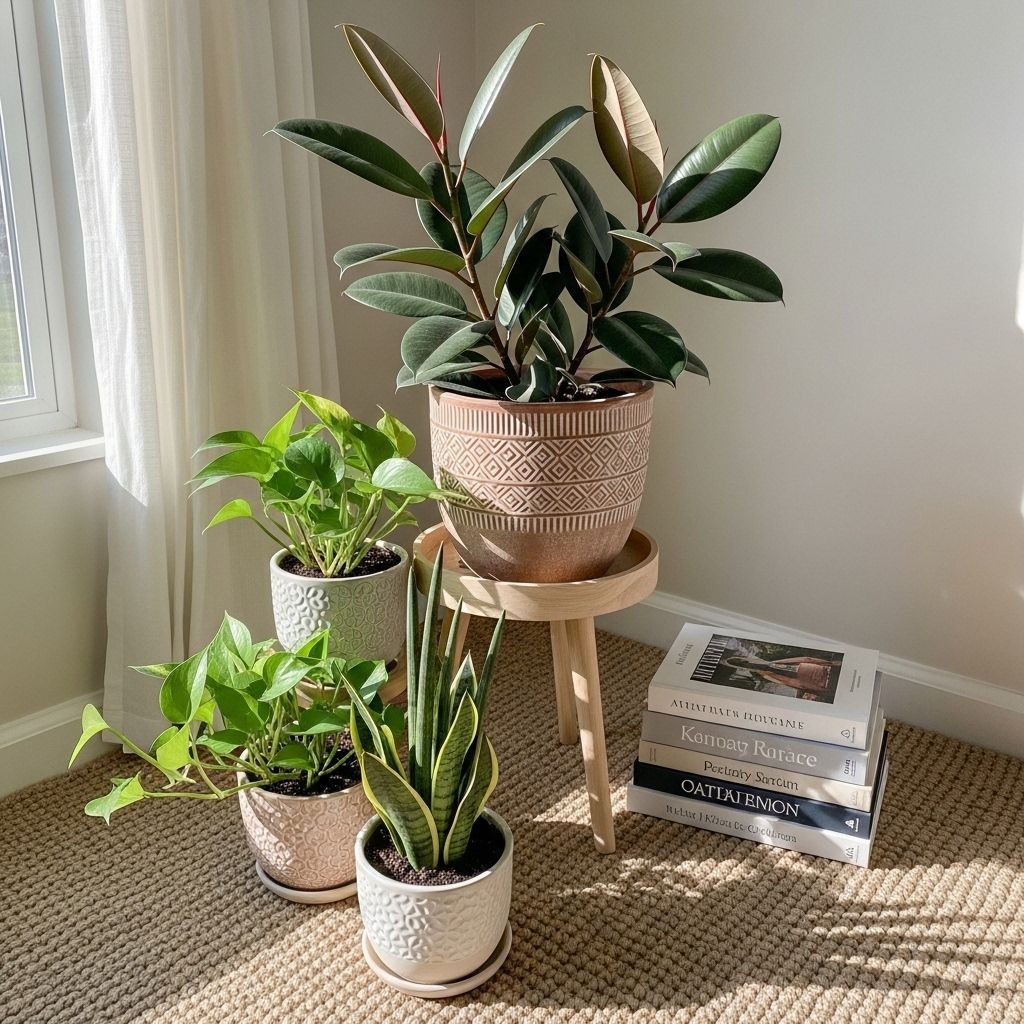
While one large plant makes a statement, layering it with smaller plants creates depth and interest. Place 2-3 smaller plants around the base of your statement plant (in their own pots) to build a curated plant vignette.
Add Complementary Decor
Don’t let large plants stand alone. Style them with complementary elements—a stack of books, a sculptural object, a textured rug underneath, or garden décor items that enhance the botanical vibe without competing for attention.
FAQ: Your Large Indoor Plant Questions Answered
Q1: What’s the easiest large indoor plant for beginners?
Snake plants and ZZ plants are the most forgiving large plants for beginners. Both tolerate low light, irregular watering, and general neglect while still looking sculptural and intentional. Rubber plants are also excellent starter options if you have brighter light available.
Q2: How much do large indoor plants typically cost?
Prices vary widely based on plant size, rarity, and where you purchase. Expect to pay $40-150 for common large plants (4-6 feet tall) at garden centers. Specialty or rare varieties can cost $200-500+. Buying smaller plants and growing them yourself saves money but requires patience.
Q3: Can large plants survive in apartments with low natural light?
Yes! Several large plants thrive in low light including snake plants, ZZ plants, pothos (which can be trained to climb), corn plants, and parlor palms. You can also supplement natural light with grow lights to expand your options.
Q4: How often should I water large indoor plants?
This depends on plant type, pot size, light conditions, and season. Generally, large plants in 10+ inch pots need watering every 7-14 days during growing season, less in winter. Always check soil moisture rather than following a strict schedule—water when the top 1-2 inches feel dry.
Q5: What’s the fastest-growing large indoor plant?
Monstera deliciosa grows relatively quickly indoors, often adding several feet per year with proper care and bright light. Bamboo palm and rubber plants also grow quickly compared to fiddle leaf figs or ZZ plants, which are slower growers.
Transform Your Space with Living Architecture
Large indoor plants are more than decor—they’re living architecture that transforms how spaces feel and function. They bring scale, drama, and life to rooms in ways furniture and accessories simply can’t match.
You don’t need to be an expert gardener or have a mansion-sized home. Start with one statement plant suited to your space’s light conditions and your maintenance comfort level. Place it intentionally where it fills empty space or creates a focal point. Care for it consistently with proper watering and occasional feeding.
As that plant thrives and grows, you’ll discover what I learned with my first fiddle leaf fig: large plants change everything. They make rooms feel more complete, more personal, more alive. Walking through your door becomes a different experience—not just entering a space, but returning to a place where living, growing things thrive under your care.
Whether you’re returning from camping breakfast ideas adventures in nature or simply unwinding after work, coming home to impressive greenery creates instant calm and connection. Your large indoor plants become silent companions—growing and changing as you do, marking time with new leaves and upward growth.
So find that perfect corner, choose your statement plant, and watch as one dramatic piece of greenery transforms your entire home. Your space is ready to grow.