
Some days the fish just aren’t biting, no matter what you throw at that log, weed line, or rocky point where you know a bass is holding. Spinnerbait, crankbait, soft plastic, nothing works. On those days, I reach for a jig. It doesn’t look like much sitting in the box, but it can mimic crawfish, baitfish, and just about anything else a bass wants to eat, and it’s the lure I trust most when I need a bite.
The catch is that “jig” covers a lot of ground. Flipping jigs, swim jigs, football jigs, finesse jigs all do different jobs in different water, and picking the wrong one for the cover you’re fishing is the easiest way to waste a good spot. This guide is built around that reality. Instead of a straight brand ranking, the picks ahead are organized by jig type and technique, so you can find the right tool for how and where you’re actually fishing before you ever get to the buyer’s guide.
Buyer’s Guide: How to Choose the Right Fishing Jig
Before we get to the top picks, let’s cover the essentials of jig selection. Understanding these key features will help you match the right jig to the conditions you’re fishing.
Types of Jigs and When to Use Them
- Flipping/Pitching Jigs: These have a stout, heavy-duty hook and a head designed to penetrate heavy cover like wood and thick vegetation. They are the workhorses for getting into the nastiest places where big bass hide.
- Swim Jigs: Featuring a more pointed, streamlined head, swim jigs are designed to be retrieved steadily through the water column, often around lighter cover like sparse weeds or docks. They are excellent for mimicking baitfish.
- Football Jigs: Named for their football-shaped head, these jigs are designed for fishing deep, rocky bottoms. The head shape helps the jig stand up and reduces snags in rocks and crevices.
- Finesse Jigs (like the Bitsy Bug): These are smaller, lighter jigs for when the bite is tough or the water is clear. They present a more subtle, natural offering that can entice wary fish.
- Bladed Jigs (Chatterbaits): These are a hybrid, featuring a jig with a metal blade attached to the front. The blade vibrates and flashes on the retrieve, creating a ton of commotion that attracts aggressive strikes.
Key Features to Compare
- Head Design: The shape of the head dictates how the jig moves through the water and cover. Match the head shape to the type of structure you are fishing.
- Hook Quality: A strong, sharp hook is non-negotiable. For heavy cover, you need a thick-gauge hook that won’t bend out on a big fish.
- Weed Guard: The stiffness of the weed guard is important. A stiff guard is needed for heavy cover, while a softer guard is better for open water to ensure a good hookset.
- Skirt: The skirt adds bulk, color, and lifelike action to the jig. Silicone, rubber, and living rubber are common materials, each with a slightly different action in the water.
Common Mistakes to Avoid
- Using Too Heavy a Jig: You want to use the lightest jig you can while still maintaining contact with the bottom. A lighter jig has a more natural fall.
- Fishing with a Dull Hook: Always check your hook point, especially after fishing in rocks or wood. A sharp hook is critical for penetration.
- Wrong Trailer: The soft plastic trailer you add to a jig is key to its effectiveness. Match the trailer to the type of prey you are trying to imitate (e.g., a craw-style trailer for a flipping jig, a swimbait for a swim jig).
Editor’s Picks: The Best Fishing Jigs of 2026
| Category | Product | Why We Picked It |
| Best Overall | Reaction Tackle Tungsten Flipping Jig | The sensitivity and compact profile of tungsten combined with a high-quality build make it a top performer. |
| Best Value | Strike King Bitsy Bug Mini Jig | An incredibly effective and affordable option for finesse situations when the bite is tough. |
| Best for Heavy Cover | Strike King Hack Attack Heavy Cover Swim Jig | Built with a super-strong hook and a streamlined head to come through the thickest cover. |
| Best All-Purpose | BOOYAH Boo Jig Bass Fishing Lure | A classic design with a proven track record, it’s a reliable and versatile jig for many conditions. |
Top 10 Fishing Jigs – Ranked by Quality & Performance
1. Reaction Tackle Tungsten Flipping Jig
Flipping jigs
Flipping jigs are the ones I reach for when I’m punching through mats, working laydowns, or dropping straight down next to a stump. They’re built for short, accurate presentations in heavy cover where you need the jig to get down fast and stay in contact with the bottom, not for long casts across open water.
1. Reaction Tackle Tungsten Flipping Jig

Check price: Reaction Tackle Tungsten Flipping Jig
🛍️ Best For: Serious anglers who demand the highest performance and sensitivity for flipping and pitching.
My Rating: 4.9/5
🔍 Overview: This is our top overall pick, and it earns that spot on feel alone. The jig is built with a 97% tungsten head, which is denser and smaller than lead. That gives you a more compact profile and, more importantly, incredible sensitivity. You can feel every pebble, stick, and, most critically, every subtle bite. It pairs a razor-sharp hook with a durable, hand-tied skirt, and the added feel of tungsten is a real difference-maker in deeper water or when fish are biting light. It’s a premium jig, and it’s worth every penny if you flip and pitch heavy cover regularly.
| ✅ What We Loved | ❌ What to Watch Out For |
| High-density tungsten for superior sensitivity | Higher price point than lead jigs |
| Compact profile for better penetration in cover | May be too heavy-duty for light-line applications |
| Extremely sharp and strong hook | |
| Durable, high-quality skirt |
📣 Real-World Insights:
Anglers consistently praise the sensitivity of this jig. One user stated, “I can feel the difference between mud and rock bottom with this jig, something I couldn’t do with lead.” Another commented on its durability, saying, “The finish and skirt hold up incredibly well after being bashed against rocks and wood all day.”
2. BOOYAH Boo Jig Bass Fishing Lure
Flipping jigs
Flipping jigs are built for punching through heavy cover, docks, mats, and thick brush where bass hunker down. The head shape and weed guard matter more than anything else here, since you’re dragging the bait through stuff that would snag almost any other lure.

Check price: BOOYAH Boo Jig Bass Fishing Lure
🛍️ Best For: All-around jig fishing, from flipping docks to dragging on points.
My Rating: 4.7/5
🔍 Overview: The BOOYAH Boo Jig earns its spot as a flipping option because it’s built to take a beating and keep working. It has a heavy-duty hook, a tough weed guard, and a full-bodied skirt that pulses with a good amount of action even on a slow drag. The head shape is a hybrid design, which means it comes through wood cover and rock without hanging up nearly as much as a straight football or arkie head would. It also runs a rattle system, which matters more than people expect once the water gets murky or the light gets low. This isn’t a specialist jig built for one job. It’s a proven, do-it-all design that earns a permanent spot in the box.
| ✅ What We Loved | ❌ What to Watch Out For |
| Very strong and sharp hook | The weed guard can be a bit stiff out of the package |
| Rattle system for added attraction | Not as snag-resistant in heavy rock as a true football jig |
| Durable construction and paint job | |
| Great value for the quality |
📣 Real-World Insights:
Users love the durability and reliability of the Boo Jig. One reviewer called it “the most dependable jig in my tackle box.” Another praised the rattle, noting, “On tough days, the rattle seems to make a huge difference in getting bites.”
3. Strike King Bitsy Bug Mini Jig
Finesse jigs
Finesse jigs come out when the water’s clear and calm, or when the fish have seen every big, bulky bait in your box and want nothing to do with them. A smaller profile and lighter weight give you a subtle fall that pressured bass, and plenty of panfish, will still eat when they’ve turned their nose up at everything else.

Check price: Strike King Bitsy Bug Mini Jig
Best for: Finesse fishing, clear water, or when targeting smaller fish.
Rating: 4.8/5
Overview
When the bite gets tough, it’s time to downsize, and the Bitsy Bug is the king of finesse jigs. Its small profile and light weight give you a subtle presentation that pressured or finicky bass can’t resist. Days when fish are ignoring larger offerings are exactly when a Bitsy Bug paired with a small craw trailer starts getting bit. Despite its size, it carries a surprisingly strong hook that can handle bigger fish than you’d expect from something this compact. It earns a permanent spot in the box for high-pressure lakes or post-frontal conditions.
| ✅ What We Loved | ❌ What to Watch Out For |
| Incredible value, very affordable | The hook, while strong for its size, can be overpowered by very large fish in heavy cover |
| Excellent for finesse applications | The weed guard is light and not suitable for thick vegetation |
| Subtle profile gets a lot of bites | |
| Comes in a wide range of proven colors |
Real-world insights
Anglers call this jig a “fish-catching machine” when conditions are tough. One user wrote, “I’ve caught more fish on a Bitsy Bug than any other jig when the water is clear and calm.” Many praise its ability to catch not only bass but also large panfish and other species, making it a versatile choice for anyone who fishes clear, heavily pressured water.
4. Berkley SlobberKnocker Fishing Jig
Bladed jigs
Bladed jigs get lumped in with swim jigs and lipless cranks a lot, but they’re their own animal. That thumping vibration cuts through stained water and calls fish in from a distance, which makes this style my go-to when visibility drops or when I need to cover a flat quickly. The tradeoff is they’re notorious for hanging up in grass, so a design that comes through cover clean is worth paying attention to.

Check price: Berkley SlobberKnocker Fishing Jig
🛍️ Best For: Anglers who love the action of a bladed jig but want a more weedless and refined design.
My Rating: 4.6/5
🔍 Overview: The Berkley Slobberknocker improves on the classic bladed jig design with a through-head connection for the blade, which makes the entire package more durable and streamlined. This design creates an intense vibration and a loud “knocking” sound as it hits the head. I’ve found it comes through cover better than many other bladed jigs. It features a quality hook and a hand-tied skirt, making it a premium option in the bladed jig category.
| ✅ What We Loved | ❌ What to Watch Out For |
| Innovative head design creates a unique sound and vibration | Premium price point for a bladed jig |
| More durable and weedless than traditional bladed jigs | The action can be too intense for very cold water |
| High-quality components, including a sharp hook and hand-tied skirt | |
| Comes in excellent color patterns |
📣 Real-World Insights:
Users are impressed with the unique action and durability. One reviewer said, “The Slobberknocker has a thump you can feel all the way up your arm, and the bass absolutely crush it.” Another noted, “It comes through grass that would hang up my other Chatterbaits.”
5. Strike King Tour Grade Swim Jig
Swim jigs
Swim jigs are built to keep moving. You cast them past docks, over submerged grass, or through scattered cover and reel steady, letting the head shape and skirt do the work of imitating a fleeing baitfish rather than something you hop off the bottom.

Check price: Strike King Tour Grade Swim Jig
🛍️ Best For: Swimming through sparse vegetation, around docks, and over submerged cover.
My Rating: 4.5/5
🔍 Overview: The Strike King Tour Grade Swim Jig is built specifically for a swimming retrieve, not a hop-and-drag one. The head is shaped with a pointed nose that helps it slice through vegetation instead of hanging up in it, and the balance keeps it tracking true at a steady pace. It carries a quality hook and a flowing skirt that pulses as you reel, which matters a lot in swim jig fishing since the retrieve is constant and the bait needs to look alive the whole way in. It shines in spring when bass push into shallow water to spawn, and paired with a swimbait trailer it turns into a convincing baitfish imitation that fish eat with confidence.
| ✅ What We Loved | ❌ What to Watch Out For |
| Excellent head design for swimming retrieves | Not designed for bottom-bouncing or heavy cover |
| High-quality hook and components | The weed guard may be too light for thick wood cover |
| Realistic color patterns and skirt | |
| Great value in the “Tour Grade” line |
📣 Real-World Insights:
Anglers praise its ability to come through cover cleanly. “This is the best swim jig I’ve used for fishing around grass and docks,” one user wrote. Others commented on the quality of the hook, noting that it has an excellent hook-up ratio.
6. Strike King Hack Attack Heavy Cover Swim Jig
Heavy cover swim jigs
Grass mats, lily pads, and thick brush eat lures alive, and this is where a swim jig either proves itself or gets stripped down to bare wire on the first good bite. A heavy cover jig needs a hook that won’t straighten under braid and a head shape that slides through vegetation instead of hanging up on every stem.

Check price: Strike King Hack Attack Heavy Cover Swim Jig
🛍️ Best For: Power fishing and pulling big bass out of the absolute thickest cover.
My Rating: 4.7/5
🔍 Overview: Designed by pro angler Greg Hackney for extreme power fishing, the Hack Attack is built for extraction, not finesse. It runs a super-strong, custom-made Gamakatsu hook that won’t bend under pressure, paired with a streamlined head shaped to punch into and slide back out of the gnarliest cover you can find. Pair this jig with heavy braided line and a stout rod, since that combination is what lets you winch a fish out of grass or brush before it has a chance to wrap you up.
| ✅ What We Loved | ❌ What to Watch Out For |
| Incredibly strong, heavy-duty hook | Overkill for open water or light cover situations |
| Excellent design for penetrating heavy cover | Requires heavy-duty rod, reel, and line to be effective |
| Very durable construction | |
| Perfect for power fishing techniques |
📣 Real-World Insights:
Users who fish heavy cover swear by this jig. “If you’re tired of losing fish because your hook bent, buy this jig. It’s bulletproof,” one reviewer stated. Another called it their “go-to lure for fishing the thickest slop on the lake.”
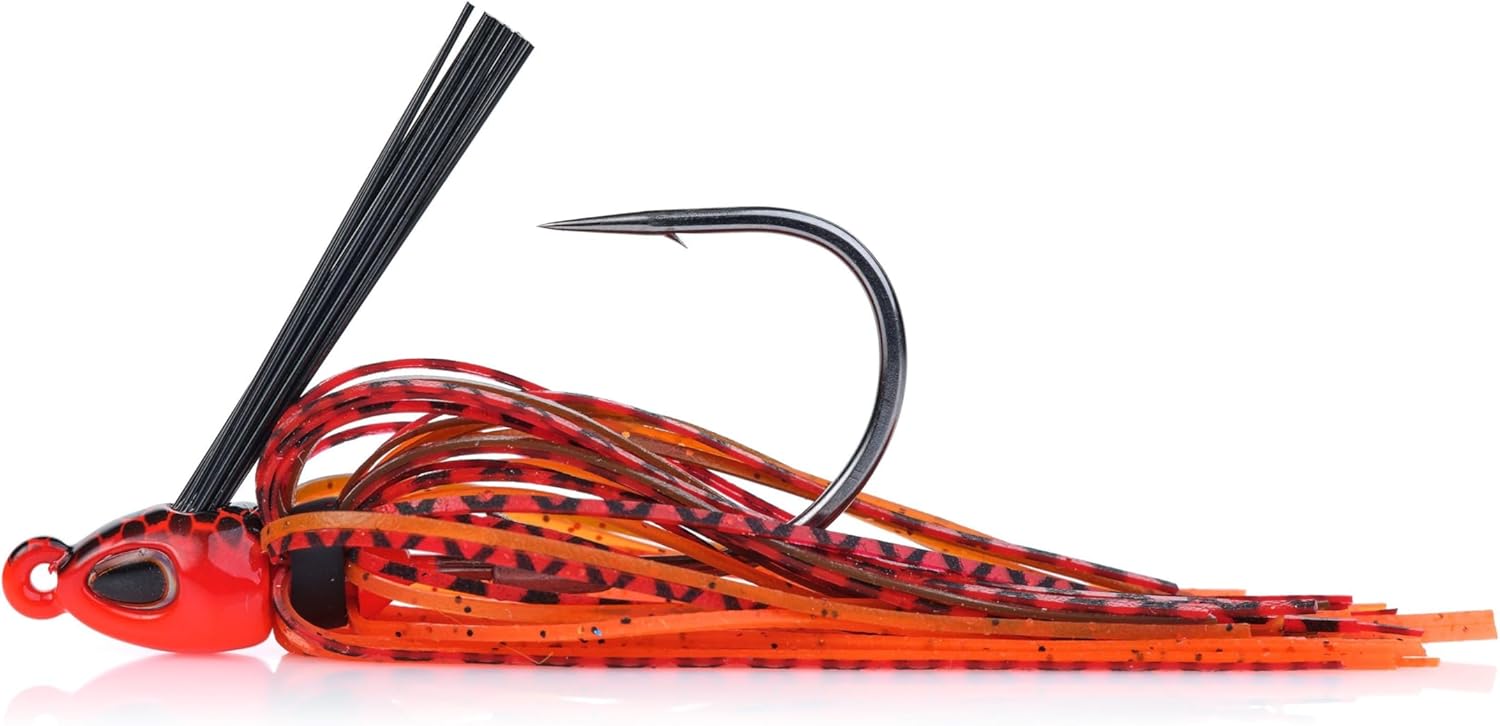
7. Berkley Swim Fishing Jigs
Swim jigs
Swim jigs are built for horizontal retrieves through grass edges, submerged timber, and around docks where fish are keying on baitfish. The pointed head slips through cover without hanging up, so you can keep the jig moving steadily instead of stopping to pick weeds off the hook.
Check price: Berkley Swim Fishing Jigs
🛍️ Best For: Anglers looking for a versatile swim jig with unique, scientifically-proven color patterns.
My Rating: 4.4/5
🔍 Overview: This swim jig from Berkley stands out due to its high-quality PowerBait-infused skirt and its range of scientifically developed color patterns. The head is a classic pointed design that works well for swimming, and the hook is sharp and reliable. The addition of PowerBait scent can give you an edge, encouraging fish to hold on a little longer for a better hookset. It’s a solid and affordable option that comes in some of the most realistic baitfish patterns available.
| ✅ What We Loved | ❌ What to Watch Out For |
| PowerBait infused skirt for added attraction | The weed guard is on the lighter side |
| Excellent, scientifically-proven color patterns | Not as heavy-duty as the Hack Attack or Boo Jig |
| Good quality for a very reasonable price | |
| Versatile head design |
📣 Real-World Insights:
Many users are convinced the PowerBait scent makes a difference. “I seem to get more committed bites with this jig compared to others,” one angler noted. The color patterns are also frequently praised, with another user saying, “The HD Tru-Color patterns are the most realistic I’ve seen.”
8. TRUSCEND Fishing Jigs
Bladed swim jigs
Bladed swim jigs sit in their own category because they don’t just wobble, they vibrate. That tight thump comes from a metal blade tucked under the jig’s chin, and it works best in open water or sparse cover where you want a fleeing baitfish look rather than a bottom-bumping presentation.

Check price: TRUSCEND Fishing Jigs
🛍️ Best For: Anglers looking for a unique, vibrating swim jig for open water applications.
My Rating: 4.2/5
🔍 Overview: This TRUSCEND jig is a hybrid design, pairing a jig head with a metal blade under the chin instead of the more common wire-and-blade rig you’ll find on other bladed jigs. That gives it a tighter, more consistent vibration on a straight retrieve, which is worth trying when fish have already seen every standard swim jig in the area and stopped reacting to them. It’s built for open water and light cover, not for grinding through wood or heavy grass.
| ✅ What We Loved | ❌ What to Watch Out For |
| Unique vibrating action | Not weedless, primarily for open water |
| Realistic 3D eyes and finish | The hook is smaller and lighter than on a traditional bass jig |
| Good for pressured fish that have seen other lures | |
| Comes as a multi-pack, offering good value |
📣 Real-World Insights:
Users report success with a variety of species, not just bass. “I’ve caught walleye, pike, and big crappie on these jigs,” one reviewer mentioned. Another praised its effectiveness for vertical jigging in open water.
9. MadBite Bladed Jig Fishing Lures
Bladed jigs
Bladed jigs (sometimes called chatterbaits) pair a jig head with a metal blade at the nose, so the whole thing wobbles and vibrates as you reel. They’re great for covering water fast in stained water or when fish are chasing baitfish, and they work well through grass edges and light cover where a straight retrieve keeps them ticking along without hanging up.
9. MadBite Bladed Jig Fishing Lures

Check price: MadBite Bladed Jig Fishing Lures
🛍️ Best for: anglers wanting to try bladed jigs without a significant financial investment.
My rating: 4.1/5
🔍 Overview: This bladed jig from MadBite gives you the popular, vibrating action of a chatterbait at a very budget-friendly price. They come in a multi-pack with a variety of colors, so it’s easy to experiment and figure out what the fish want on a given day. They don’t have the premium components you’ll find on something like the Slobberknocker, but they’re perfectly functional and catch a lot of fish. If you’ve been curious about the bladed jig craze but don’t want to commit a lot of money to find out, this is the entry point that makes sense.
| ✅ What We Loved | ❌ What to Watch Out For |
| Extremely affordable, great value in the multi-pack | Components (hook, snap) are not as high-quality as premium brands |
| Proven fish-catching action | The skirt is not as durable as hand-tied versions |
| Good variety of colors included | |
| A great way to build a collection of bladed jigs |
📣 Real-world insights:
Anglers are impressed with the value and effectiveness. “For the price, you can’t beat these. They run true and the bass hammer them,” said one user. Another commented, “It’s great to have a bunch of these so I’m not afraid to throw them into heavy cover and risk losing one.”
10. Croch Bass Jigs Set
Finesse jigs
When bass get finicky, especially in clear water or after a cold front, a small finesse jig fished slow and subtle often outperforms anything bulkier. It’s the style I’d point a new angler toward first, since it forgives a sloppy retrieve.
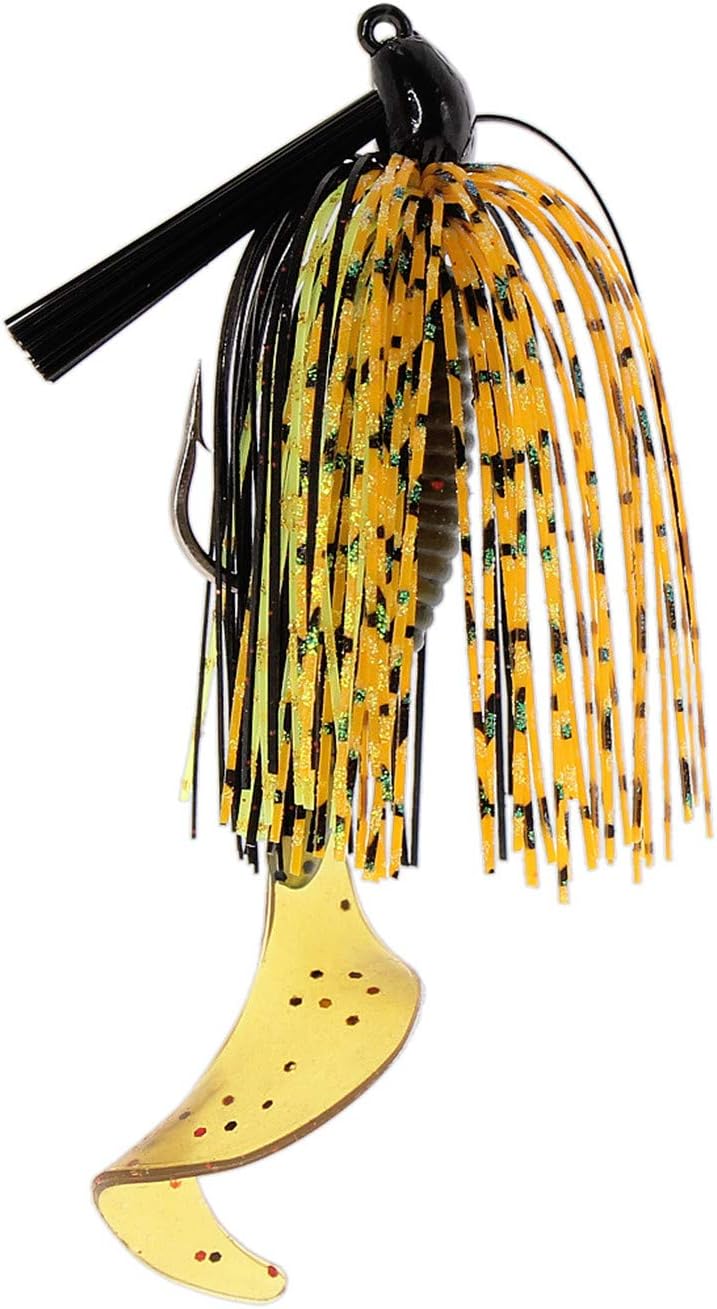
Beginner starter kit: Croch Bass Jigs Set
Check price: Croch Bass Jigs Set
🛍️ Best For: Beginners who want a complete, ready-to-fish jig kit.
My Rating: 4.0/5
🔍 Overview: This kit from Croch rounds out our top 10 as the best entry point for someone just picking up jig fishing. It bundles a variety of jig heads with a matching selection of soft plastic trailers, so you’re not stuck guessing which trailer belongs with which head while you’re still learning the ropes. The build quality is what you’d expect from a bulk kit, nothing premium, but perfectly adequate for practice and for putting fish in the boat while you figure out what you like. It also spans a few different styles, meaning you can try flipping, swimming, and finesse presentations out of the same box before committing to a specialty jig.
| ✅ What We Loved | ❌ What to Watch Out For |
| Complete kit with jigs and trailers | The hooks are not as sharp or strong as on premium jigs |
| Excellent value for the number of pieces | The soft plastic trailers are not very durable |
| Allows for experimentation with different styles | Designed for beginners, not for serious tournament anglers |
| Takes the guesswork out of jig selection |
📣 Real-World Insights:
Beginner anglers love the convenience and value of this kit. “This was the perfect way to get started with jig fishing without being overwhelmed,” one reviewer wrote. Another said, “I’ve caught plenty of bass on these. It has everything you need to get out on the water and start learning.”
Read more: Top 10 Bass Fishing Lures in 2026 (Tested & Reviewed)
Jig Weight and Head Shape Selection by Depth and Cover
Matching jig weight to water depth
Jig weight is really about maintaining bottom contact and feel, not just casting distance. In shallow water under 8 feet, a 1/4 to 3/8 ounce jig gives you enough feel without dropping so fast that it looks unnatural to fish sitting in cover. Once you’re working depths past 15 feet, or fighting current, a 1/2 to 3/4 ounce head keeps the line angle manageable and lets you actually feel the bottom instead of guessing at it. Going too light in deep water means slack line and missed bites; going too heavy in the shallows means you blow through the strike zone before a fish reacts.
Head shape and cover density
Head shape matters as much as weight. Football heads roll over rock and gravel without wedging, which makes them the natural choice for open, hard bottom. Arkie and compact round heads work well through scattered brush and moderate wood cover since they deflect off limbs rather than catching them. For thick vegetation and heavy wood, a flipping jig with a narrow, bullet-shaped head and a stiff weed guard is built to punch through without hanging up. The denser the cover, the more the head shape should prioritize a clean entry over anything else.
Line diameter’s role
Thinner lines cut through water with less resistance, letting a lighter jig sink faster and reach the strike zone sooner. Heavier, thicker lines add drag, which is part of why heavy cover anglers often pair thicker braid or fluorocarbon with a slightly heavier head to compensate. Matching all three, weight, head shape, and line diameter, to the depth and cover you’re fishing is what keeps a jig working the way it’s supposed to instead of fighting the conditions.
Jig Trailer Pairing Guide
The trailer you thread onto a jig hook changes how the whole bait falls, swims, and looks alive, so it deserves its own thought rather than a grab-whatever-is-in-the-bag decision.
Matching trailer bulk to jig weight
A heavy football jig punching through deep water can carry a bulkier chunk or craw trailer without losing its fall rate, since the head weight is doing the work. Lighter jigs, especially finesse and swim jigs under a quarter ounce, get overwhelmed by a thick trailer fast. Too much bulk on a light head kills the subtle fall and makes the bait plane or spin instead of gliding straight down.
Matching trailer action to jig type
Swim jigs want a paddle tail or thin craw that kicks on a steady retrieve, since the trailer is doing most of the swimming motion. Flipping and pitching jigs pair well with craw-style trailers that flare on the fall and give the bait a defensive, crawfish-like posture when it hits bottom. Football jigs dragged along rock and gravel benefit from a trailer with subtle claw action rather than something that thrashes, since a slower, natural wobble matches how a crawfish actually moves along the bottom.
Color pairing basics
Matching trailer color to the jig skirt keeps the profile natural in clear water, while a contrasting trailer, like a chartreuse tail on a black and blue jig, gives fish a visible target in stained or muddy conditions. Neither approach is wrong, it depends on water clarity and how much flash you want the bait throwing off.
Retrieve Technique and Presentation by Jig Type
Matching your hand to the head
The shape of a jig head tells you how to fish it. A football head wants to bump bottom, a swim jig wants to stay in motion, and a flipping jig wants to fall on a slack line. Fishing them the wrong way is the most common reason a good jig gets blamed for a bad day.
Football and finesse jigs: the drag
These are bottom-contact baits. Cast it out, let it settle, then drag it slowly across rock, gravel, or hard clay, keeping the rod tip low so you can feel every change in bottom texture. Short hops are fine over scattered cover, but the drag is what makes the round head roll naturally and keeps the trailer swimming just above the bottom.
Flipping and pitching jigs: the fall
This is about the drop, not the retrieve. Pitch it into a gap in the cover, keep a controlled slack line, and watch for a tick or a line jump on the fall. If it reaches bottom untouched, hop it once or twice and reel in for another pitch. Most bites come before the jig ever settles.
Swim jigs: constant motion
Swim jigs are meant to be reeled steadily just under the surface film or through submerged grass, never paused on the bottom. Vary your retrieve speed to find what the fish want that day, and expect the strike to feel like a jolt rather than a subtle tick.
Grass and vibrating jigs: rip and burn
Grass jigs get ripped through vegetation to trigger reaction strikes, while bladed jigs are burned at a steady clip to keep the blade thumping. Both reward speed over patience.
Rod, Reel, and Line Pairing for Each Jig Type
Matching tackle to jig weight and style
Rod, reel, and line choice really comes down to the jig weight and the kind of cover you’re fishing, more than any single “best” setup. A light finesse or hair jig worked on a slow, subtle retrieve needs a rod with enough tip sensitivity to feel a soft pickup, paired with lighter fluorocarbon so the bait can move naturally. A heavy flipping jig punched into thick cover calls for the opposite: a stiff, heavy-power rod and abrasion-resistant braid or heavy fluorocarbon that can horse a fish out before it wraps you around a stump.
Casting and swim jigs
Casting and swim jigs, which get worked with a steady retrieve rather than a lot of rod-tip work, generally pair well with a moderate-fast rod and a reel geared for covering water quickly. Fluorocarbon is the usual choice here since it sinks and stays relatively invisible, which matters on the more horizontal presentations these jigs are known for.
Football and grass jigs
Football jigs dragged along deep, hard bottom benefit from a longer, moderate rod that keeps steady contact without ripping the bait off structure, while grass jigs punching through vegetation want the same heavier backbone as a flipping setup. In both cases, line strength matters more than diameter, since you’re often fighting cover as much as the fish itself.
Freshwater vs. Saltwater Jigging
Most of what’s out there on jigs assumes you’re bass fishing a freshwater lake, and the tackle box logic doesn’t fully carry over once you’re fishing structure in salt. If you’re picking jigs for both, it’s worth knowing where the two diverge.
Weight and hardware
Saltwater jigging generally means heavier heads to reach depth and fight current, paired with stronger hooks and corrosion-resistant hardware. A freshwater jig left in a saltwater environment will rust fast, the components just aren’t built for it.
Trailers and profile
Freshwater trailers lean on soft plastics mimicking crawfish or baitfish in a pond or lake. Saltwater jigging tends to favor larger profiles and tougher trailers that hold up against toothier fish and rougher handling.
Gear to match
Rods and reels for saltwater jigging need higher line capacity and better drag systems, since the fish and the depths are usually bigger. This section focuses on freshwater jigs, but it’s the reason “jig” alone isn’t enough of a spec when you’re shopping.
Beginner Starter Jig Selection
If you’re just starting out, the jig aisle can feel like overkill. You don’t need ten colors and five head shapes on day one. A small, honest starter lineup covers most freshwater situations without draining your tackle budget.
What to actually buy first
- A 3/8 oz round or ball head jig in black/blue or green pumpkin, paired with a craw trailer. This handles most cover depths and is the most forgiving to fish on the fall.
- A 1/4 oz finesse jig for clearer water or pressured fish, since lighter jigs fall slower and get more looks.
- One swim jig for grass or open water retrieves, paired with a paddle tail trailer.
That’s three jigs, two trailers, and two or three colors. It’s enough to fish bank cover, points, and grass without guessing at every rod change.
Where to spend, where to save
Spend a little more on hooks and skirts, since a dull hook or a jig that falls apart after one fish costs you more in lost bites than a few extra dollars up front. Save on color variety until you know what your local water actually needs.
Frequently Asked Questions (FAQ)
What is the best all-around weight for a bass jig?
A 3/8 oz. jig is arguably the most versatile weight across the board, and it’s the one I reach for most often when I’m not sure what a lake is going to demand. It’s light enough to give a natural, slow fall that bass can’t resist, but still heavy enough to keep bottom contact in moderate depths and wind. If you’re flipping heavy cover or working water deeper than 20 feet, size up to 1/2 oz. or more so you can actually feel what’s happening down there.
What color jig should I use?
The simplest rule is to match the color to water clarity and whatever the local forage looks like. In clear water, natural tones like green pumpkin, watermelon, and brown tend to look most convincing. In stained or murky water, go darker with black and blue or black and red so the jig throws a distinct silhouette bass can key in on, and if you’re imitating baitfish, white or shad patterns are hard to beat on a swim jig.
How do I choose the right jig trailer?
It really comes down to matching the trailer to the action you’re trying to create. For a standard flipping jig meant to look like a crawfish, a craw-style trailer with flapping claws gets the job done. For a swim jig, a paddle-tail swimbait trailer adds the kicking motion that triggers reaction bites, and for a finesse jig, a small chunk-style trailer gives you that subtle, gliding fall that works when fish are more cautious.
Are tungsten jigs worth the extra cost?
For experienced anglers, I’d say yes without much hesitation. Tungsten’s added sensitivity lets you feel subtle bites and changes in bottom composition, rock, gravel, mud, that you’d otherwise miss with lead. If you’re just starting out, though, don’t feel pressured to spend more, a standard lead jig is perfectly fine to learn the fundamentals with before you upgrade.
What is the best fishing jig overall?
There isn’t really one jig that wins in every situation, which is part of why a list like our top 10 fishing jigs of 2026 exists in the first place. The best jig depends on the cover you’re fishing, the water clarity, and whether you need a flipping jig, swim jig, or finesse jig for that day. What matters more than any single winner is picking a style suited to the conditions in front of you and having a couple of proven options in your box.
What are some popular brands of fishing jigs?
Anglers tend to gravitate toward brands known for consistent hook quality, durable skirts, and weed guards that actually hold up after a few fish. Reliable hand-tied craftsmanship and strong hook-to-weight ratios are usually what separate a jig that lasts a season from one that falls apart after a dozen casts. Rather than chasing a specific name, look for jigs with solid components, since that consistency matters more than the logo on the package.
Conclusion
The fishing jig is a timeless lure for a reason: it works. It may take some practice to master, but the rewards are well worth it. From the high-performance sensitivity of the Reaction Tackle Tungsten Jig to the unbeatable value of the Strike King Bitsy Bug, there is a jig on this list that will help you become a more successful angler.
Don’t be afraid to experiment with different types, weights, and colors. The key is to build confidence and understand how to adapt your jig presentation to the conditions. Tie one on, get out on the water, and you might just find that the humble jig becomes the most trusted tool in your entire arsenal.