

Sedona. Just the name conjures images of towering crimson cliffs, ancient vortexes, and skies that ignite with unparalleled sunsets. But what if you’re chasing something more? Something that whispers of lush greenery and the gentle trickle of water against red rock? You might be wondering about waterfall Sedona hiking.
Let’s cut to the chase: Sedona isn’t famous for Niagara-sized waterfalls. This is arid Arizona, after all. However, that doesn’t mean you can’t find incredibly scenic trails that feature captivating cascades, inviting swimming holes, and the unexpected delight of water in the desert. These are seasonal gems, often appearing after winter snowmelt or intense summer monsoon rains. If you’re looking for different ways to experience the area without hitting the trails, there are also many things to do in Sedona without hiking.
Ready to discover where the water flows in Red Rock Country? You’ll learn the reality of Sedona’s “waterfalls,” pinpoint the best trails to experience them, get the essential gear rundown, and master the timing for your best chance to witness these liquid marvels. Prepare to add a new dimension to your Sedona hiking adventure.

The Reality of Sedona’s “Waterfalls”
Forget what you think you know about traditional waterfalls. Sedona offers a unique, often seasonal, take on these natural wonders.
Seasonal Wonders: Dependent on Nature’s Schedule
Sedona’s “waterfalls” are almost entirely dependent on rainfall and snowmelt. This isn’t a region fed by massive, consistent rivers flowing from towering mountains. Instead, you’ll find ephemeral flows, vibrant after significant precipitation events.
- Winter & Early Spring: This is your prime time. After heavy snows melt from the surrounding mountains, Oak Creek and its tributaries swell, creating the most consistent flows and stunning cascades. Think late February through April.
- Monsoon Season: From late June through early September, Arizona experiences its monsoon season. Intense, short-lived thunderstorms can cause washes and creeks to surge, bringing temporary waterfalls to life. However, these can also lead to dangerous flash floods, so extreme caution is advised. During these warmer months, understanding how to stay cool while camping and hiking is crucial for comfort and safety.
More Cascades & Creeks: Manage Your Expectations
When you embark on waterfall Sedona hiking, shift your focus from towering plunges to serene cascades, flowing creeks, and inviting swimming holes. The beauty lies in the contrast: vibrant green riparian areas set against the striking red rock. These are places for peaceful reflection, splashing, and appreciating water’s transformative power in a dry landscape.
Top Trails for Waterfall Sedona Hiking Experiences
While you won’t find a single, famous “Sedona Waterfall Trail,” several routes offer incredible opportunities to find flowing water and delightful cascades. When planning any of these excursions, it’s always smart to go through a full hiking checklist to ensure you have everything you need.
A. West Fork Trail of Oak Creek Canyon: The Premier Choice
If you’re serious about finding water in Sedona, this is your undeniable top pick. West Fork is often touted as one of Arizona’s most beautiful hikes, and for good reason.
- Description: This lush, shady trail follows the West Fork of Oak Creek through a stunning canyon. You’ll navigate over a dozen creek crossings, often on charming log bridges. After substantial rain or snowmelt, small cascades appear, and the creek itself flows beautifully.
- Length & Difficulty: It’s roughly 6.5 miles round trip, rated moderate. The trail is mostly flat, but the creek crossings can be tricky and slippery.
- Seasonality: Best experienced in late winter or early spring for the most consistent water flow. Fall also offers spectacular fall foliage.
- Key Features: It’s incredibly scenic, offering a cool respite from the desert heat. It’s also very popular, especially on weekends and during peak season. Be aware there’s a day-use fee per vehicle.
- Tips: Wear waterproof hiking boots or bring water shoes for the crossings. The water can be chilly, even in spring. Arrive early to secure parking, as it fills up fast.

B. Slide Rock State Park: Nature’s Water Park
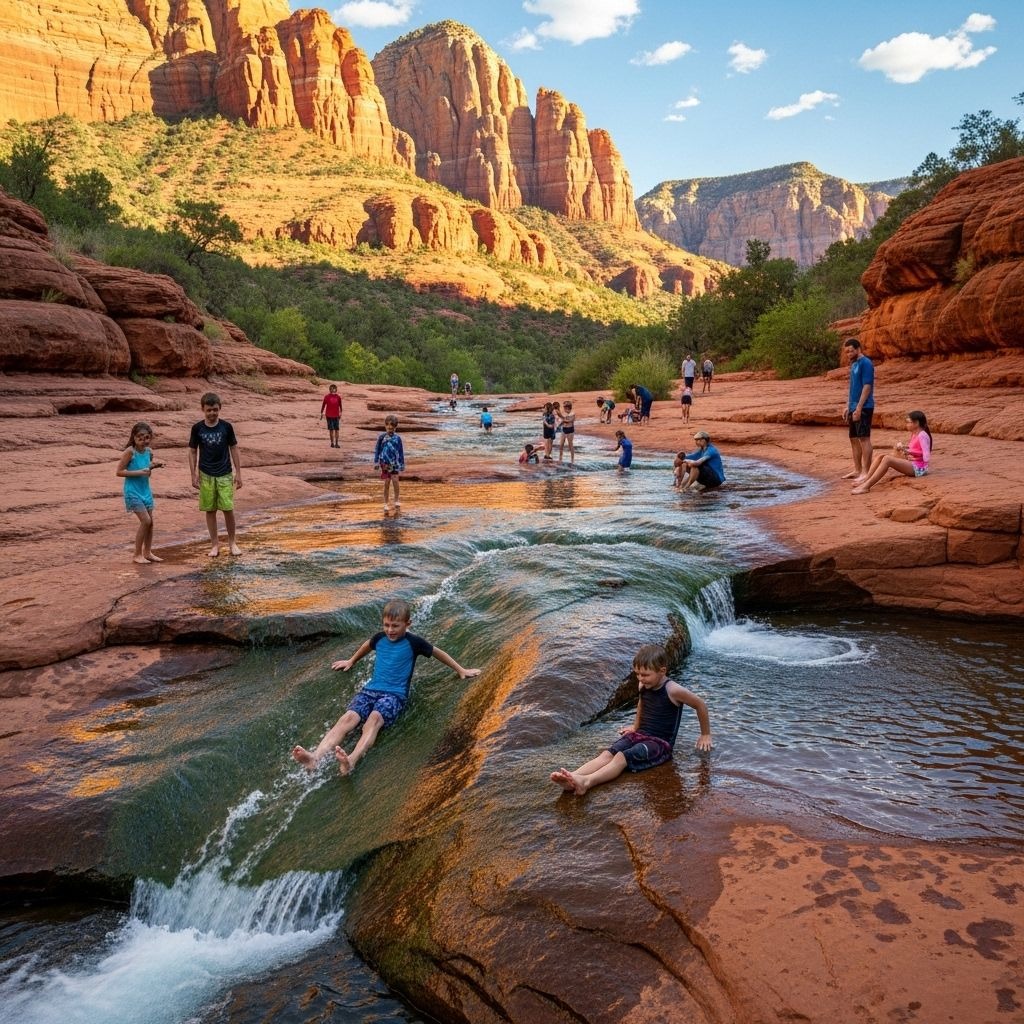
Less of a traditional hiking trail and more of a recreational area, Slide Rock State Park is famous for its natural water slide and swimming holes, fed by Oak Creek.
- Description: This historic apple orchard turned state park offers unique opportunities to play in the creek. While not a dramatic waterfall, you’ll find small cascades and a natural chute carved into the sandstone, perfect for sliding.
- Access: This is a popular fee area and can get extremely crowded, especially in warmer months. Plan to arrive very early to guarantee entry.
- Best Use: Ideal for families and anyone looking to cool off and have fun in the water. There are gentle walks along the creek, but serious hiking is limited.
- Tips: Bring water shoes with good grip. Be prepared for crowds, especially on summer weekends. Check the park’s website for current conditions and closures before you go.
C. Red Rock Crossing/Crescent Moon Ranch: Iconic Views & Water
For that quintessential Sedona postcard shot, this is your destination. While not a primary waterfall hike, it offers stunning views of Cathedral Rock framed by Oak Creek.
- Description: This easily accessible area provides flat, gentle walks along Oak Creek. After rains, the creek can flow swiftly, and you’ll find small, gentle trickles and cascades, perfect for peaceful contemplation or photography.
- Accessibility: It’s very easy to access, with ample parking (fee required via Red Rock Pass or day pass). It’s incredibly popular for photography, picnics, and wading.
- Best for: Easy strolls, iconic photo opportunities, and gentle creek access. Not for robust hiking or dramatic waterfalls.

D. Dry Creek Road Area (Various Trails): Seasonal Surprises
The network of trails off Dry Creek Road, while primarily known for accessing major red rock formations, can sometimes reveal seasonal water features.
- Description: Trails like the Devil’s Bridge approach or Boynton Canyon (less direct waterfall, but unique energy) might have dry washes that, after significant rainfall, turn into flowing creeks with small, temporary cascades.
- Key: These are highly unpredictable. You won’t find a consistent “waterfall” here. It’s more about the chance encounter with temporary beauty. Always research recent weather and trail conditions before heading out here specifically for water.
Essential Gear & Prep for Your Waterfall Sedona Hiking Adventure
Being prepared is non-negotiable for any hike in Sedona, especially when water is involved.
A. Footwear: Waterproof is Your Friend
For West Fork, waterproof hiking boots are highly recommended to keep your feet dry during creek crossings. Alternatively, water shoes with good traction (like Tevas or Chacos) are excellent if you plan to get wet. Always check that your footwear fits properly to avoid blisters; understanding how should hiking boots fit can save you discomfort.
B. Hydration: Carry More Water Than You Think
Even on shaded trails or cooler days, the Arizona climate demands serious hydration. Carry at least 2-3 liters of water per person for a longer hike.
C. Sun Protection: Non-Negotiable
A wide-brimmed hat, sunglasses, and high-SPF sunscreen are vital. The sun is intense, even in cooler months or cloudy days.
D. Layered Clothing: Be Ready for Anything
Temperatures in Sedona can fluctuate wildly, especially between sun and shade, or morning and afternoon. Dress in layers so you can easily adjust. For spring or fall, think breathable base layers and a light jacket. In summer, focus on moisture-wicking fabrics.
E. Navigation: Don’t Rely on Cell Service
Cell service can be spotty in the canyons. Carry a physical map, a compass, or download offline maps on a reliable GPS app. Knowing how to read a topographic map can be a lifesaver in unfamiliar terrain.
F. Trail Etiquette: Leave No Trace
Pack out everything you pack in. Stay on marked trails to protect fragile ecosystems. Do not disturb wildlife or natural features.
G. Permits/Fees: Know Before You Go
Many popular trailheads in Sedona require a Red Rock Pass. State Parks like Slide Rock also have entrance fees. Check the official Red Rock Pass website or specific park websites before you arrive.
Beyond Waterfalls: Other Sedona Hiking Experiences
While you’re seeking those elusive cascades, remember that Sedona offers an abundance of other world-class hiking experiences.

A. Iconic Red Rock Trails: The Main Event
- Devil’s Bridge: A famous natural arch, requires an early start due to crowds.
- Airport Mesa: Popular for sunset views and its vortex energy.
- Bell Rock & Courthouse Butte: Majestic formations with loops around them.
- Boynton Canyon: Another renowned vortex site, known for its unique energy.
B. Vortex Sites: Spiritual Exploration
Sedona is famous for its energy vortexes, sites believed to emit healing or inspiring energy. Many of these are accessible via hiking trails.
C. Other Water Activities: Kayaking, Fishing
Oak Creek itself offers opportunities beyond hiking. You can find spots for kayaking, trout fishing (with a valid Arizona fishing license), and simply wading in the cooler waters.
Responsible Hiking & Safety Tips
Your safety and the preservation of Sedona’s natural beauty are paramount.
A. Check Conditions: Flash Floods are Real
Always check current weather forecasts and trail conditions before heading out, especially during monsoon season. Flash floods can occur rapidly and turn a dry wash into a raging torrent. Never attempt to cross a flooded wash. The Arizona State Parks website is an excellent resource for up-to-date information on park and trail conditions: azstateparks.com.
B. Stay on Trail: Protect Fragile Ecosystems
Sedona’s red rocks and riparian areas are delicate. Stick to marked trails to prevent erosion and protect native plants and wildlife.
C. Tell Someone: Share Your Itinerary
Inform a trusted friend or family member of your hiking plan, including your chosen trail, expected return time, and who is with you.
D. Wildlife Awareness: Keep Your Distance
Sedona is home to various wildlife, including javelina, deer, coyotes, and snakes. Observe from a distance and never approach or feed animals.
FAQ: Your Sedona Waterfall Hiking Questions Answered
Q1: Are there any big waterfalls in Sedona?
A: No, Sedona is not known for large, perennial waterfalls like those found in other regions. Its “waterfalls” are primarily seasonal cascades and flowing creeks, especially after heavy rains or snowmelt.
Q2: What’s the best time of year to see water features?
A: The most consistent time is late winter through early spring (February-April) after snowmelt. The monsoon season (July-August) can also bring temporary flows, but be mindful of flash flood risks.
Q3: Do I need a Red Rock Pass for these hikes?
A: Yes, many popular trailheads in the Red Rock Secret Mountain Wilderness and certain state parks (like Slide Rock) require a Red Rock Pass or a daily fee. Purchase one beforehand or at designated kiosks.
Q4: Is West Fork Trail suitable for kids?
A: West Fork Trail is generally suitable for families, but consider the length (6.5 miles round trip) and the numerous creek crossings. Younger children might find the crossings challenging or cold. It’s a great option for adventurous kids and families.
Q5: Can I swim in these areas?
A: You can swim or wade in designated areas like Slide Rock State Park and other spots along Oak Creek. Always check for specific signage, water quality advisories, and be aware of currents, especially after heavy rains.
Conclusion: Sedona’s Watery Surprises Await
While Sedona’s red rock landscape is undeniably its star, the presence of seasonal water features adds another layer of magic to this incredible destination. From the winding beauty of West Fork to the playful splashes at Slide Rock, your quest for waterfall Sedona hiking will lead you to unexpected natural wonders.
Embrace the seasonal nature of these watery treasures, prepare wisely with your gear, and always prioritize safety. Don’t forget to pack plenty of hiking snacks to fuel your adventures. Whether you consider yourself a seasoned hiker or just enjoy a scenic stroll, the distinction between trekking vs hiking often blurs when you’re immersed in Sedona’s unique beauty. Go forth, explore, and let Sedona’s hidden cascades surprise and delight you!