

That flash of brilliant orange-red against a dark, powerful body – it’s hard to deny the immediate allure of the redtail catfish. You’ve seen them, perhaps as captivating juveniles in a local fish store or in stunning photos online, and the thought crosses your mind: “Could this magnificent creature grace my home aquarium?” It’s a tempting vision. But before you dive in, let’s talk about the reality behind this Amazonian wonder. The redtail catfish (Phractocephalus hemioliopterus) is more than just a pretty tail; it’s a serious commitment.
Are you truly prepared for what owning a redtail catfish entails? This isn’t just another fish; it’s a potential tank-busting behemoth that demands respect, resources, and a profound understanding of its needs. Let’s explore the world of the redtail catfish, so you can make an informed and responsible decision.
What is a Redtail Catfish? A Closer Look
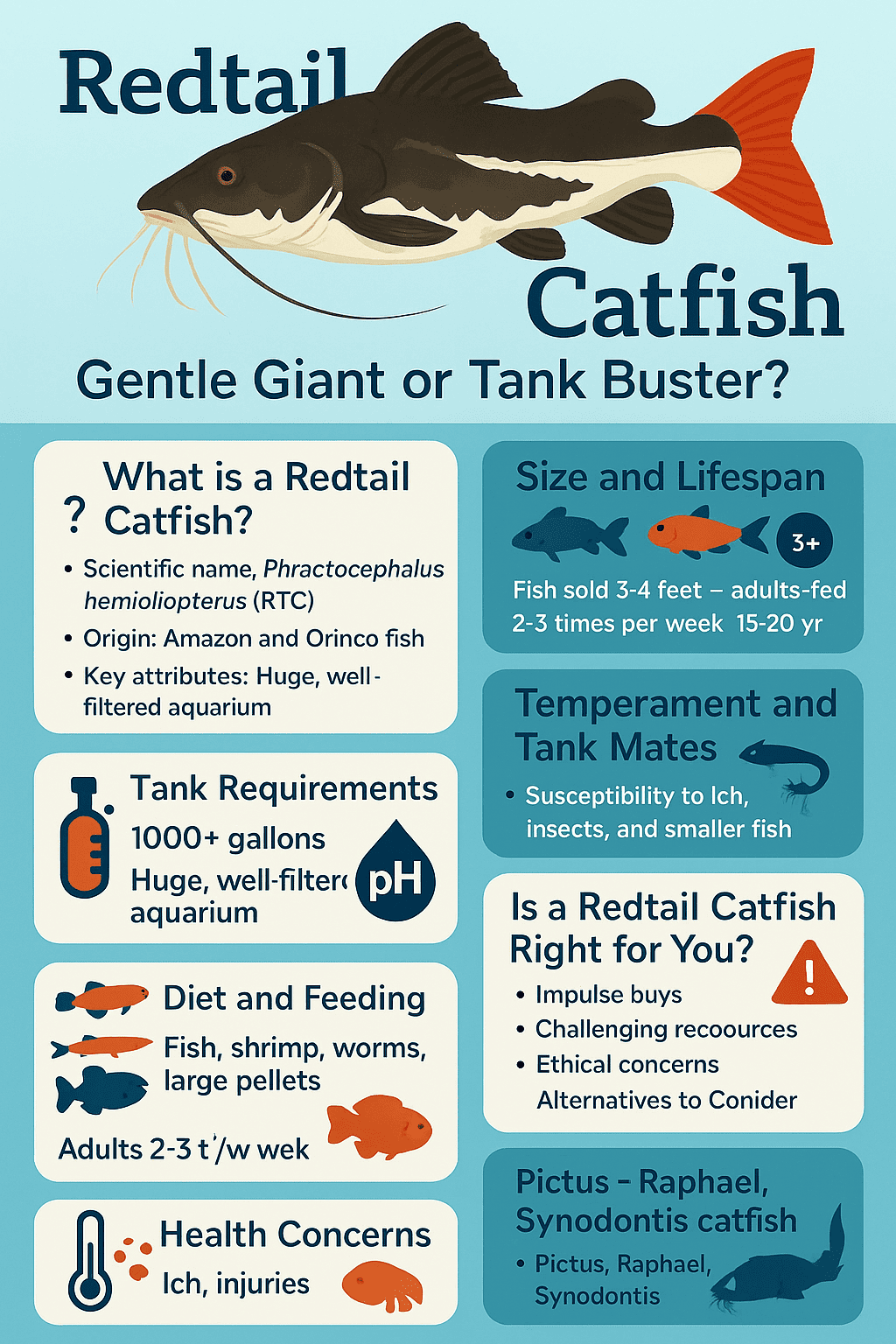
The redtail catfish, scientifically known as Phractocephalus hemioliopterus, is a large pimelodid catfish native to the vast freshwater systems of South America.
- Scientific Name: Phractocephalus hemioliopterus
- Common Names: Redtail Catfish (often abbreviated as RTC), South American Red-tailed Catfish, Banana Catfish.
- Origin and Natural Habitat: You’ll find these giants in the Amazon and Orinoco River basins, as well as other river systems in countries like Brazil, Venezuela, Peru, Ecuador, Colombia, and Bolivia. They prefer large rivers, streams, and lakes, often inhabiting deeper, slower-moving waters with soft, muddy bottoms. They are surprisingly adaptable, also found in flooded forests during the wet season.
- Appearance: Their look is unmistakable:
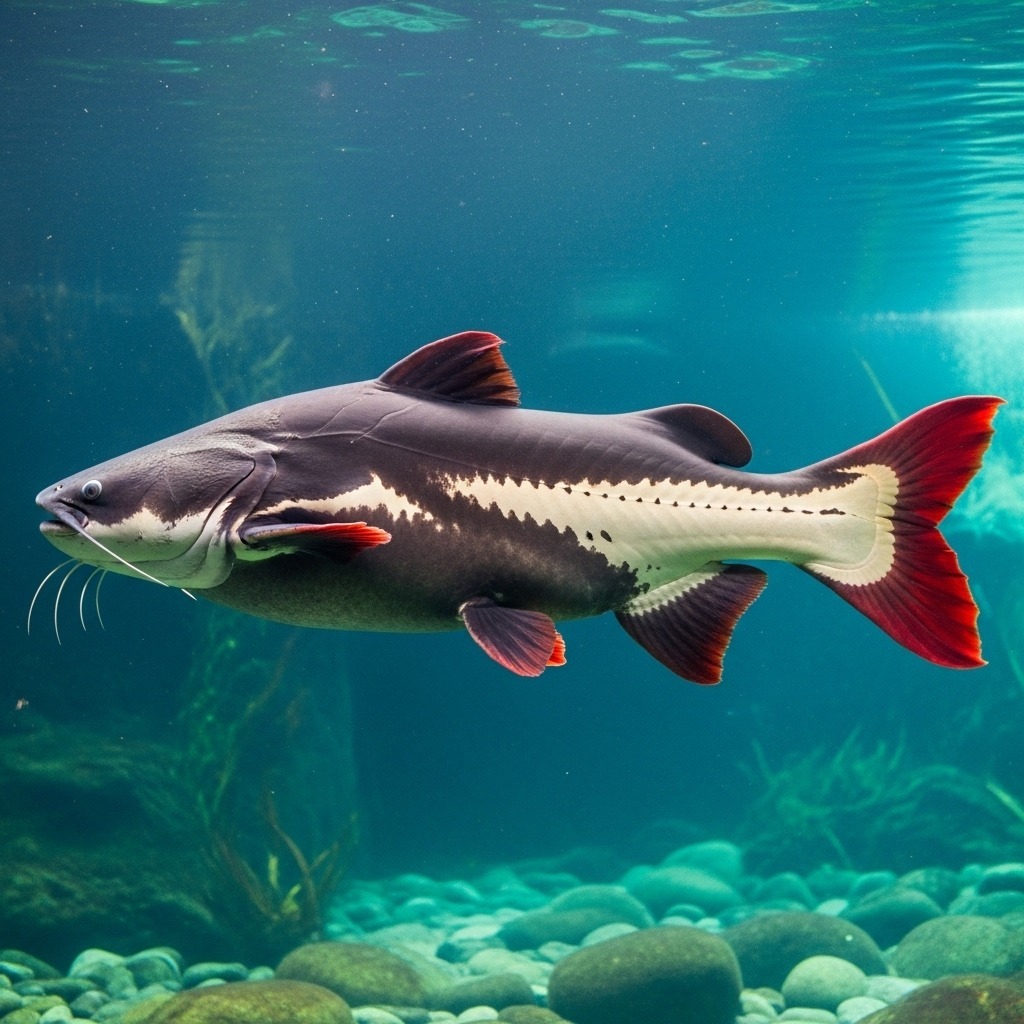
- A dark grey to black back and sides, often with scattered darker spots.
- A creamy white underbelly that extends from the snout to the start of the tail fin.
- The iconic, vividly colored caudal (tail) fin, ranging from orange to a deep red.
- A broad head with a very wide mouth, equipped with three pairs of sensitive barbels (whiskers) – two on the upper jaw and four on the lower – used to navigate and find food in murky waters.
- A robust, somewhat torpedo-shaped body.
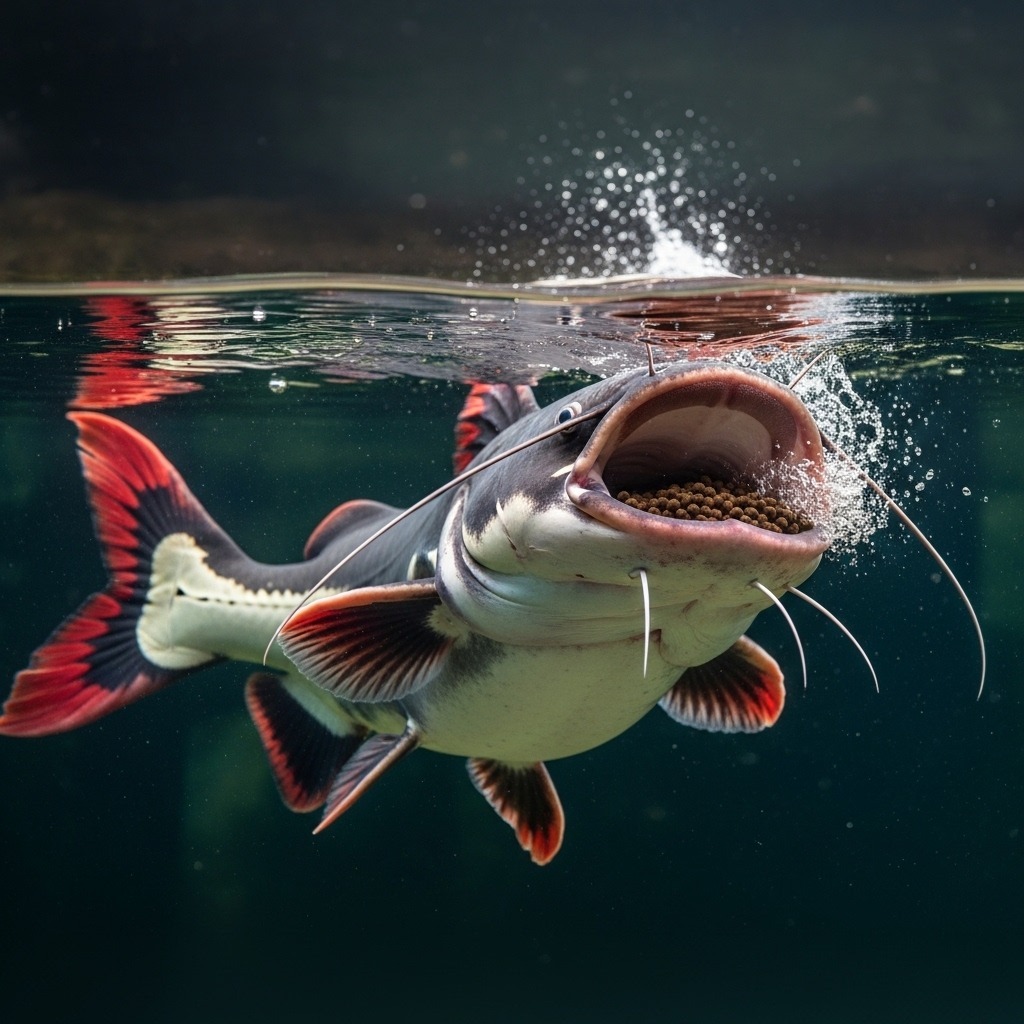
- Unique Characteristics: Beyond their striking colors, redtail catfish are known for their enormous mouths, which act like vacuum cleaners, allowing them to consume surprisingly large prey. They are also known to be quite intelligent and can even learn to recognize their owners.
The Elephant in the Room: Redtail Catfish Size and Lifespan
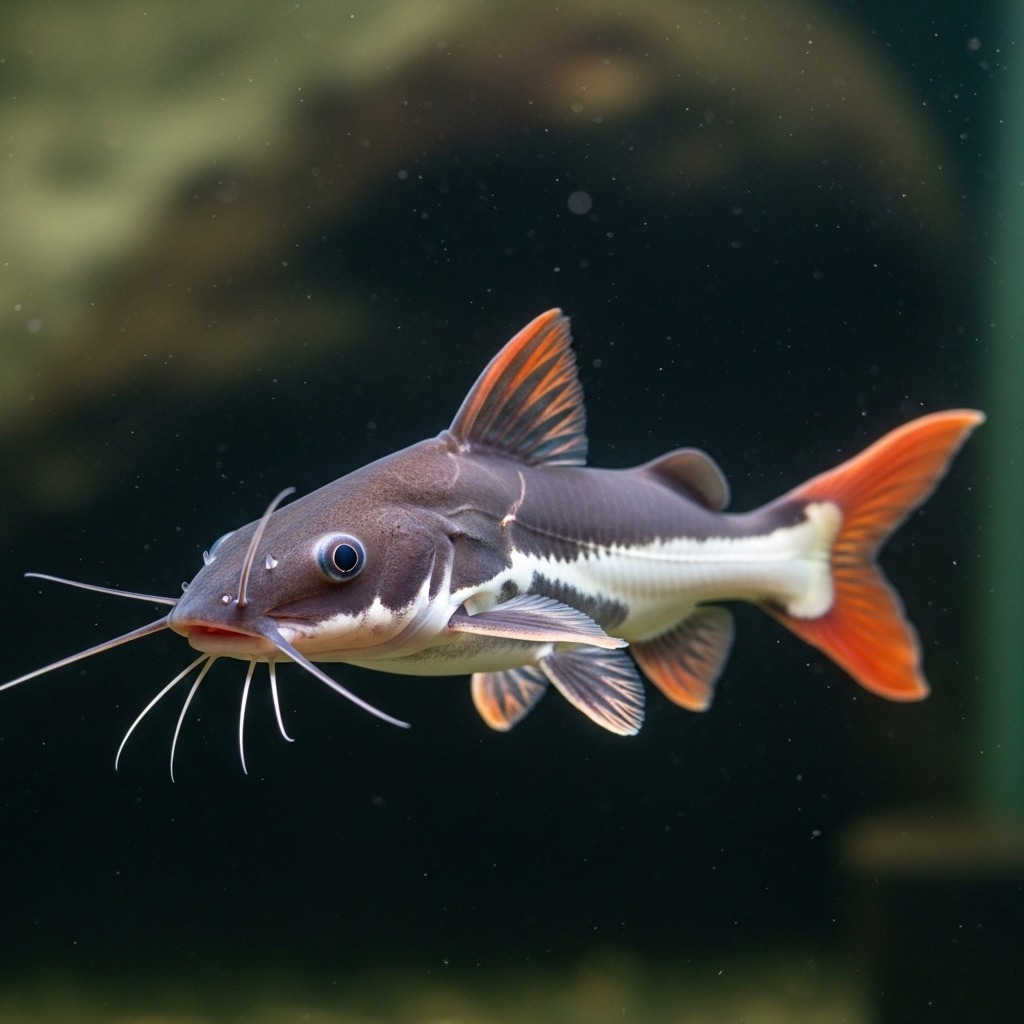
This is where many potential owners falter. That cute 3-inch juvenile redtail catfish you see in the store has an astonishing growth potential.
- Juvenile Size vs. Adult Size: They are typically sold at a manageable 3-6 inches. However, don’t let this fool you.
- Maximum Size in Captivity: In a suitable environment, redtail catfish can easily reach 3 to 4 feet (around 1 to 1.2 meters) in length, with some individuals reportedly exceeding 5 feet in massive enclosures or in the wild. Their size often makes them bigger than some types of fishing rods!
- Weight: Adult fish can weigh anywhere from 50 to over 100 pounds (22-45+ kg).
- Growth Rate: They grow incredibly fast, especially during their first year. A small juvenile can reach over a foot in length within months.
- Lifespan: With proper care, a redtail catfish can live for 15 to 20 years, and sometimes even longer. This is a long-term commitment, akin to owning a dog or cat, but with far more demanding spatial needs.
- The “Tank Buster” Label: This isn’t an exaggeration. They earn this title by quickly outgrowing virtually all standard home aquariums, often leading to heartbreaking decisions for unprepared owners.
Redtail Catfish Tank Requirements: A Herculean Task
Housing a redtail catfish is not for the faint of heart or the small-apartment dweller. Think big. No, think bigger.
A. Tank Size – The Biggest Hurdle
Forget your 55-gallon or even 100-gallon tank. These are laughably small for an adult redtail catfish.
- Minimum for Juveniles (and this is very temporary): A young RTC might start in a 75-100 gallon tank, but it will outgrow this rapidly.
- Minimum for Adults: Realistically, an adult redtail catfish requires a tank (or, more accurately, an indoor pond) of at least 1,000 to 2,000 gallons (3785 to 7570 liters). Some experts recommend even larger, upwards of 3,000 gallons for a truly thriving adult, especially if considering any tank mates. Public aquariums, like the renowned Georgia Aquarium, are often the only places equipped to house these giants properly.
- Dimensions Matter: It’s not just about volume. The tank needs to be wide enough for the fish to turn around comfortably (at least twice its adult length in width) and long enough for some swimming space (4-5 times its adult length).
B. Water Parameters
Maintaining pristine water quality in such a large system is a challenge.
- Temperature: 70-79°F (21-26°C).
- pH: 6.0-7.5. They are relatively adaptable but prefer slightly acidic to neutral water.
- Hardness: Soft to moderately hard (5-15 dGH).
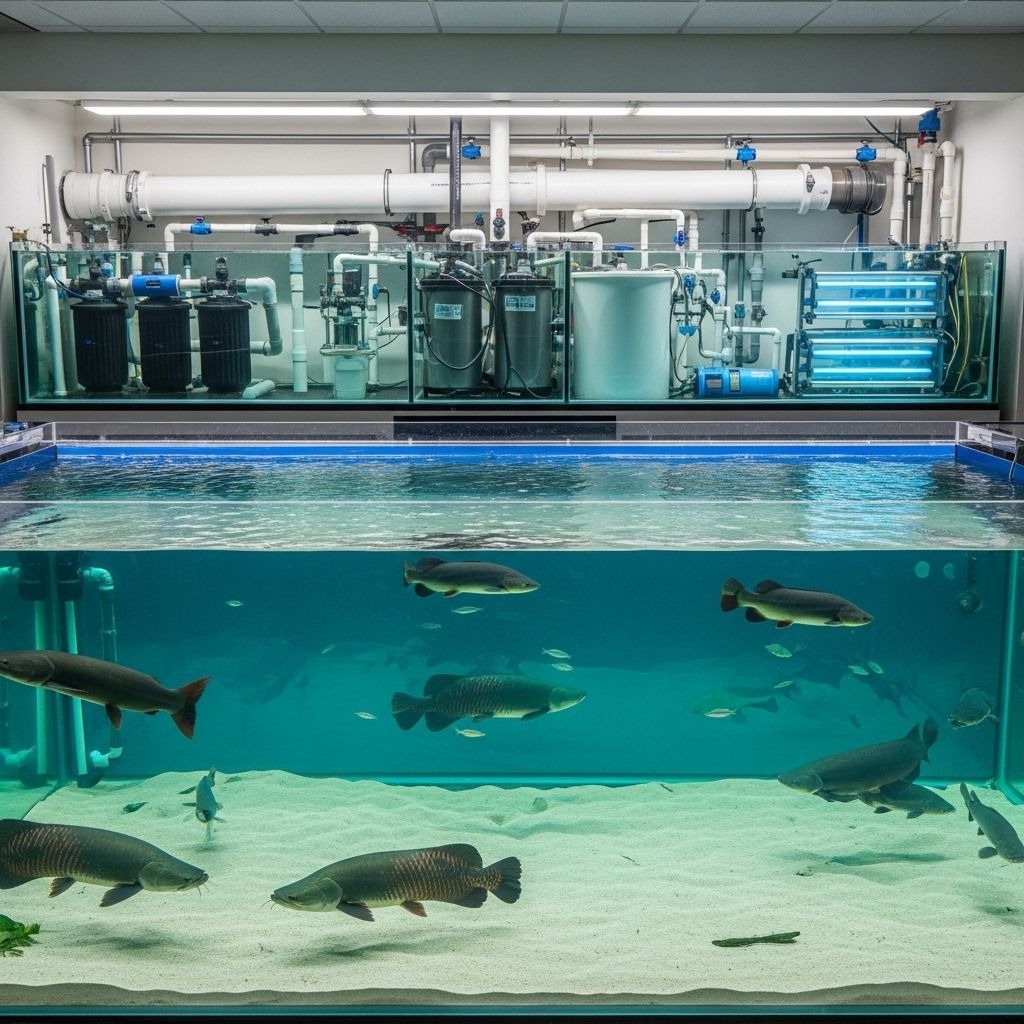
- Filtration: You’ll need an industrial-strength filtration system. Think multiple large canister filters, powerful sump systems, or even systems designed for koi ponds. The bioload of a redtail catfish is immense due to its size and carnivorous diet.
- Water Changes: Expect to perform frequent and large-volume water changes – potentially 25-50% weekly or bi-weekly, depending on your filtration and stocking density. This means dealing with hundreds of gallons of water regularly.
C. Tank Setup & Substrate
- Substrate: Fine sand or a bare bottom tank are the best options. Gravel can be ingested and cause impaction. A bare bottom is easiest to clean.
- Decor: Keep it minimal and robust. Large, smooth pieces of driftwood or very large, smooth rocks can provide some cover. Ensure nothing can be easily dislodged or swallowed. Avoid anything with sharp edges. Many keepers opt for no decor to maximize swimming space and ease of cleaning.
- Hiding Spots: While they become less shy as they grow, providing a large cave or overhang can help them feel secure, especially when younger. This structure must be extremely stable.
- Lid: Absolutely essential. A heavy, secure lid is a must. Redtail catfish are powerful and can jump or inadvertently knock equipment (like heaters or filter intakes) around.
Diet and Feeding: What Do Redtail Catfish Eat?
In their native Amazonian waters, redtail catfish are opportunistic predators and scavengers. Understanding their natural diet helps in providing appropriate food in captivity. It’s a world away from simply learning how to start fishing for smaller species; these are apex predators in their juvenile stages too.
- Natural Diet: Their diet in the wild includes fish, crustaceans (crabs, shrimp), insects, and even fallen fruits and nuts during certain times of the year.
- Captive Diet:
- Juveniles: Can be fed a variety of foods like high-quality sinking pellets or carnivore pellets, bloodworms, chopped earthworms, and small pieces of fish or shrimp.
- Adults: Their diet should consist mainly of whole foods. Good options include:
- Frozen-thawed fish (such as tilapia, smelt, pollock – avoid oily fish like goldfish or rosie reds as a staple).
- Large, high-quality carnivore pellets specifically designed for large predatory fish.
- Earthworms, nightcrawlers.
- Prawns, shrimp (with shells for roughage).
- Occasionally, other seafood like squid or mussels.
- Variety is key to ensure they receive a balanced range of nutrients.
- Feeding Frequency:
- Juveniles: Daily or every other day.
- Adults: 2-3 times per week is usually sufficient. They have slow metabolisms once mature.
- Important Considerations:
- Avoid Mammalian Meats: Do not feed fatty red meats (like beef heart) or poultry regularly, as these are difficult for fish to digest and can lead to health problems like fatty liver disease.
- No Live Feeders (Goldfish/Rosies): Avoid feeder goldfish or rosy red minnows. They offer poor nutrition and carry a high risk of introducing diseases and parasites. If you choose to feed live fish, quarantine them properly and ensure they are gut-loaded.
- They Eat Anything: Remember their wide mouth. They will attempt to eat anything that can fit, including smaller tank mates, heaters, sponges, and other equipment.
Temperament and Tank Mates: A Solitary Giant?
Despite their predatory nature, redtail catfish are not typically aggressive in the territorial sense, especially if well-fed and given enough space. However, their feeding response is indiscriminate.
- General Temperament: Often described as “gentle giants” by those who can house them. They can become quite interactive with their owners. Their primary “aggression” is predatory.
- The Golden Rule of Tank Mates: If another fish can fit into the redtail catfish’s mouth (or even looks like it might fit), it will eventually become food. There are countless stories of prized tank mates disappearing overnight.
- Suitable Tank Mates (for EXTREMELY large systems – think public aquarium size):
- Other very large, robust, and fast-moving fish that cannot be easily swallowed.
- Examples might include adult Pacu, other large catfish species (like adult Tiger Shovelnose Catfish – though this combination requires truly colossal tanks), large arowanas, or very large, deep-bodied cichlids like adult Oscars or Managuense.
- Even with these, success is not guaranteed, and individual temperaments vary.
- Unsuitable Tank Mates: Virtually any fish smaller than their head. This includes most community fish, smaller cichlids, and even medium-sized fish you might think are safe.
- Keeping Multiple Redtails: Generally not advised unless the tank is exceptionally large (many thousands of gallons). While not overly territorial, they can compete for food, and their combined bioload would be astronomical.
Redtail Catfish Health and Common Diseases
Redtail catfish are hardy fish, but they are susceptible to common freshwater fish diseases, especially if water quality is compromised or they are stressed.
- Common Issues:
- Ich (White Spot Disease): Especially when stressed or introduced to a tank with the parasite.
- Fungal and Bacterial Infections: Often secondary to injuries or poor water conditions.
- Ammonia/Nitrite Poisoning: A major risk in inadequately filtered or overstocked tanks due to their massive bioload.
- Fin Rot: Caused by poor water quality.
- Issues Related to Diet/Size:
- Bloat and Digestive Problems: From overfeeding, improper diet (e.g., fatty foods), or swallowing indigestible objects.
- Injuries: Can injure themselves on sharp decor or by thrashing if startled in a cramped space. Ensure all tank equipment is “RTC-proof.”
- Prevention is Key:
- Maintain impeccable water quality through massive filtration and regular water changes.
- Provide a spacious, stress-free environment.
- Feed a varied, high-quality diet.
- Quarantine any new additions (if you dare add any) to prevent disease introduction.
Breeding Redtail Catfish: Not a Home Aquarium Endeavor
If you’re dreaming of breeding redtail catfish in your home setup, it’s time for a reality check.
- Extremely Difficult in Captivity: Due to their immense size requirements and the specific environmental triggers needed for spawning, breeding redtail catfish is virtually impossible in a home aquarium.
- Commercial Breeding: They are bred commercially, primarily in Southeast Asia and Florida, for the aquarium trade. This is done in very large outdoor ponds, often using hormonal injections to induce spawning.
- Not a Realistic Goal: This is not a species you will accidentally find spawning in your tank.
The Ethical Dilemma: Responsible Redtail Catfish Ownership
Owning a redtail catfish comes with significant ethical responsibilities. This is where their captivating beauty meets the stark reality of their needs.
- The Impulse Buy: That small, charming juvenile in the pet store is incredibly deceptive. Many are purchased without full knowledge of their adult size and needs.
- Long-Term Commitment: Are you prepared for a 20-year commitment to a fish that will require a tank the size of a small car and a significant ongoing financial investment in food, electricity (for pumps and heaters), and maintenance?
- Rehoming Challenges: This is one of the biggest issues. When an RTC outgrows its tank (which it inevitably will in most home setups), finding a suitable new home is incredibly difficult. Public aquariums and zoos rarely have space for unwanted giants, and other hobbyists capable of housing them are few and far between. Many end up neglected in undersized tanks, suffering from stunted growth and poor health, or worse, euthanized.
- Illegal Release – A Definite NO: Never release a redtail catfish (or any non-native pet) into local waterways. They can become invasive, outcompeting native species for food and habitat, and potentially introducing diseases. This is environmentally devastating and illegal in most places. Understanding the harm of introducing non-native species is crucial, similar to grasping why is magnet fishing illegal in certain areas to protect ecosystems.
- An Honest Self-Assessment: Before buying, ask yourself:
- Can I genuinely provide a 1000+ gallon system?
- Can I afford the setup, food, and maintenance for 20 years?
- Am I prepared for the physical labor of maintaining such a large system?
- What is my plan if I can no longer care for it? (Knowing rehoming is near impossible).
Perhaps you’ve enjoyed bass fishing or other outdoor pursuits; the dedication and respect for nature learned there should extend to the creatures we consider keeping in captivity.
Alternatives to the Redtail Catfish
If reading this has made you realize a redtail catfish isn’t for you (and for 99.9% of hobbyists, it isn’t), but you still love the idea of a larger, interactive catfish, consider these more manageable (though still large) alternatives:
- Pictus Catfish (Pimelodus pictus): Active, silvery, spotted, grow to about 5-6 inches. Need a group and a spacious tank (55+ gallons).
- Striped Raphael Catfish (Platydoras armatulus): “Talking catfish,” interesting patterns, grow to about 7-8 inches. Nocturnal, need hiding places.
- Synodontis Catfish Species: Many varieties (like a Featherfin Syno or Upside-Down Catfish) with unique looks and behaviors, generally staying under 10 inches. Research specific species for needs.
- Bristlenose Pleco (Ancistrus sp.): Great algae eater, stays relatively small (4-6 inches), peaceful.
These options still require proper care and appropriately sized tanks, but their needs are far more attainable for the average dedicated aquarist.
Final Thoughts: The Redtail Catfish Verdict
The redtail catfish is, without a doubt, a magnificent and awe-inspiring creature. Its vibrant colors and commanding presence make it a highly desirable fish in the aquarium trade. However, its colossal adult size and demanding care requirements place it firmly in the “expert-only” category, and even then, only for experts with access to public aquarium-sized enclosures or custom-built indoor ponds.
This is not a fish for beginners, nor is it suitable for the vast majority of experienced home aquarists. Admire them in public aquariums, watch videos of them thriving in appropriate environments, but please, think very carefully – and then think again – before bringing a juvenile redtail catfish home. Your decision will impact many years of your life and the entire life of the fish. Responsible fishkeeping means making choices that ensure the well-being of the animals under our care, for their entire lifespan.
Frequently Asked Questions (FAQ) – Redtail Catfish
Q1: How big do redtail catfish get?
A: Redtail catfish can grow to an impressive 3-4+ feet (1-1.2+ meters) in captivity, and sometimes even larger, weighing over 100 pounds.
Q2: What is the minimum tank size for a redtail catfish?
A: For a fully grown adult redtail catfish, the absolute minimum is 1,000-2,000 gallons, with larger being much better. Standard home aquariums are not suitable.
Q3: Are redtail catfish aggressive?
A: They are not typically aggressive in terms of territoriality towards fish they cannot eat. However, they are opportunistic predators and will eat any fish, crustacean, or invertebrate that can fit into their very large mouths.
Q4: Can redtail catfish live with other fish?
A: Only in exceptionally large tanks (thousands of gallons) and only with other very large, robust fish that cannot be swallowed. Even then, it’s a risk.
Q5: What do you feed a redtail catfish?
A: A varied diet of high-quality large carnivore pellets, frozen-thawed whole fish (like tilapia or smelt), earthworms, prawns, and other seafood. Avoid fatty mammalian meats and live feeder goldfish.
Q6: How long do redtail catfish live?
A: They have a long lifespan of 15-20 years, or even more, with proper care.
Q7: Why can’t I release my redtail catfish into the wild?
A: Releasing a non-native species like the redtail catfish into local waterways is illegal and ecologically harmful. They can outcompete native species, disrupt the ecosystem, and introduce diseases, causing significant damage to local wildlife populations.