
Last year, I moved into a studio apartment with exactly one small window and a balcony barely big enough to turn around on. As someone who’d always gardened, the thought of giving up my green space felt devastating. But here’s what I discovered: you don’t need acres or even a yard to grow a thriving garden. You just need creativity, the right approach, and a willingness to think vertically instead of horizontally.
My first mini garden was a disaster. I crammed random pots onto my tiny balcony, picked plants I liked without considering their needs, and wondered why nothing thrived. Everything changed when I stopped trying to replicate a traditional garden and started designing specifically for small spaces. Now, my 30-square-foot balcony produces more herbs, vegetables, and flowers than I can use, and my windowsills overflow with thriving plants.
If you’re stuck in a small apartment, have a tiny balcony, or just want to maximize limited outdoor space, a mini garden for small spaces can completely transform how you experience your home. Let me show you exactly how to do it right, avoiding all the mistakes I made along the way.
Why I Started a Mini Garden (And Why You Should Too)
Creating a mini garden in my cramped apartment wasn’t just about aesthetics or having fresh herbs—it fundamentally changed my daily life and mental health.
Mental health benefits are real. Having living plants around me reduced my stress levels noticeably. Coming home to greenery after a long commute felt like stepping into a sanctuary. Research consistently shows that interacting with plants reduces cortisol levels and improves mood. On particularly stressful days, I’d spend 15 minutes watering and tending my mini garden, and it worked better than scrolling through social media to decompress.
Fresh herbs and vegetables year-round became my reality, even in a tiny space. No more buying expensive basil that wilted in two days or paying premium prices for organic lettuce. I harvest fresh ingredients daily, and the taste difference between homegrown and store-bought is staggering. My cherry tomatoes actually taste like tomatoes, not bland, watery spheres.
Cost savings add up faster than you’d think. My initial investment was about $150 for containers, soil, and seeds. Within three months, I’d recouped that in grocery savings from herbs alone. Fresh basil costs $3-4 at the grocery store and lasts maybe a week. My three basil plants in decorative ceramic plant pots produce continuously all summer for pennies.
Beyond practical benefits, a mini garden connects you to natural cycles and seasons even in urban environments. Watching seeds germinate, plants grow, and producing your first harvest creates a sense of accomplishment that’s hard to replicate elsewhere. It’s tangible progress you can see, smell, taste, and share.
The transformation isn’t just about the plants themselves—it’s about reclaiming your space and making it truly yours. Every morning when I step onto my balcony with coffee in hand, surrounded by thriving plants I’ve nurtured, I feel grounded and connected to something bigger than my daily routine.
Understanding Your Space: The First Step I Wish I’d Taken
My biggest initial mistake was jumping straight into buying plants without understanding my space. I wasted money on sun-loving vegetables that languished in shade and purchased plants too large for my available area.
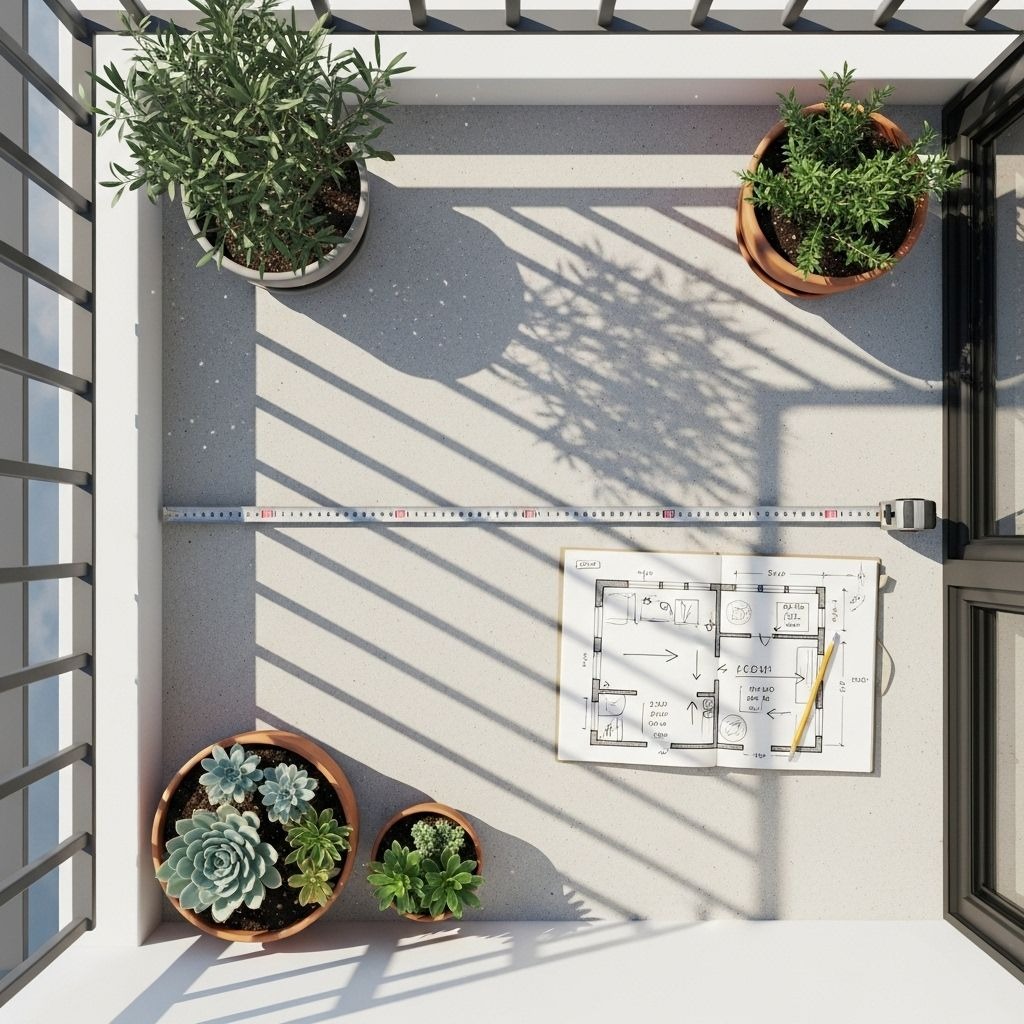
Measure your available space accurately. Get out a tape measure and document exactly what you’re working with. How much floor space do you have on your balcony or patio? What’s the vertical height available? Are there railings you can utilize? I drew a simple diagram of my balcony with measurements, which helped me plan container placement strategically. Don’t eyeball it—actual measurements prevent overbuying and help you maximize every square inch.
Assess sunlight patterns over several days. Light is the most critical factor for plant success. Spend a week observing how sunlight moves across your space. Note which areas get morning sun, afternoon sun, and how many total hours of direct light each spot receives. I discovered one corner of my balcony got 8 hours of sun (perfect for tomatoes), while another got only 3 hours (ideal for lettuce and herbs). Use a soil pH/moisture meter with a light sensor to get exact readings if you want precision.
Identify microclimates within your small space. Even tiny areas have variations. One side of my balcony is protected from wind by the building and stays warmer. The other side gets afternoon wind that dries out containers faster. Near the wall retains more heat than the open railing edge. Understanding these microclimates lets you match plants to optimal conditions.
Consider heat reflection too. My balcony has white walls that reflect intense light and heat—great for some plants, overwhelming for others. Dark surfaces absorb and radiate heat. Windows create greenhouse effects. All these factors influence what thrives where.
Take photos at different times of day to track sun movement. I created a simple spreadsheet noting morning, midday, and afternoon sun patterns for different zones of my balcony. This planning phase felt tedious at the time, but it saved me hundreds of dollars in plant purchases that wouldn’t have survived in the wrong locations.
Vertical Gardening: The Game-Changer for Tiny Spaces
If I could give you one piece of advice for mini gardens, it’s this: think vertically. The moment I started growing up instead of out, my productive space tripled overnight.
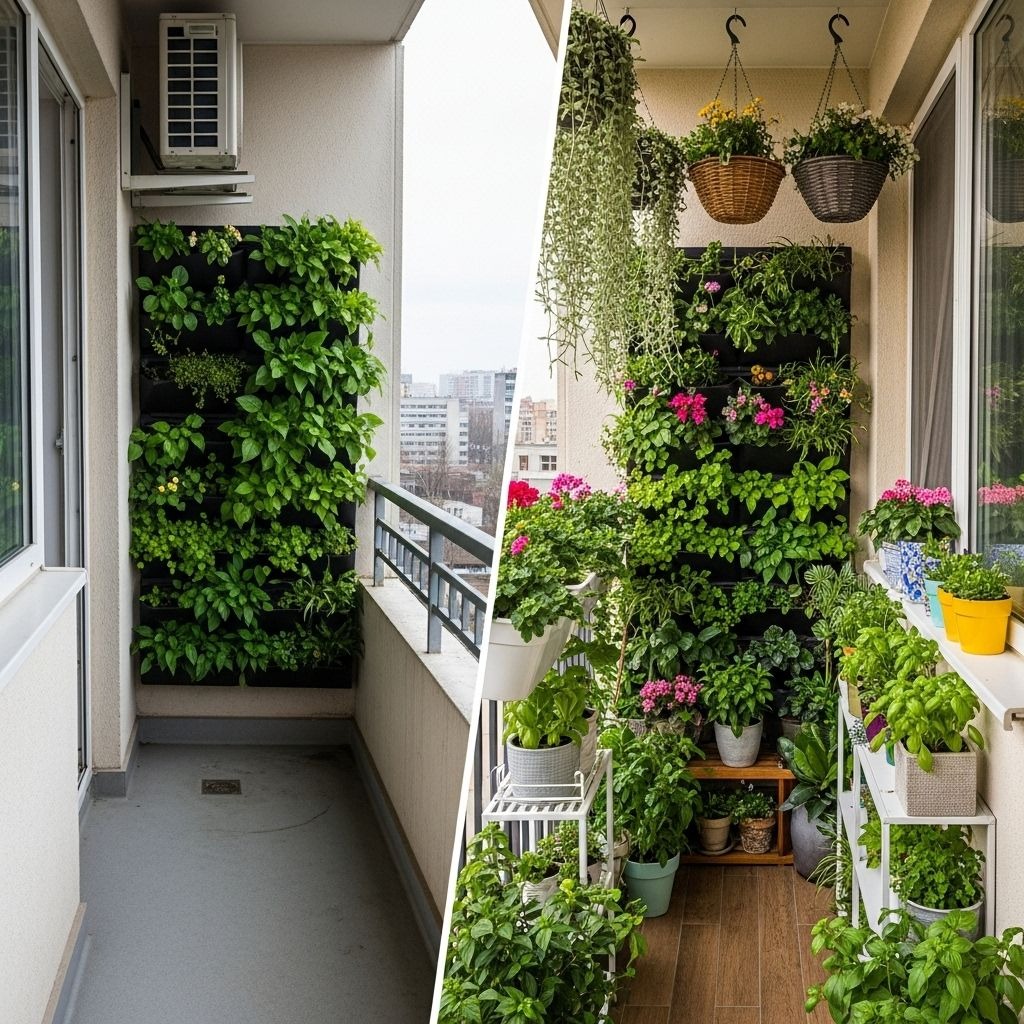
Wall-mounted planters and living walls transform empty vertical surfaces into productive gardens. I installed a modular wall planter system on my balcony wall that holds 12 pockets for herbs and greens. It uses zero floor space and produces constantly. You can create your own living wall with hanging plant baskets mounted on hooks, pocket-style fabric planters, or wooden pallets with attached containers.
Living walls work beautifully indoors too. I mounted a vertical garden in my kitchen using magnetic planters on a metal sheet. Fresh herbs literally within arm’s reach while cooking changed my culinary game completely. The key is ensuring adequate drainage—each planter needs holes and a drip tray system to prevent water damage.
Trellises for climbing plants maximize vertical space dramatically. Beans, peas, cucumbers, and tomatoes all grow vertically with proper support. I use a simple bamboo trellis secured to my balcony railing, and my cucumber plants climb 6 feet high, producing abundantly in less than 2 square feet of floor space. Install plant stakes or wire trellises for support structures.
Flowering vines like morning glories or climbing nasturtiums create privacy screens while producing beautiful blooms. I trained ivy along fishing line suspended from my balcony ceiling to create a living curtain—it’s gorgeous and blocks my view of the parking lot below.
Stacking and tiered systems create multiple growing levels in minimal footprint. I built a three-tier plant stand from repurposed wood that holds nine containers in the space previously occupied by three. You can purchase ready-made indoor plant stands or create DIY versions from shelving, crates, or ladders. Each level should get adequate light, so use taller plants at the back and shorter ones in front.
Hanging baskets from ceiling hooks or shepherd’s hooks add another growing layer at eye level and above. I grow trailing cherry tomatoes, strawberries, and cascading flowers in hanging arrangements. They’re easier to harvest than ground-level plants and don’t take up precious floor real estate. Just remember hanging containers dry out faster and need daily watering checks.
The vertical approach isn’t just practical—it creates visual interest and makes your small space feel like a lush garden oasis rather than a few scattered pots.
Container Gardens That Actually Work
Container selection makes or breaks mini gardens in small spaces. After killing multiple plants through poor container choices, I learned what actually matters.
Choose the right container sizes for your plants’ root systems. Herbs need minimum 6-8 inch pots with at least one gallon of soil. Lettuce and greens do well in shallow, wide containers (8-10 inches wide, 6 inches deep). Tomatoes and peppers absolutely require 5-gallon minimum, though 7-10 gallons produces better. I use grow bags for larger vegetables because they’re lightweight, portable, and promote healthy root growth through air pruning.
For truly tiny spaces, consider specialized compact containers. Balcony railing planters attach directly to railings and use zero floor space. Window boxes extend your growing area outward. Hanging planters utilize vertical space. Self-watering planters reduce maintenance time significantly—crucial when you have limited space and a busy schedule.
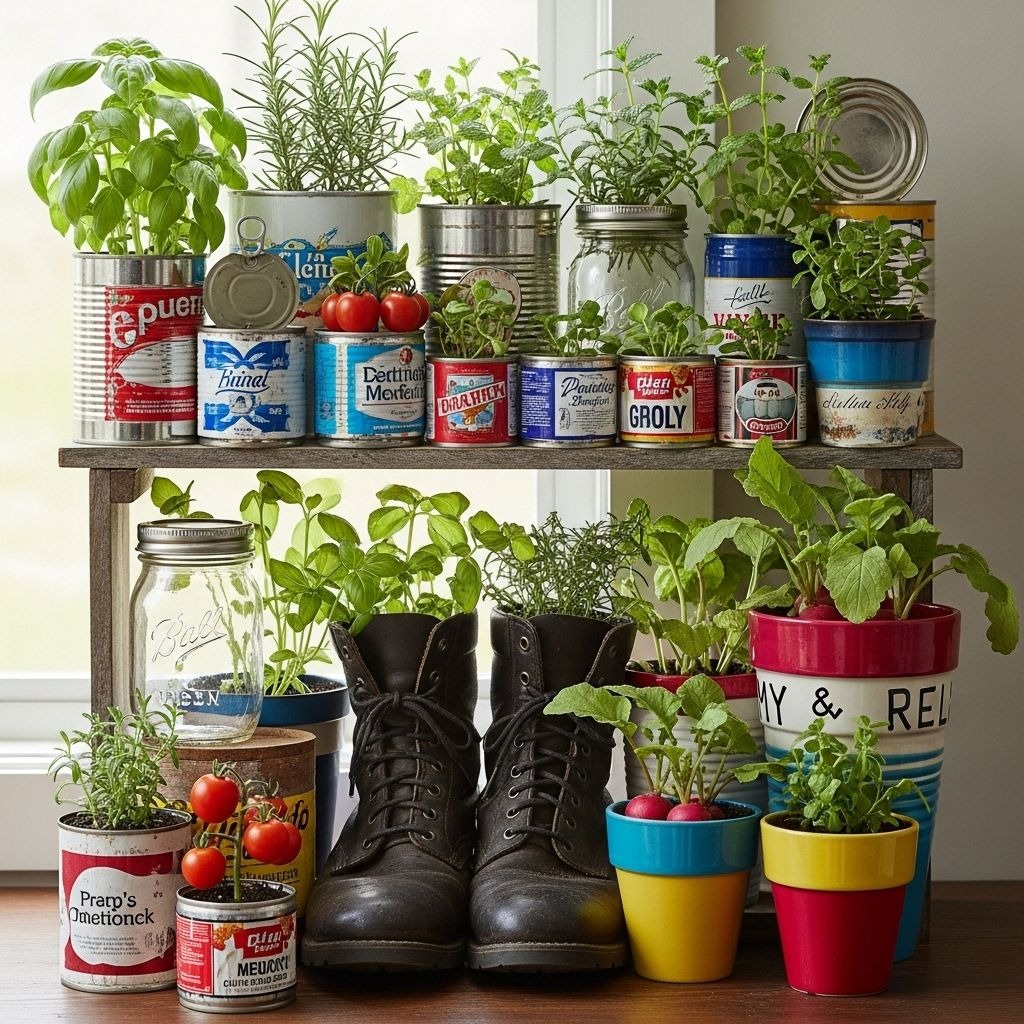
Creative upcycling ideas save money and add personality. I’ve successfully grown herbs in repurposed tin cans (with drainage holes punched), old colanders, wooden crates lined with landscape fabric, and even retired cookware. My favorite container is an old metal watering can with herbs cascading from the spout—functional and adorable. Just ensure whatever you use has drainage holes and is large enough for root systems.
Mason jars work beautifully for windowsill herb gardens. I mounted several on a wooden board with hose clamps, creating an instant vertical herb wall in my kitchen window. Compact enough for the tiniest spaces and incredibly productive.
Self-watering systems changed my life when I traveled frequently. Traditional containers need daily watering in summer heat—not feasible if you’re gone for days. Self-watering containers have reservoirs that provide steady moisture for 5-7 days. I also use DIY olla pots (unglazed terracotta vessels buried in soil that release water slowly) and drip irrigation timers connected to my outdoor hose.
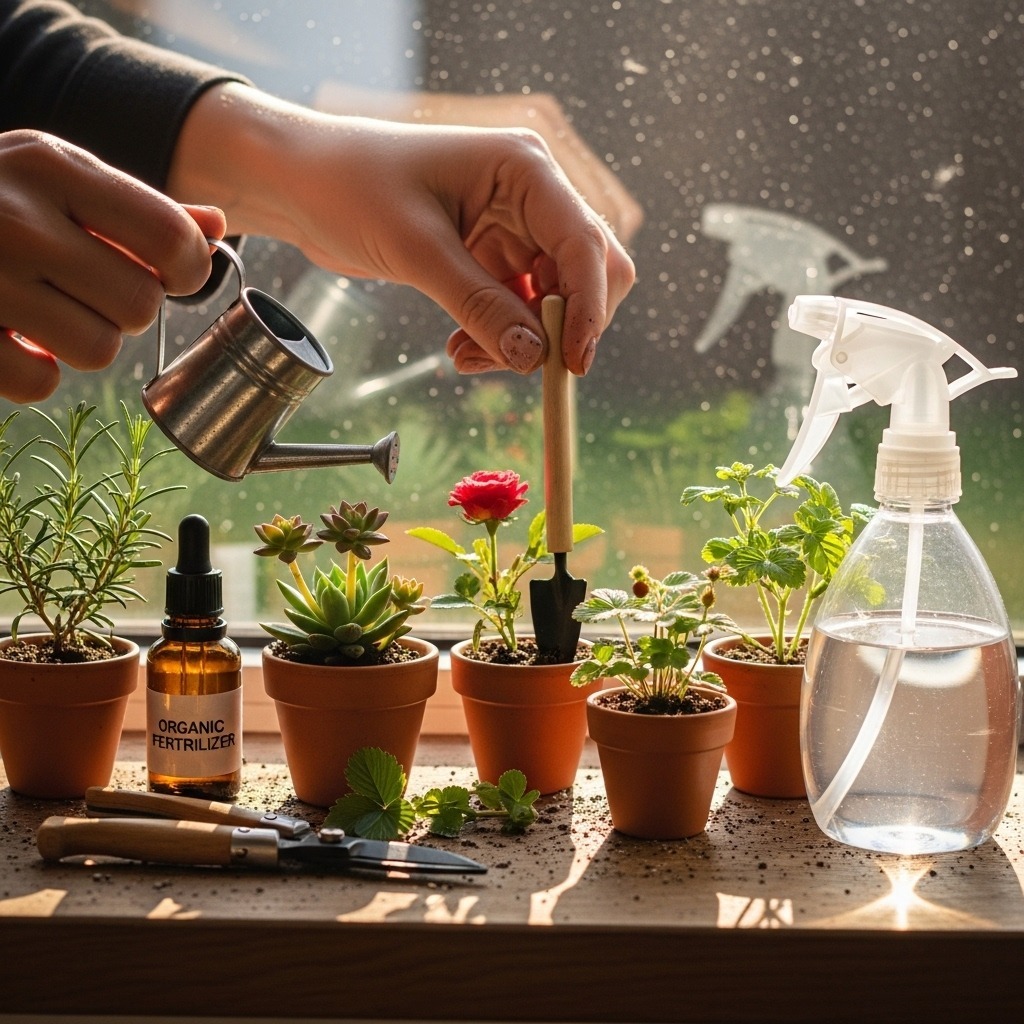
For indoor mini gardens, watering spray misters work great for herbs and small plants. I also use wine bottle stakes—you fill a wine bottle with water, insert it into a ceramic stake, and it slowly releases moisture for days.
Best Plants for Mini Gardens
Plant selection determines success in small spaces. You can’t grow sprawling pumpkin vines in a studio apartment, but you can grow an amazing variety when you choose appropriately.
Compact vegetables perfect for mini gardens:
Cherry tomatoes lead the pack for small space gardening. Varieties like ‘Tiny Tim,’ ‘Tumbling Tom,’ and ‘Window Box Roma’ stay compact and produce heavily. Determinate varieties stop growing at a set height, making them ideal for limited spaces. I’ve harvested over 50 tomatoes from a single plant in a 7-gallon container on my balcony.
Lettuce and salad greens are my absolute favorite for mini gardens. Harvest in 30 days, grow in shallow containers, succession plant every two weeks for continuous production. Varieties like ‘Tom Thumb’ butterhead stay especially compact. I keep four lettuce containers in rotation, providing fresh salads all season without ever buying grocery store lettuce.
Peppers thrive in containers of all types. Compact options like ‘Lunchbox’ mini sweet peppers or ornamental hot peppers stay under 2 feet tall and produce abundantly. Even full-size bell peppers work well in 5-gallon containers.
Radishes are ready in just 25 days, need minimal space, and you can grow them in any spare pot corner. Perfect for impatient gardeners or kids who want quick results.
Bush beans stay compact at 18 inches and don’t need trellising unlike pole bean varieties. ‘Provider’ and ‘Blue Lake Bush’ are reliable producers that work perfectly in medium-sized containers.
Spinach and chard are cut-and-come-again crops that produce for months in compact spaces. Rainbow chard adds gorgeous color while providing nutritious greens continuously.
Cucumbers in compact varieties like ‘Bush Champion’ and ‘Spacemaster’ stay manageable in large pots or can even trail from hanging plant baskets.
Herbs that thrive in small spaces:
Herbs are mini garden champions. They’re compact, productive, forgiving, and incredibly useful. I keep at least 8 herb varieties growing year-round between my balcony and indoor windowsills.
Basil, parsley, cilantro, thyme, oregano, chives, mint (in its own container—it spreads aggressively), rosemary, and sage all excel in containers. Most herbs prefer slightly drier conditions than vegetables, making them ideal for occasional forgetful watering. A single basil plant produces enough for multiple batches of pesto throughout summer.
Dwarf fruit varieties worth growing:
You can actually grow fruit in small spaces with dwarf cultivars. Dwarf citrus trees (lemons, limes, kumquats) thrive in large containers and produce real fruit. Strawberries grow beautifully in hanging baskets or vertical towers. Blueberries have compact dwarf varieties perfect for patio containers.
I grow alpine strawberries in a hanging basket—they produce tiny, intensely flavored berries continuously from spring through fall. Way better than store-bought and incredibly space-efficient.
Low-maintenance ornamentals for decoration:
Not everything needs to be edible. Mix in flowers and foliage for beauty and pollinator support. Marigolds, petunias, pansies, succulents, trailing ivy, ferns, and ornamental grasses all work beautifully in mini gardens. They add color, attract beneficial insects, and many require less care than vegetables.
Similar to maintaining your mini garden while traveling, learning camping for beginners helps you appreciate growing your own food for outdoor adventures. Fresh herbs from your mini garden make excellent additions to camping breakfast ideas.
Balcony and Patio Mini Gardens
Balconies and patios offer the most flexibility for mini gardens since you have outdoor light and space, even if limited.
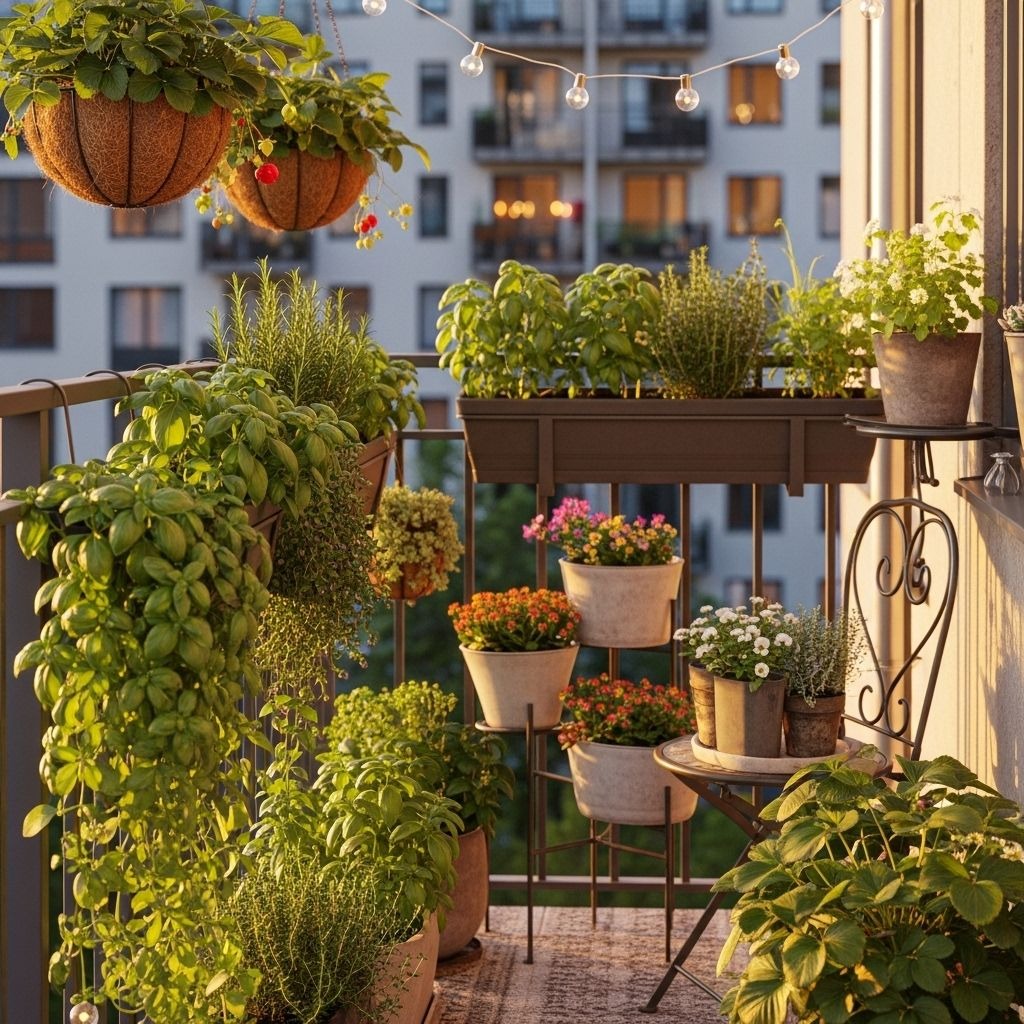
Railing planters maximize space without sacrificing floor area. These specialized containers attach directly to balcony railings, utilizing otherwise wasted space. I have six railing planters producing herbs and lettuce continuously. They come in various sizes and styles, from simple plastic boxes to decorative metal designs. Balcony railing planters typically hold 1-2 gallons of soil—perfect for herbs, greens, and compact flowers.
Pro tip: Position railing planters on the outside of your railing (if safe and allowed) to maximize interior balcony floor space. Just ensure they’re securely attached with brackets designed to handle weight when soil is wet.
Hanging baskets add vertical growing space at eye level and overhead. I have shepherd’s hooks positioned in my balcony corners supporting hanging baskets of cherry tomatoes, strawberries, and trailing petunias. Use hanging-plant hooks rated for outdoor use and ensure they’re securely mounted to handle wet soil weight.
Choose trailing and cascading plant varieties for hanging baskets—they look better and produce more in elevated positions. ‘Tumbling Tom’ tomatoes, trailing strawberries, cascading petunias, and trailing nasturtiums all excel.
Floor space optimization requires strategic planning. Measure your balcony and sketch a layout before purchasing containers. Group plants with similar water needs together. Use corners and edges first, keeping the center open for access. Place taller plants against walls or railings where they won’t block light from shorter plants.
I use indoor plant stands to create levels—larger pots on the floor, medium pots on low stands, small pots on higher stands. This creates a tiered effect that maximizes space and looks beautiful.
Consider wheeled plant caddies for larger containers. Being able to easily move heavy pots lets you adjust positioning based on changing sunlight patterns, weather conditions, or when you need to clean your balcony. I also use them to quickly move frost-sensitive plants inside during unexpected cold snaps.
Add solar decorative lights to your balcony mini garden to enjoy it during evening hours. String lights create ambiance and make your tiny space feel like an outdoor room rather than just a plant storage area.
Indoor Mini Garden Solutions
Indoor mini gardens let you grow year-round regardless of outdoor space limitations or weather conditions.
Windowsill gardens are the simplest indoor growing solution. South-facing windows provide the most light for vegetables and herbs. East and west windows work for many herbs. North windows have limited direct light—stick to low-light plants like ferns and pothos.
I keep mason jar herb gardens on my kitchen windowsill—basil, parsley, and chives that I harvest daily for cooking. Use shallow containers that fit your windowsill dimensions. Self-watering planters prevent overwatering issues that plague many indoor plants.
For windows without adequate natural light, supplement with indoor-plant LED grow lights. I run grow lights on timers 12-14 hours daily, and my indoor herbs produce just as well as outdoor ones. Modern LED grow lights are energy-efficient, run cool, and don’t look industrial—many have attractive designs suitable for living spaces.
Kitchen herb stations keep fresh herbs within arm’s reach while cooking. I mounted a small shelf next to my stove with three pots of herbs I use constantly—basil, cilantro, and parsley. Game-changing for weeknight cooking. You can also use countertop plant propagation stations that look decorative while growing herbs in water.
Wall-mounted magnetic planters work brilliantly in kitchens. I attached a metal sheet to my wall and use magnetic pots to grow 6 different herbs vertically. Easy to rearrange, looks modern, and incredibly space-efficient.
Bedroom hanging gardens create peaceful, oxygen-producing environments. Trailing plants in hanging planters near windows or from ceiling hooks add life to bedrooms without taking up floor or surface space. Pothos, philodendrons, string of pearls, and ivy all thrive indoors with minimal care.
I created a bedroom hanging garden inspired by the Hanging Gardens of Babylon (on a much, much smaller scale). I suspended macramé plant hangers at varying heights in my bedroom window, filled them with trailing plants, and it’s become my favorite room feature. The plants improve air quality and create a calming atmosphere.
For serious indoor growing, consider grow tents if you have closet space or a spare corner. These self-contained growing environments let you control light, humidity, and temperature. I use a small grow tent for starting seeds and growing lettuce year-round. Pair with hydroponic nutrient solutions for soil-free growing.
Mini Greenhouse Options
Mini greenhouses extend growing seasons and protect delicate plants, even in small spaces.
DIY mini greenhouse ideas range from incredibly simple to moderately complex. The easiest version? Repurpose clear plastic storage bins as mini greenhouses by drilling ventilation holes in the top. I start all my spring seedlings this way—the clear lid creates a humid microclimate perfect for germination.
Another simple option: recycled windows over a wooden frame. I found old windows at a salvage store and built a 2×3 foot mini greenhouse for my balcony that protects early spring lettuce from frost. It’s portable enough to move when not needed.
Portable cold frames provide frost protection and season extension without permanent installation. I use a small cold frame on my balcony from February through April to grow cold-hardy greens weeks before outdoor planting. When temperatures warm, I store it in my closet until fall. Mini greenhouses with zippered covers work beautifully for balcony growing.
Season extension techniques matter for mini gardens since you want maximum productivity from limited space. Starting seeds indoors under grow lights gives 6-8 week head starts. Using seed starter kits ensures high germination rates. Protect plants with row covers during temperature swings. Bring tender container plants indoors during cold snaps.
I extend my growing season by 3-4 months using season extension techniques. I harvest lettuce from March through November despite living in a cold climate—that’s fresh salads for 8+ months from my tiny balcony.
Maximizing Production in Tiny Spaces
Getting serious production from mini gardens requires strategic techniques beyond basic care.
Succession planting means planting small amounts every 2-3 weeks rather than everything at once. I plant 4-6 lettuce seeds every two weeks all season long, ensuring continuous harvests rather than a one-time glut. This works for radishes, spinach, beans, and herbs too. You’ll always have something ready to harvest rather than feast-or-famine production.
Companion planting maximizes space by growing complementary plants together. I grow basil with tomatoes (pest control plus space efficiency), lettuce under taller plants (shade tolerance), and radishes between slower-growing vegetables (harvest before they need space). This polyculture approach mimics natural ecosystems and produces more food per square foot.
Intercropping fast and slow growers uses space efficiently. Plant quick-maturing radishes or lettuce between tomato seedlings. You’ll harvest the quick crops before tomatoes need the space. By the time your tomatoes get bushy, your spring lettuce is long gone.
Intensive spacing in containers allows closer plant spacing than traditional in-ground gardens since you control soil quality. I grow lettuce on 4-inch centers instead of recommended 6-8 inches because containers have richer soil and consistent care. More plants equal more harvest from the same footprint.
Vertical training keeps plants compact and increases yields. I prune tomatoes to single or double stems, training them vertically on stakes. This focuses energy into fruit production rather than excess foliage and keeps plants manageable in small spaces.
Making Your Mini Garden Beautiful
Functionality matters, but so does aesthetics—especially when your mini garden is in your living space.
Choose cohesive decorative ceramic plant pots that complement your décor. I use white and terracotta tones throughout my balcony for visual continuity. Mix textures and heights for interest while maintaining a unified color palette.
Add garden décor items like small statues, decorative stakes, or painted rocks for personality. My balcony mini garden includes tiny fairy garden accessories hidden among plants—it makes me smile every time I water.
Incorporate edible flowers for beauty and function. Nasturtiums, pansies, and violas are all edible and gorgeous. I scatter them throughout my mini garden for pops of color that I can also toss in salads. The combination of functional food plants and beautiful ornamentals creates visual interest without sacrificing productivity.
Create seating areas within or adjacent to your mini garden. A single chair and small table let you sit with morning coffee surrounded by your plants. I position my chair where I can watch birds visit my balcony garden—pure morning meditation that grounds me before workdays.
Layer plants by height to create depth and visual interest. Tall plants in back, medium in middle, trailing plants spilling over edges creates a professional, designed look rather than random pots scattered about.
When you’re ready to take your outdoor experiences beyond your balcony, having quality gear enhances adventures. Fresh herbs and vegetables from your mini garden travel well to campsites and elevate camp meals significantly.
Getting Started Today
The best time to start your mini garden was months ago. The second best time is today.
Start small with just 3-5 containers and plants you’ll actually use. Success with a few plants motivates expansion. Purchase quality potting soil, appropriate containers with drainage, and beginner-friendly plants like herbs, lettuce, or cherry tomatoes.
Use resources like seed starter kits for growing from seed or buy transplants from garden centers for instant gratification. Both approaches work—I do both depending on plant type and timing. Seeds offer variety and cost savings; transplants provide immediate results.
Join online gardening communities for support and advice. Seeing others’ successes (and failures) helps you learn faster. Document your own journey with photos to track progress and identify what works in your specific conditions.
Your mini garden for small spaces doesn’t need to be perfect. Mine certainly isn’t. But it’s productive, beautiful, and brings me daily joy in my tiny apartment. That windowsill of herbs, that balcony full of vegetables, that hanging basket of strawberries—they’re possible for you too, no matter how small your space.
Every expert gardener started exactly where you are now—staring at a small space and wondering if it’s even possible. I’m here to tell you it absolutely is. The mistakes will happen. You’ll underwater something, overwater something else, choose the wrong container, plant at the wrong time, or face pest problems. That’s all part of the learning process.
Your patio might be small, but its potential is enormous. Those few square feet of outdoor space can produce hundreds of dollars worth of fresh produce, herbs, and flowers in a single season. More importantly, they provide a peaceful sanctuary where you can disconnect from technology, observe natural growth, and feel the satisfaction that comes from nurturing living things.
FAQ: Your Mini Garden for Small Spaces Questions Answered
Q1: How much space do I need to start a mini garden?
You can start a productive mini garden with as little as one sunny windowsill or a 2×3 foot balcony corner. Seriously. I’ve grown 6 different herbs on a single 24-inch wide windowsill using mason jars. The smallest balconies can support 10-15 containers through vertical growing, railing planters, and hanging baskets. Even if you only have indoor space, you can grow herbs, microgreens, and lettuce under LED grow lights. Start with whatever space you have—you can always expand as you learn.
Q2: What vegetables grow best in small spaces?
Lettuce, spinach, radishes, cherry tomatoes, peppers, and bush beans are top performers for mini gardens. These crops produce well in containers, have compact growth habits, and provide good yields relative to space occupied. Herbs are the absolute best for small spaces—basil, parsley, cilantro, thyme, and chives all produce abundantly in small pots. Avoid sprawling plants like full-size pumpkins, watermelons, or standard cucumbers unless you have vertical growing space. Stick with compact varieties specifically bred for container growing.
Q3: How do I grow vegetables indoors without a yard?
Use sunny windowsills, supplement with LED grow lights, and choose appropriate vegetables. Herbs, lettuce, microgreens, and dwarf tomatoes all grow successfully indoors. South-facing windows provide the most light, but you can grow in any window by adding grow lights. I run LED grow lights 12-14 hours daily on timers, and my indoor garden produces year-round. Use quality potting soil, containers with drainage, and fertilize regularly since indoor plants can’t access natural nutrients. Indoor mini gardens work beautifully—I harvested over 5 pounds of lettuce from my kitchen windowsill last winter.
Q4: How often do I need to water a mini garden?
Small containers dry out faster than large ones, so checking daily is essential. During hot summer weather, small pots may need watering twice daily, while larger containers might need it every other day. Indoor plants typically need watering 1-2 times weekly. The foolproof method: stick your finger an inch into the soil. If dry, water thoroughly until it drains from holes. If moist, wait. Consistency matters more than frequency—steady moisture produces healthier plants than cycling between soaked and parched. Self-watering containers reduce watering to once weekly, which is perfect for busy schedules or frequent travelers.
Q5: Can I grow a mini garden on a shaded balcony?
Yes, but you’ll need to choose shade-tolerant plants. Lettuce, spinach, kale, and Asian greens all handle partial shade well. Herbs like parsley, cilantro, mint, and chives tolerate less than full sun. Ferns, hostas, and shade-loving flowers add beauty. You won’t successfully grow tomatoes, peppers, or sun-loving vegetables in deep shade, but you can still have a productive mini garden. I grew lettuce and herbs on my north-facing balcony for years before moving to a sunnier apartment. Alternatively, supplement natural light with grow lights to expand what you can grow.
Q6: What containers work best for balcony mini gardens?
Lightweight plastic or resin containers work best for balconies since they won’t stress weight limits and are easy to move. Avoid heavy terracotta or ceramic for large containers unless you know your balcony’s weight capacity. Use a mix of sizes—railing planters that attach to railings without using floor space, hanging baskets suspended from hooks, and floor containers in corners. Grow bags are excellent for balconies because they’re lightweight, portable, fold flat for storage in winter, and promote healthy root development through air pruning. Whatever containers you choose, ensure they have drainage holes—this is absolutely non-negotiable for plant health.
Q7: How do I start seeds indoors for my mini garden?
Use seed starting trays or small pots filled with seed starting mix (lighter than regular potting soil). Plant seeds at the depth indicated on packets, keep soil consistently moist, and provide warmth and light. Most seeds germinate at 65-75°F. Place trays in warm locations or use heat mats. Once seeds sprout, provide 12-16 hours of light daily using grow lights positioned 2-3 inches above seedlings. Gradually harden off seedlings before moving them outdoors by exposing them to outdoor conditions for increasing periods over 7-10 days. Seed starter kits include everything you need and take guesswork out of the process. I start all my warm-season vegetables indoors 6-8 weeks before last frost, giving them a huge head start for maximum productivity in my limited space.