
The first time I brought a plant home, I killed it within two weeks. I’d bought this gorgeous fiddle leaf fig from a local nursery, placed it in a dark corner of my apartment because “it looked good there,” and forgot about it. When the leaves started dropping, I panicked and overwatered it. Game over.
But here’s what I learned: indoor plant decor isn’t just about buying pretty plants and hoping for the best. It’s about understanding which plants work where, how to style them so they elevate your space instead of cluttering it, and creating arrangements that look intentional rather than random. Once I figured that out, my entire apartment transformed. Walking through my door now feels like stepping into a peaceful, green sanctuary—and I’m about to show you how to create the same vibe in your home.
Whether you’re working with a tiny studio apartment, a spacious living room, or anywhere in between, indoor plant decor has the power to completely change how your space looks and feels. Let’s dig into how to do it right.
What Is Indoor Plant Decor?
Indoor plant decor is the intentional use of houseplants as design elements to enhance your living space. It goes beyond just keeping plants alive—it’s about strategically placing greenery to create visual interest, add texture and color, improve air quality, and bring a sense of calm and nature into your home.
Think of plants as living furniture. Just like you wouldn’t randomly scatter chairs around a room, you don’t want to place plants without considering scale, proportion, light requirements, and overall aesthetic. Indoor plant decor combines horticulture with interior design to create spaces that are both beautiful and functional.
Why Indoor Plant Decor Works
Instant Visual Impact
Plants add life, literally and figuratively, to any room. They introduce organic shapes and natural textures that soften hard architectural lines. A bare corner becomes a focal point with a tall statement plant. A sterile coffee table gets personality with a small succulent arrangement.
Improved Air Quality and Well-Being
Beyond aesthetics, indoor plants purify air by absorbing toxins and releasing oxygen. Studies show that being around greenery reduces stress, boosts mood, and increases productivity. Your indoor plant decor isn’t just pretty—it’s actively improving your living environment.
Versatility Across Design Styles
Whether your style is minimalist Scandinavian, bohemian maximalist, modern industrial, or classic traditional, there’s an indoor plant decor approach that works. Plants are remarkably adaptable design elements that complement virtually any aesthetic when styled thoughtfully.
The Foundation: Choosing Plants for Your Space
Before you start styling, understand your space’s conditions. The biggest mistake beginners make is choosing plants based on looks alone, then wondering why they die.
Assess Your Light
Walk through your home at different times of day. Which rooms get direct sunlight? Which are bright but never get direct sun? Which stay relatively dim?
High Light (6+ hours direct sun): South and west-facing windows. Perfect for succulents, cacti, crotons, jade plants, and some palms.
Medium Light (4-6 hours indirect bright light): East-facing windows or a few feet back from south/west windows. Ideal for pothos, philodendrons, monsteras, spider plants, and most common houseplants.
Low Light (2-4 hours indirect light or north-facing windows): Snake plants, ZZ plants, peace lilies, pothos, and Chinese evergreens tolerate lower light well.
For spaces with insufficient natural light, indoor plant LED grow lights allow you to grow light-loving plants anywhere. They’re especially useful for creating dramatic plant displays in darker corners or hallways.
Consider Maintenance Level
Be honest about how much time you’ll dedicate to plant care. If you travel frequently or tend to forget watering, choose low-maintenance options like snake plants, ZZ plants, or pothos. If you enjoy daily plant rituals, you can handle higher-maintenance varieties like ferns or calatheas.
Start with Easy, Forgiving Plants
For your first indoor plant decor projects, stick with proven performers:
- Snake Plant (Sansevieria): Nearly indestructible, tolerates neglect and low light
- Pothos: Fast-growing trailing vine, adapts to various light conditions
- ZZ Plant: Glossy architectural leaves, thrives on neglect
- Spider Plant: Easy, produces baby plants for propagation
- Peace Lily: Elegant white blooms, tells you when it needs water by drooping (then perks up immediately after watering)
Indoor Plant Decor Ideas by Room
Different rooms have different conditions and purposes. Here’s how to style plants room by room.
Living Room: Make a Statement
Your living room is where you can go bold with indoor plant decor. This is the space for statement plants that command attention.
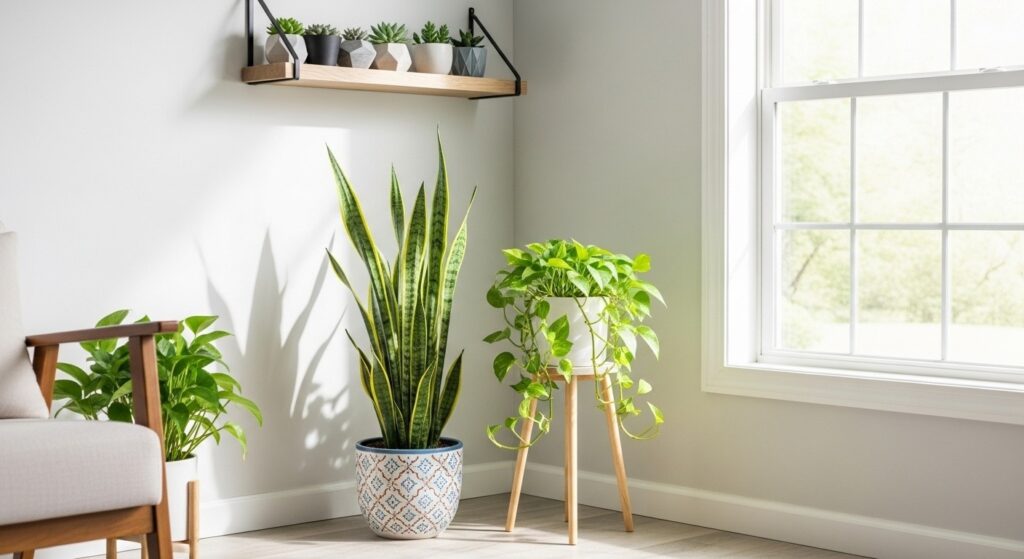
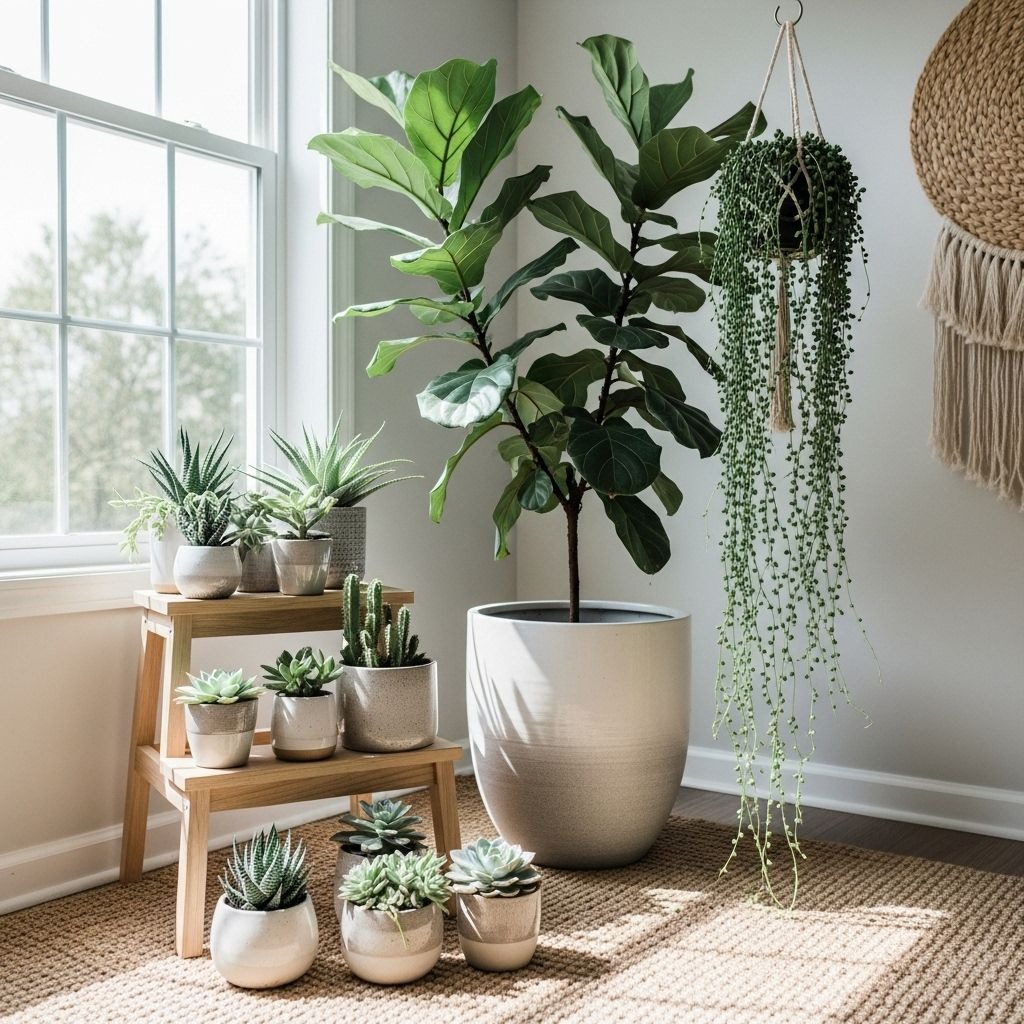
Corner Drama: Large floor plants like fiddle leaf figs, bird of paradise, or monstera deliciosa fill empty corners beautifully. Place them in decorative ceramic plant pots that complement your furniture.
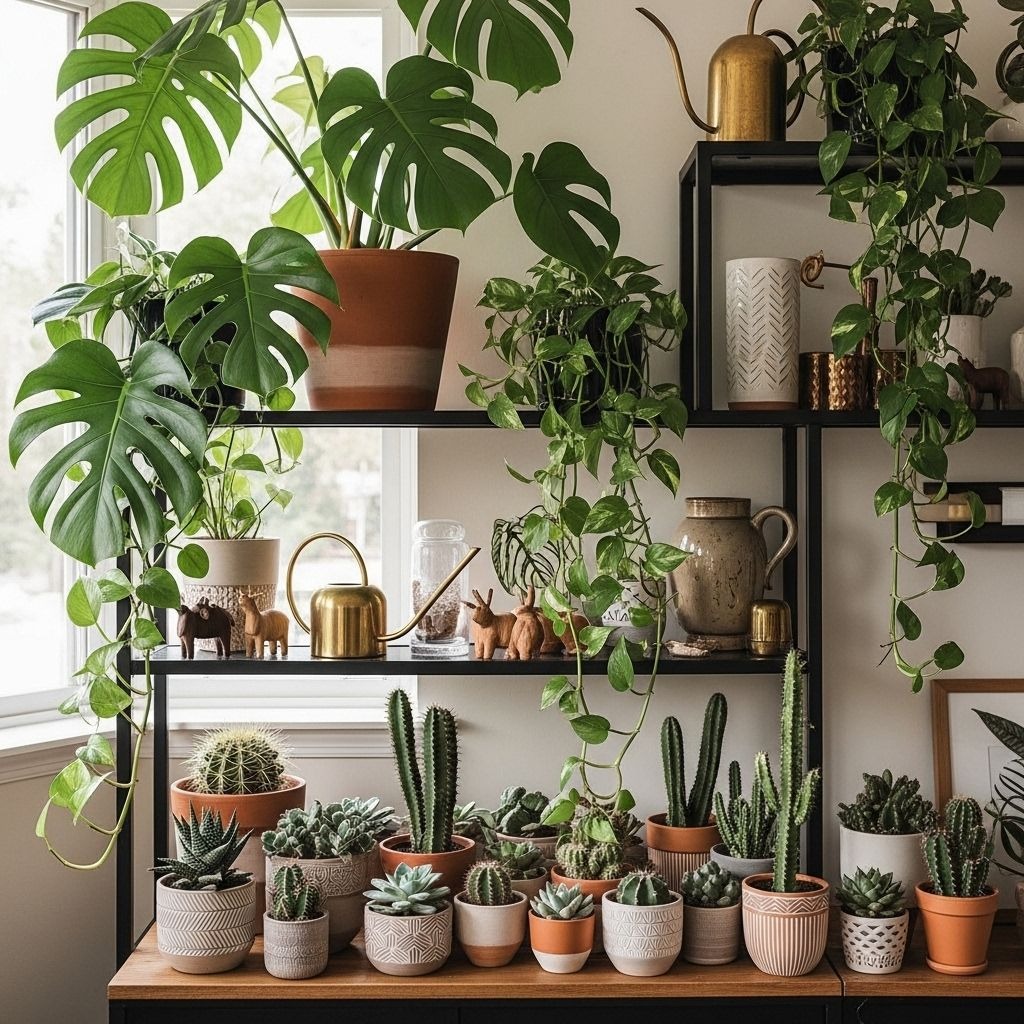
Plant Shelving: Create an urban jungle vibe by grouping multiple plants on indoor plant stands at varying heights. Mix trailing plants with upright varieties for visual interest.
Coffee Table Centerpiece: Small sculptural plants like succulents in minimalist pots or a terrarium create conversation pieces without overwhelming the table.
Bedroom: Calm and Clean
Bedrooms benefit from air-purifying plants that create a peaceful atmosphere.
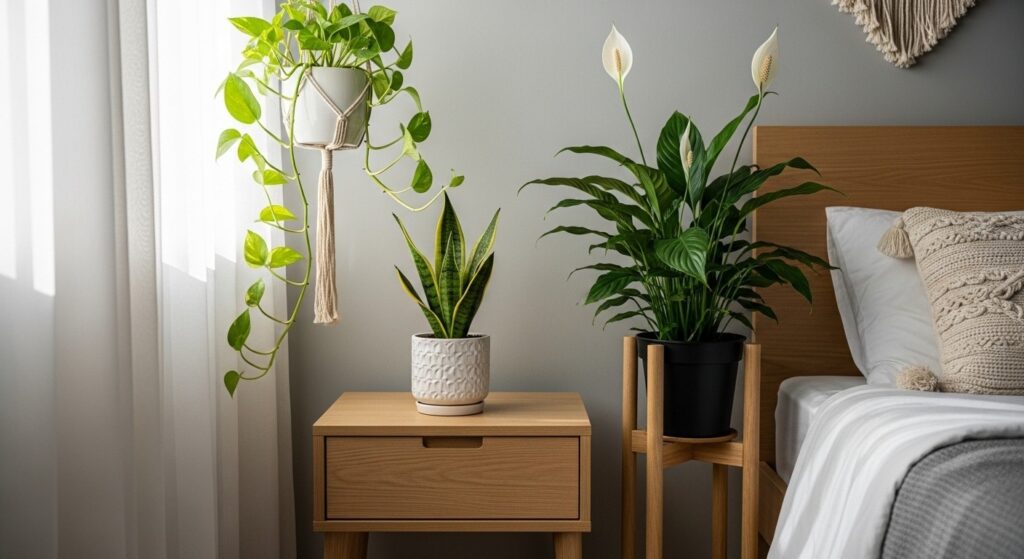
Bedside Greenery: Small snake plants or pothos in simple pots fit perfectly on nightstands. Snake plants release oxygen at night, unlike most plants, making them ideal for bedrooms.
Hanging Plants: Hanging plant baskets with trailing pothos or string of pearls add greenery without taking up surface space. Hang them near windows or use hanging plant hooks to create cascading displays.
Kitchen: Functional Beauty
The kitchen is perfect for herbs and edible plants that serve dual purposes.
Window Sill Herb Garden: Basil, rosemary, thyme, and parsley thrive on sunny window sills. Use matching small pots or balcony railing planters adapted for indoor ledges.
Open Shelving: If you have open shelves, tuck small pothos or philodendrons between dishes for unexpected pops of green.
Bathroom: Embrace Humidity
Bathrooms with windows are ideal for humidity-loving tropical plants.
Shower Shelves: Boston ferns, peace lilies, and orchids love bathroom humidity. Place them on corner shelves or window sills where they benefit from steam.
Hanging Options: Suspend plants from the ceiling or use wall-mounted planters to maximize vertical space in small bathrooms.
Design Principles for Indoor Plant Decor
Follow these guidelines to create professional-looking plant arrangements.
The Rule of Odd Numbers
Group plants in odd numbers—3, 5, or 7—for more visually appealing arrangements. Even numbers can look static and formal; odd numbers create dynamic, natural-looking displays.
Vary Heights and Textures
Create depth by combining tall floor plants, medium-height tabletop plants, and trailing varieties. Mix leaf shapes and textures—pair broad-leafed plants like monstera with delicate ferns or spiky snake plants with soft, trailing pothos.
Match Containers to Your Style
Your planters are as important as the plants themselves. Choose containers that complement your existing decor:
- Minimalist/Scandinavian: White or light grey ceramic pots, simple shapes
- Bohemian: Woven baskets, macrame hangers, terracotta with patterns
- Modern/Industrial: Concrete planters, matte black ceramics, geometric shapes
- Traditional: Classic terracotta, glazed ceramics in jewel tones
Decorative ceramic plant pots in coordinating colors create cohesive looks when displaying multiple plants together.
Create Focal Points
Don’t scatter plants randomly throughout your space. Instead, create intentional focal points—a concentrated plant display on shelving, a dramatic statement plant in a corner, or a styled plant vignette on a console table.
Layer with Accessories
Enhance your indoor plant decor with complementary elements. Stack plants on vintage books, add candles or small sculptures nearby, or incorporate garden décor items that tie into your overall aesthetic. Just like curating gear for outdoor adventures—selecting the right camping cookware set—thoughtful selection makes all the difference.
Advanced Indoor Plant Decor Techniques
Once you’ve mastered the basics, try these elevated styling approaches.
The Urban Jungle Look
Maximize greenery by filling an entire wall or corner with plants at multiple levels. Use indoor plant stands of varying heights, wall-mounted shelves, and hanging planters to create a lush, layered jungle effect. This works especially well in bright, high-ceiling spaces.
Terrariums and Glass Displays
Closed terrariums create self-sustaining mini-ecosystems perfect for humidity-loving plants like ferns and moss. Open terrariums work well for succulents and air plants. Display them on coffee tables, bookshelves, or as hanging features.
Statement Plant Styling
Sometimes one perfect plant is all you need. A large fiddle leaf fig, dramatic monstera, or sculptural bird of paradise becomes living artwork. Position it where it gets proper light but also serves as a room’s focal point—near seating areas, beside fireplaces, or framing entryways.
Seasonal Rotation
Refresh your indoor plant decor seasonally. In winter, focus on evergreen varieties in cozy arrangements. Spring calls for flowering plants like orchids or African violets. Summer allows for more dramatic tropical varieties. This approach keeps your space feeling current without major redesigns.
Care Essentials for Maintaining Your Indoor Plant Decor
Beautiful plant displays only stay beautiful with proper care.
Watering Wisdom
Most indoor plant deaths result from overwatering, not underwatering. Stick your finger 1-2 inches into soil—if it’s dry, water thoroughly until water drains from the bottom. If still moist, wait. A soil pH/moisture meter removes guesswork.
For consistent moisture without fuss, self-watering planters have built-in reservoirs that plants draw from as needed. They’re perfect for frequently traveled homeowners.
Feeding Your Plants
Container plants need regular feeding since nutrients wash away with watering. Use organic fertilizer during growing season (spring and summer) according to package directions. Most houseplants need feeding every 2-4 weeks when actively growing.
Grooming and Cleaning
Dust accumulates on leaves, blocking light absorption. Wipe large leaves with a damp cloth monthly. Remove dead or yellowing leaves promptly. Prune leggy growth to encourage bushier plants. Having a quality garden tool set makes plant maintenance easier.
Rotate for Even Growth
Plants grow toward light sources. Rotate them 90 degrees every few weeks so all sides receive equal light, preventing lopsided growth.
Read more: Grow Bags Gardening: The Game-Changer for Small Spaces
Common Indoor Plant Decor Mistakes to Avoid
Mistake 1: Ignoring Light Requirements
Placing a sun-loving succulent in a dark bathroom or a low-light snake plant in blazing direct sun sets you up for failure. Match plants to actual conditions, not wishful thinking.
Mistake 2: Choosing Style Over Drainage
Beautiful pots without drainage holes kill plants. Either drill holes yourself or use decorative pots as cache pots with a draining plastic pot inside.
Mistake 3: Overcrowding
More isn’t always better. Give plants room to breathe and space to visually stand out. Overcrowded arrangements look cluttered rather than intentionally styled.
Mistake 4: Forgetting About Growth
That cute 6-inch pothos will become a 10-foot vine. That small fiddle leaf fig can reach 6 feet indoors. Consider mature size when planning placements, or be prepared to prune and manage growth.
Budget-Friendly Indoor Plant Decor Tips
You don’t need to spend a fortune to create beautiful plant displays.
Propagate Your Own
Many common houseplants (pothos, spider plants, snake plants) are easy to propagate. One plant becomes many for free. A plant propagation station makes rooting cuttings decorative.
Shop Sales and Local Nurseries
Big box stores often have plant sales. Local nurseries sometimes offer deals on “imperfect” plants that are perfectly healthy but not camera-ready. With proper care, they’ll thrive.
Use Creative Containers
Thrift stores are goldmines for unique planters. Vintage mugs, tins, baskets, and bowls (with drainage added) become one-of-a-kind containers for a fraction of retail prices.
Start Small
Begin with a few well-placed plants rather than dozens of mediocre ones. Build your collection gradually as you learn what works in your space.
FAQ: Your Indoor Plant Decor Questions Answered
Q1: What are the best low-maintenance plants for indoor decor?
Snake plants, ZZ plants, pothos, and spider plants are nearly indestructible and perfect for beginners. They tolerate irregular watering, adapt to various light conditions, and require minimal care while still providing beautiful greenery for your indoor spaces.
Q2: How do I style indoor plants in a small apartment?
Use vertical space with wall-mounted shelves and hanging planters. Choose multi-functional plants that also purify air. Stick to a cohesive color palette for pots to avoid visual clutter. Focus on corners and unused vertical areas rather than taking up precious floor space.
Q3: Can I decorate with plants if my apartment has low light?
Absolutely! Snake plants, pothos, ZZ plants, peace lilies, and Chinese evergreens all thrive in low light conditions. You can also supplement natural light with grow lights to expand your plant options even in darker spaces.
Q4: How many plants should I have in one room?
There’s no magic number, but start with 3-5 plants of varying sizes in a room. Too few can look sparse; too many can feel cluttered. Group plants in odd numbers and create intentional focal points rather than scattering them randomly.
Q5: How do I keep my indoor plant decor looking fresh?
Regular maintenance is key: dust leaves monthly, remove dead foliage, rotate plants for even growth, and repot when root-bound. Refresh your arrangements seasonally by moving plants to new locations or swapping in seasonal varieties to keep displays dynamic.