
You’ve just returned from an incredible camping trip, the crackle of the campfire still echoing in your ears, the taste of s’mores lingering. But then you realize: that cozy campfire scent has become a persistent, unwelcome guest on your clothes. It’s not the romantic whiff of woodsmoke anymore; it’s a deep, acrid reminder that sticks to everything.
Sound familiar? You’re not alone. That smoky odor from a roaring fire can cling to fabrics like a persistent shadow, following you long after the embers have died down. But don’t let a lingering smell deter you from future adventures! You might be asking yourself, how do I get the smell of a campfire out of my clothes effectively and quickly?
This isn’t just about tossing them in the wash; it’s about understanding why that smoke holds on so tight and deploying targeted strategies to banish it for good. We’re talking proven methods, from immediate post-camp actions to deep-cleaning laundry tactics and even clever non-wash solutions. Let’s get that gear smelling fresh again, so you can focus on the memories, not the stench.
Why Campfire Smoke Clings So Stubbornly
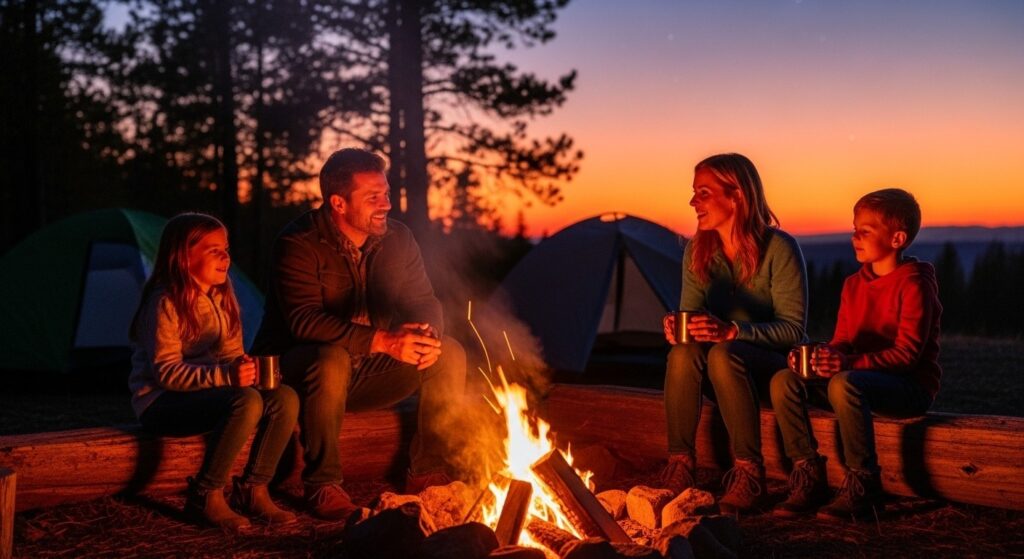
To effectively fight the smell, you need to know your enemy. Campfire smoke isn’t just a gas; it’s a complex mix that’s perfectly designed to embed itself into your fabrics.
Microscopic Particles: More Than Meets the Eye
When wood burns, it releases countless tiny particles – soot, ash, unburnt fuel – along with gases. These particles are incredibly small, often invisible to the naked eye. They’re like microscopic hooks, just waiting to latch onto anything in their path.
Fabric Fibers: Trapping These Particles
Your clothes, whether they’re cotton, wool, or synthetics, are made of woven fibers. These fibers, especially natural ones, have a porous structure that acts like a microscopic net. As smoke swirls around you, these tiny particles get trapped within the weave of the fabric. The more porous the fabric, the more smoke it absorbs.
Resins and Oils: The Sticky Culprits
Beyond just physical trapping, wood smoke also contains resins and oils. These are the sticky components that give wood its distinct aroma, and when heated, they become airborne. These oily, tar-like substances adhere to fabric fibers, essentially gluing the odor-causing particles in place. This is why a simple wash often isn’t enough; you need to break down these sticky bonds.
Immediate Action: Your First Line of Defense (Before Laundry)
You just got home, and your clothes reek. Don’t just toss them directly into the laundry basket with your clean items. A few immediate steps can make a massive difference.
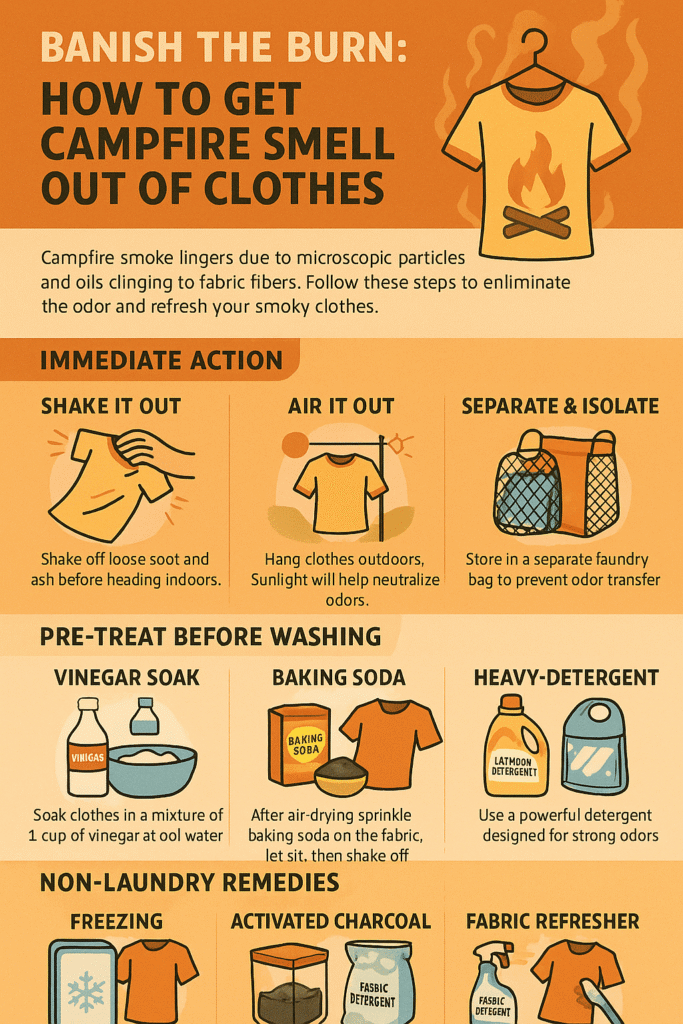
A. Shake it Out: Removing Loose Soot
Before anything else, take your smoky clothes outside. Give each item a vigorous shake. You’ll likely see a fine cloud of soot and ash dust off. This simple step removes the larger, loose particles that can otherwise just get pushed deeper into the fabric during handling or washing.
B. Air it Out: Outdoors is Best

Fresh air is a natural deodorizer. Get those clothes outside as soon as possible.
- Hang them up: Drape them over a clothesline, hang them on a hanger from a porch railing, or even string them over a fence. Make sure there’s good airflow around each item.
- Sunlight is your friend: If it’s a sunny day, let the clothes bask in the sun. Ultraviolet (UV) rays from sunlight are natural sanitizers and can help break down odor-causing compounds.
- Time it right: Leave them out for several hours, ideally overnight, or even for a full day if the smell is particularly strong. Just remember to bring them in before any dew settles.
C. Separate & Isolate: Prevent Spreading the Smell
Smoke odor is persistent and can easily transfer.
- Separate immediately: As soon as you take off your campfire clothes, put them in a dedicated laundry bag or a plastic bin away from your clean garments.
- Use a breathable bag: If you’re not washing them right away, a mesh laundry bag or even a pillowcase is better than an airtight plastic bag, which can trap moisture and make the smell worse.
Laundry Day SOS: Deep Cleaning for Stubborn Smoke
When airing out isn’t enough, it’s time to bring in the big guns: your washing machine. But don’t just throw them in with regular detergent; a strategic approach is key. When preparing for adventures that involve campfires, choosing the right camping clothes can actually help minimize how much smoke smell clings to them.
A. Pre-Treatment Power: Don’t Skip This Step
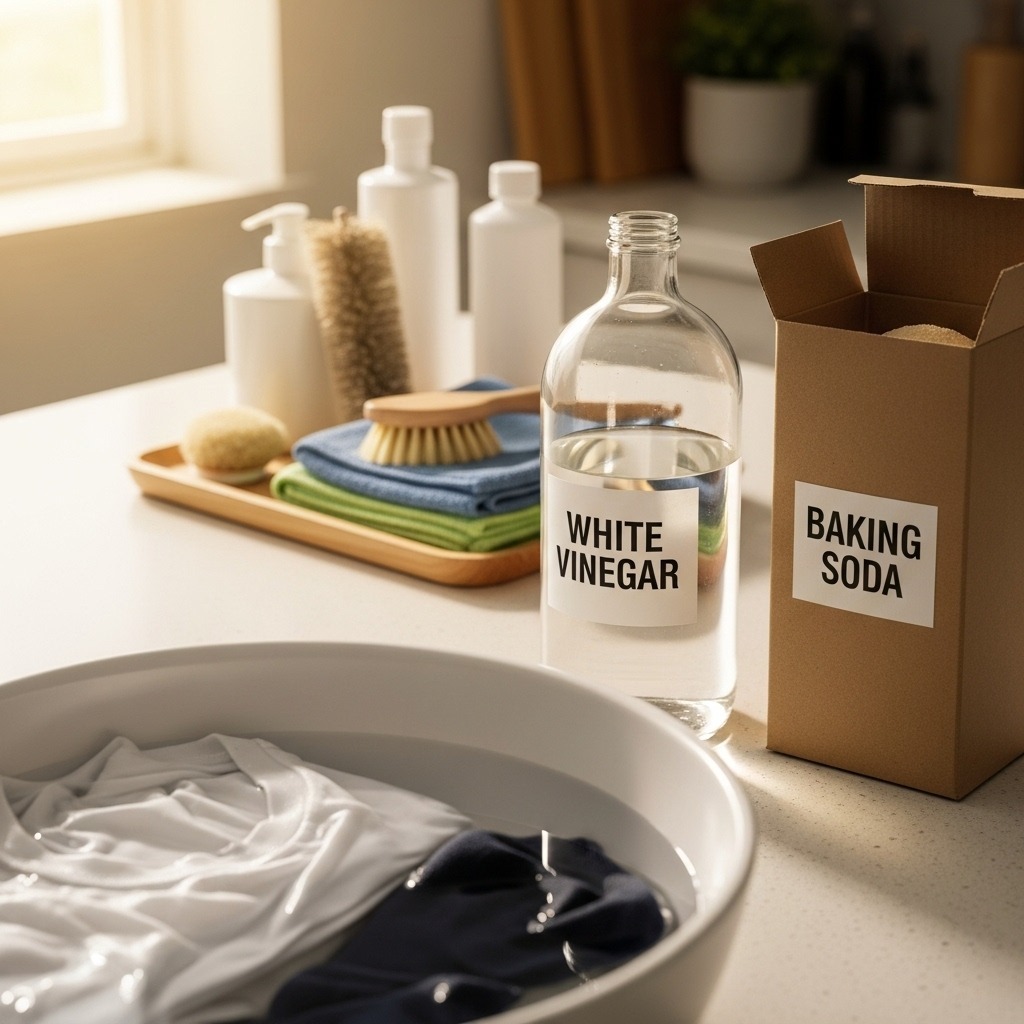
This is where the magic happens. Pre-treating your smoky clothes before the main wash cycle can dramatically improve your results.
- Vinegar Soak: White vinegar is a powerful deodorizer that neutralizes odors rather than just masking them.
- Ratio: Fill a laundry tub or large bucket with cool water. Add 1 cup of distilled white vinegar per gallon of water.
- Soak time: Submerge your clothes completely and let them soak for at least 30 minutes. For very strong odors, an overnight soak can work wonders.
- Baking Soda Pre-Soak/Paste: Baking soda is an excellent odor absorber.
- Dry sprinkle: For clothes you can’t soak, sprinkle baking soda liberally over the dry garments, let it sit for a few hours (or overnight), then shake it off before washing.
- Paste for targeted areas: If a specific part of a garment smells worse, mix baking soda with a little water to form a paste and apply it directly. Let it dry, then brush it off.
- Heavy-Duty Detergent: Invest in a detergent specifically designed for tough odors or heavily soiled clothes. These often contain enzymes that break down odor-causing molecules.
B. Washing Machine Wisdom: Maximize Effectiveness
Once pre-treated, load your clothes into the washing machine with purpose.
- Wash separately: Never mix smoky clothes with your regular laundry. You risk transferring the odor.
- Water temperature: Use the hottest water temperature safe for your fabric. Hot water helps to loosen the oily particles trapped in the fibers. Always check care labels!
- Additives to the wash:
- Add 1/2 cup of baking soda directly to the washing machine drum along with your detergent.
- Alternatively, add 1 cup of white vinegar to the fabric softener dispenser or directly into the wash cycle during the rinse. Don’t use both baking soda and vinegar simultaneously in the same part of the cycle, as they can neutralize each other.
- Extra rinse cycle: Always opt for an extra rinse cycle. This ensures all the odor-causing particles and cleaning agents are thoroughly flushed out of the fabric.
Non-Laundry Solutions: For Delicates & Quick Fixes
Sometimes, washing isn’t an option, or you need a faster solution. These methods can help for delicate items or when you’re in a pinch. Also, when you’re in the wild, knowing how to wash dishes while camping can prevent other lingering odors from affecting your gear.
A. Freezing: Traps and Neutralizes Odors
This might sound strange, but freezing can be surprisingly effective, especially for items that are difficult to wash, like wool sweaters, denim, or even leather.
- Process: Fold the smoky garment, place it inside a sealed plastic bag (to protect it from freezer odors), and leave it in the freezer overnight.
- How it works: The cold temperature kills odor-causing bacteria and can make the smoke particles more brittle, allowing them to shake off easier.
B. Activated Charcoal/Kitty Litter: Powerful Odor Absorbers
These common household items are excellent at absorbing a wide range of odors.
- Method: Place your smoky clothes in a large, sealable plastic bag or container. Add a bowl of activated charcoal (available at pet stores or garden centers) or a generous amount of fresh, unscented clay kitty litter. Seal the container and let it sit for several days.
- Caution: Ensure the charcoal or kitty litter does not directly touch the clothes, as it can leave dust or residue.
C. Fabric Refreshers: Commercial Sprays
Products like Febreze or other fabric deodorizing sprays can offer a quick, temporary fix.
- Application: Spray liberally onto the fabric until slightly damp. Hang to air dry.
- Note: These generally mask odors rather than eliminate them completely, but they can be useful for light smoke smells or between washes.
D. Steaming: Helps Release Trapped Particles
The heat and moisture from steam can help to relax fabric fibers and release trapped smoke particles.
- Tools: Use a garment steamer, or simply hang the smoky clothes in a steamy bathroom (after a hot shower) for 20-30 minutes.
- Follow up: After steaming, hang the clothes in a well-ventilated area to air dry completely.
Prevention is Key: Minimize the Smell Before it Starts

The best way to get the smell of a campfire out of your clothes is to prevent it from getting in there in the first place! A little foresight goes a long way. This is particularly true for those who enjoy camping for beginners, where learning these small tips can enhance the whole experience.
A. Choose Your Campfire Spot Wisely
- Upwind: Always sit and set up your camp upwind of the fire. This means the smoke will blow away from you, not directly into your clothes.
- Good ventilation: Avoid making fires in enclosed spaces or areas with poor airflow where smoke can get trapped.
B. Designated “Campfire Clothes”: A Smart Strategy
Before you even leave for your trip, pick out specific clothes you’ll wear around the fire.
- Sacrifice: Choose old, easily washable clothes you don’t mind getting smoky.
- Change immediately: As soon as you’re done by the fire, change out of your “campfire clothes” and put on fresh ones. Store the smoky clothes separately. This also helps you stay warm while camping by protecting your clean layers from smoky drafts.
C. Distance Matters: Don’t Sit Too Close
While cozy, sitting right next to a roaring fire ensures maximum smoke absorption. Position your chairs a comfortable distance back where you still feel the warmth but are less directly in the path of the smoke.
D. Shower & Change Immediately: Don’t Let Skin/Hair Transfer Smell
Your hair and skin also absorb smoke odor. Taking a shower and washing your hair as soon as you can after returning home (or even at camp if facilities allow) will prevent the smell from transferring to your clean clothes, bedding, and furniture.
E. Consider Synthetic Fabrics: They Absorb Less Odor
Natural fibers like cotton and wool are highly absorbent and prone to trapping odors. Synthetic materials like nylon and polyester are generally less absorbent and can be easier to de-smoke. If you frequently find yourself battling campfire smell, consider adding some synthetic outdoor gear to your camping wardrobe for fire-side wear.
Troubleshooting Persistent Odors
Even with the best techniques, some stubborn items might retain a faint smoky scent. Don’t give up!
A. Repeat Treatments: Patience Pays Off
If a single wash or soak doesn’t completely remove the smell, repeat the process. Sometimes, multiple cycles of soaking, washing with additives, and airing out are necessary to fully break down the embedded particles.
B. Professional Dry Cleaning: For Very Delicate or Heavily Saturated Items
For delicate items that can’t be machine washed, or for extremely heavy smoke saturation (e.g., from a house fire, not just a campfire), a professional dry cleaner might be your best bet. They have specialized solvents and equipment designed to tackle deep-set odors.
C. Ozone Generator: (Advanced, for Extreme Cases)
For truly extreme cases, ozone generators are available. These machines produce ozone gas which neutralizes odors. However, they should be used with extreme caution in a well-ventilated area, as ozone can be harmful to humans and pets. This is generally overkill for campfire smells and best left to professionals or emergency restoration.
FAQ: Your Campfire Smell Questions Answered
Q1: Why does campfire smell linger so long?
A: Campfire smoke contains microscopic tar and resin particles that cling to fabric fibers. These oily substances essentially “glue” the odor-causing compounds into the material, making them resistant to simple washing.
Q2: Can I use essential oils to cover the smell?
A: Essential oils can temporarily mask odors, but they won’t remove the source of the smell. In fact, they might just add another scent layer on top of the smoke, which could be unpleasant once the essential oil fades. Focus on odor removal first.
Q3: Is drying clothes outside enough?
A: For light smoke smells, airing clothes outside in fresh air and sunlight can be very effective. However, for heavier or more persistent odors, it’s often a good first step, but usually not enough on its own. It’s best combined with washing or other treatments.
Q4: Does freezing clothes really work?
A: Yes, freezing can work, especially for items that are hard to wash. The cold temperatures can help to kill odor-causing bacteria and make smoke particles more brittle, allowing them to release more easily. It’s a great non-wash option.
Q5: Will the smell eventually fade on its own?
A: Given enough time and exposure to fresh air, the smell will eventually fade. However, this could take weeks or even months, especially if the clothes are stored in a confined space. Using active removal methods speeds up the process significantly.
Conclusion: Embrace the Outdoors, Ditch the Odor
That distinct campfire aroma is a wonderful part of the outdoor experience. But keeping it confined to the memories – not your wardrobe – is key to enjoying your home life after a trip. By understanding how smoke adheres to fabrics and utilizing the right cleaning strategies, you can confidently answer how do I get the smell of a campfire out of my clothes every time.
Don’t let a lingering odor stop you from enjoying your next great adventure. Whether you’re trying out primitive camping or simply enjoying a backyard fire pit, armed with these tips, you’re ready to tackle any smoky aftermath. Now get out there, make some incredible memories, and know that you can always return to fresh, clean clothes. There are so many things to do while camping that you shouldn’t let a little smoke smell hold you back!