
Hanging indoor plants are a stylish and practical way to bring greenery into your home, making any room feel more vibrant, inviting, and alive. Whether you live in a cozy apartment or a spacious house, these plants allow you to maximize your vertical space and create visual interest at every level.
Why Choose Hanging Indoor Plants?
- Maximize Space: Perfect for small or cluttered homes, hanging plants add lush life without taking up valuable floor space.
- Improved Air Quality: Popular varieties such as pothos and spider plant help purify indoor air.
- Versatile Decor: Hanging plants soften corners, fill empty walls, and add depth to decor with trailing vines and cascading leaves.
- Safe from Children and Pets: Suspended plants are out of reach from curious hands and paws, reducing accidental damage or ingestion.
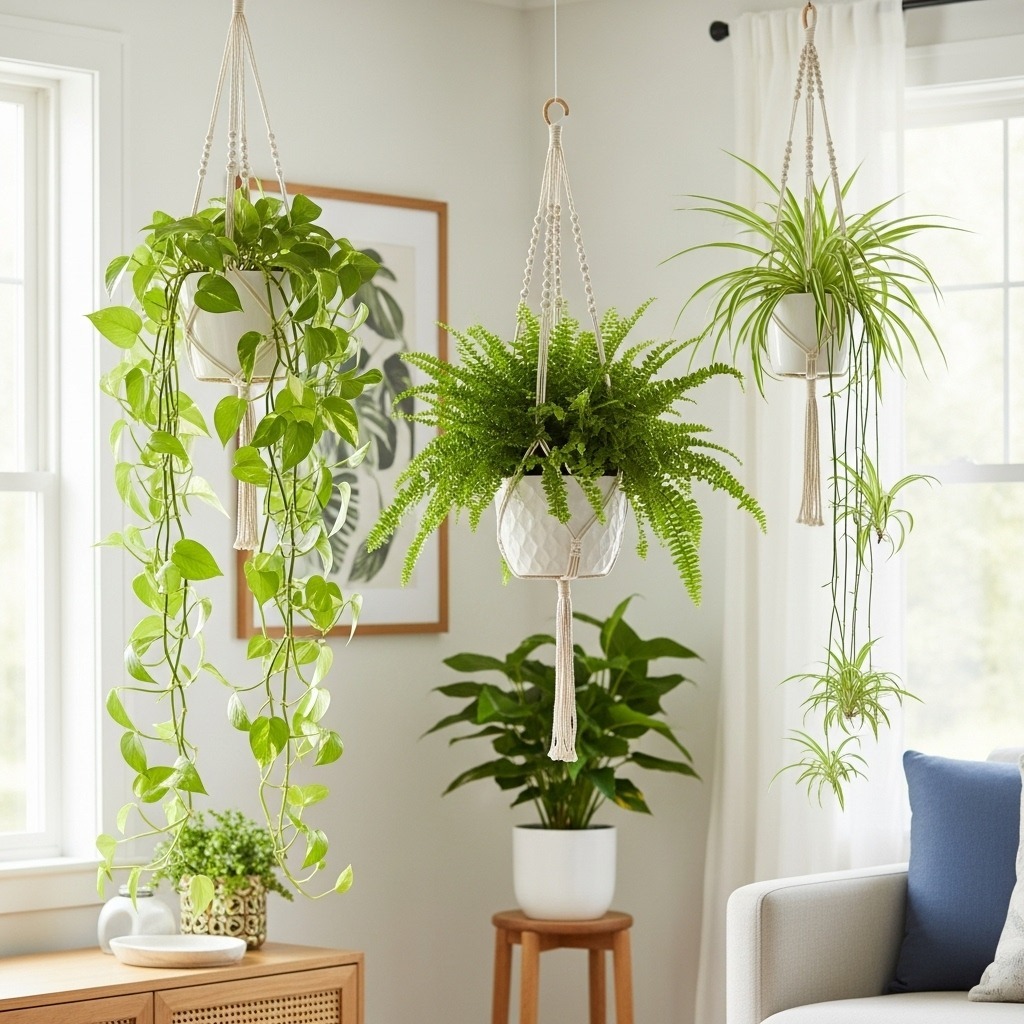
Popular Indoor Hanging Plants
1. Pothos (Epipremnum aureum)
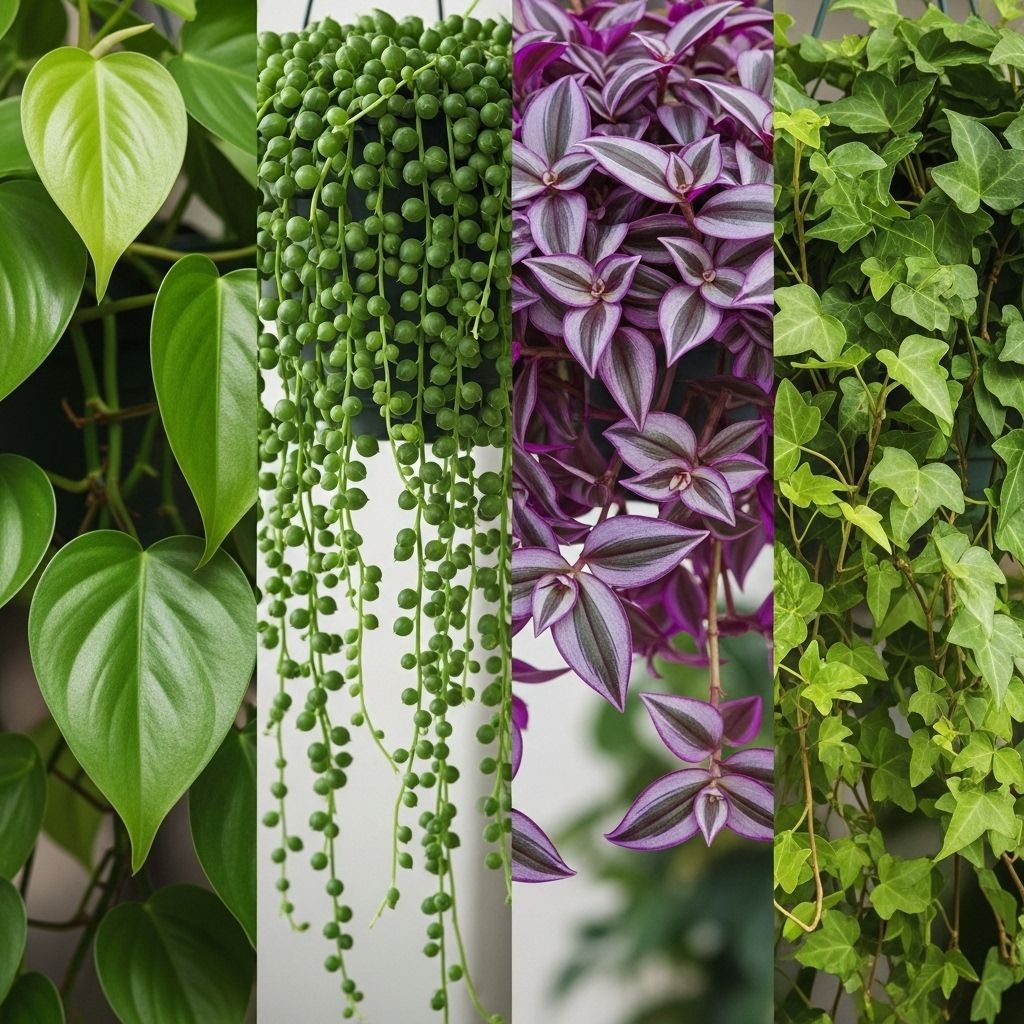
One of the most forgiving houseplants, pothos thrives in a range of light conditions, sports heart-shaped leaves, and comes in various stunning varieties (golden, marble queen, neon). Its trailing vines are perfect for high shelves or hanging baskets.
2. Heartleaf Philodendron
Similar to pothos in appearance and care, philodendrons are resilient, quick to grow, and tolerate low light well. Their vines can trail or climb and look gorgeous cascading from a high vantage point.
3. Spider Plant
An old favorite, the spider plant produces slender, arching leaves and “babies” (plantlets) that dangle from long runners. It’s a great air purifier and is non-toxic to pets.
4. String of Pearls
This succulent’s unique spherical leaves look like beaded necklaces. It prefers bright, indirect light and is an instant focal point in any room.
5. Boston Fern
A lush classic, Boston ferns bring drama with their arching, feathery fronds. These prefer humidity and indirect light, making them ideal for bathrooms.
6. English Ivy
Adaptable and fast-growing, English ivy thrives as a hanging plant and can be trained to climb or trail decoratively. However, it prefers cooler spaces and moderately moist soil.
7. Hoya (Wax Plant)
Hoyas are slow-growers but reward plant parents with beautiful, waxy foliage and, when mature, clusters of fragrant, star-shaped flowers. They like bright, indirect light.
8. Tradescantia (Wandering Jew)
With its vibrant purple and green striped leaves, this fast-growing plant adds an instant pop of color to your hanging garden.
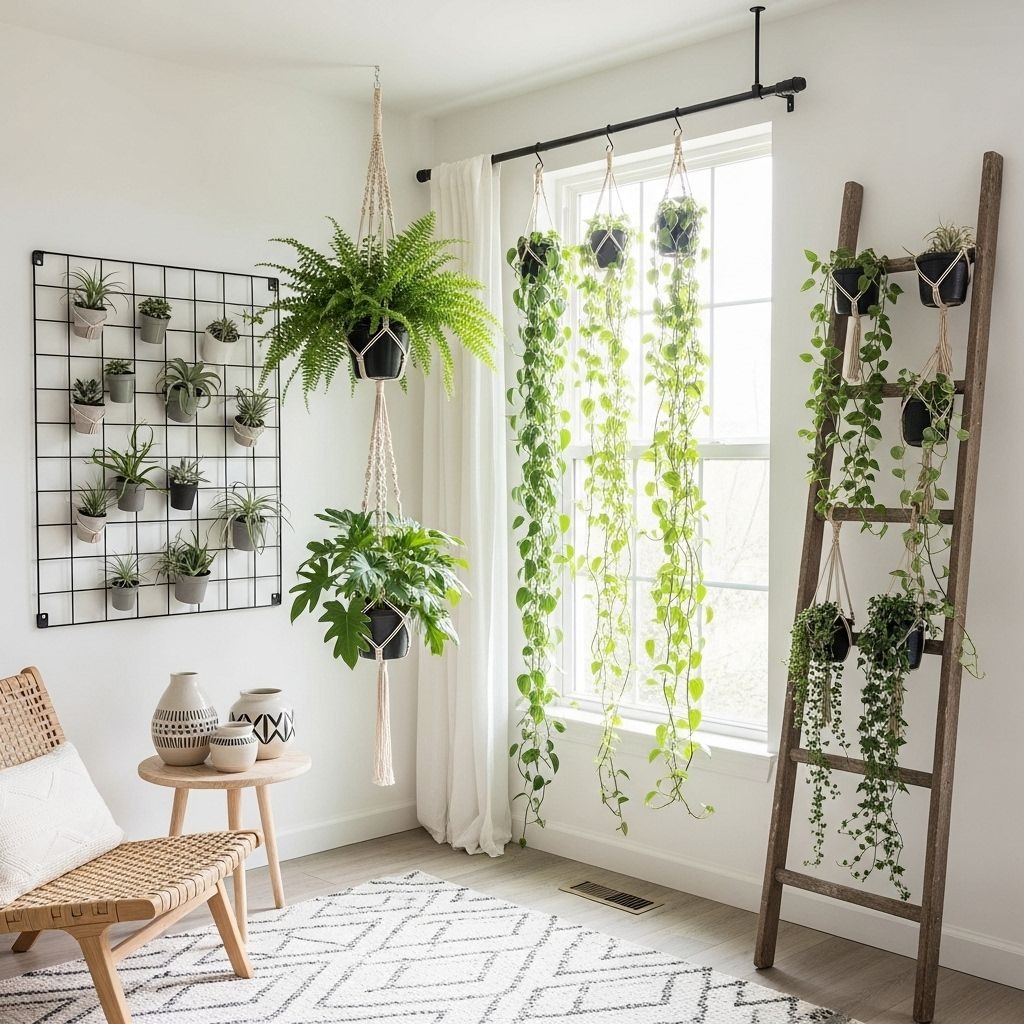
Creative Ways to Hang Indoor Plants
- Ceiling Hooks and Swag Hooks: For heavy planters, secure hooks drilled into joists; for rentals, use adhesive-backed swag hooks or over-door hooks.
- Tension Rods: Extend between windows or walls for a renter-friendly plant display.
- Curtain Rods: Hang macramé or S-hooks for trailing plants in front of windows.
- Freestanding Racks and Ladders: Repurpose a coat rack, garment rack, or decorative ladder as a flexible plant display.
- Wall-Mounted Grid Panels or Shelves: Suspend planters in grids or on shelves, layering different heights for impact.
- Hanging Shelves: Rope-hung wood shelves can hold multiple smaller pots at varying levels.
- Macramé Holders: Classic or boho styles add texture and can be customized for any pot size or color scheme.
Read more: Small Space Gardening: Transform Tiny Spaces Into Gardens
Placement Tips
- Layer at Different Heights: Suspend plants from the ceiling, on wall hooks, and place some on high shelves to create an immersive, jungle-like space.
- Group for Impact: Cluster plants with various leaf shapes and colors together to make a statement.
- Light Matters: Most hanging plants prefer bright indirect light, but many (like pothos or philodendron) will tolerate lower light. Use supplemental grow lights in dim spaces.
- Keep Accessible: Install plants at a reachable height for easy watering and care—avoid placing them so high you won’t tend them regularly.
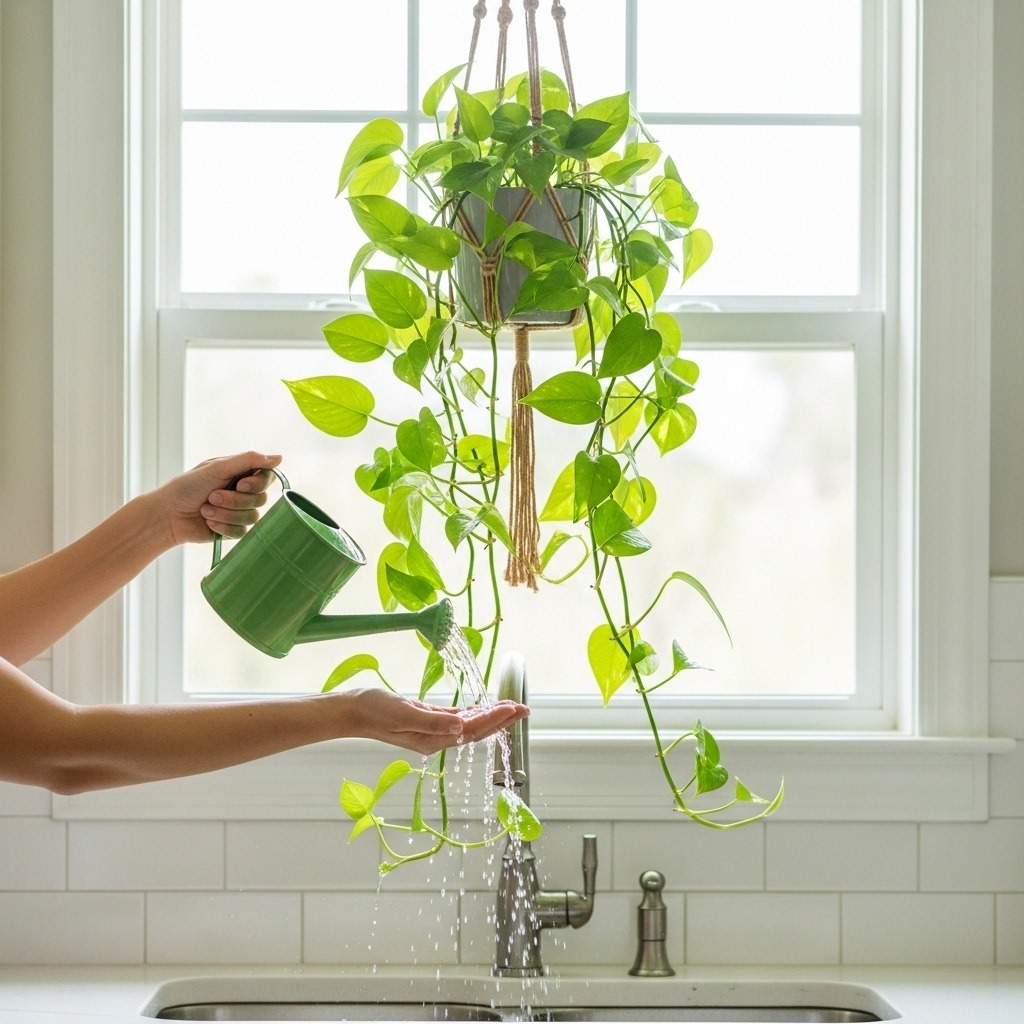
Care Tips for Thriving Hanging Plants
- Water Wisely: Most hanging plants dry out faster due to raised placement. Check soil moisture two inches down before watering. Take pots to the sink for a good soak.
- Fertilize Regularly: Use a diluted liquid fertilizer every 2–4 weeks during the growing season.
- Trim and Rotate: Prune leggy vines to encourage bushiness and rotate pots to ensure even light exposure.
- Watch for Pests: Check for spider mites and aphids, which can appear in hanging planters with less airflow.
- Humidity Helps: Ferns and some tropicals love humidity—group them together or use a tray of pebbles and water.
DIY and Renter-Friendly Hanging Solutions
- Macramé Hangers: Create custom-length hangers with cotton rope or jute for a boho look.
- Command Hooks and Tension Rods: No-drill options that won’t damage walls or ceilings.
- Repurpose Items: Old colanders as plant baskets, clothing racks as plant stands, or window curtain rods for macramé hangers.
- Hanging Shelves: Build or buy wooden shelves suspended with rope for multiple mini pots.
Styling Ideas
- Hang in front of windows for maximum light and dramatic curtain effects with cascading vines.
- Create a “green wall” by combining several wall-mounted planters or grid systems.
- Use macramé planters in the bathroom for an instant tropical feel.
- Place a plant in a hanging basket above a bedside table for relaxing, calming greenery in your bedroom.
- Layer different plant sizes and textures—mix spider plant “babies” with lush ferns and structured succulents.
FAQ: Hanging Indoor Plants
Q: What are the best low-light hanging plants?
A: Pothos, heartleaf philodendron, and spider plant all thrive in low-to-medium light and are perfect for less sunny corners.
Q: How can I water hanging plants without making a mess?
A: Remove plants from their hangers and place in the sink to soak, or use double-potting with catch basins for indoor drip-free watering.
Q: How do I hang plants if I rent and can’t drill?
A: Use adhesive-backed hooks, tension rods, window curtain rods, or over-the-door hooks. Freestanding racks or ladders work too.
Q: Can I hang plants from my balcony railing?
A: Yes—use clamp-style or S-hook railing planters designed for balconies to display plants safely outdoors.
Q: What’s the easiest hanging plant for beginners?
A: Golden pothos. It tolerates a range of light, recovers from missed waterings, and grows long, lush vines with minimal fuss.