

Ever stood at a coffee shop counter, eyes glazing over the menu, and wondered, “What really is the difference in the whole cortado vs cappuccino debate?” You’re not alone. These two espresso-based darlings sound similar, both promising a delightful coffee experience. But dive a little deeper, and you’ll find they offer distinctly unique sips.
So, are you ready to unlock the secrets behind these popular choices? Which one truly aligns with your coffee cravings? Let’s break it down, cut through the coffee jargon, and help you confidently order your next perfect cup. This isn’t just about knowing the names; it’s about understanding the craft and finding your ideal coffee moment.
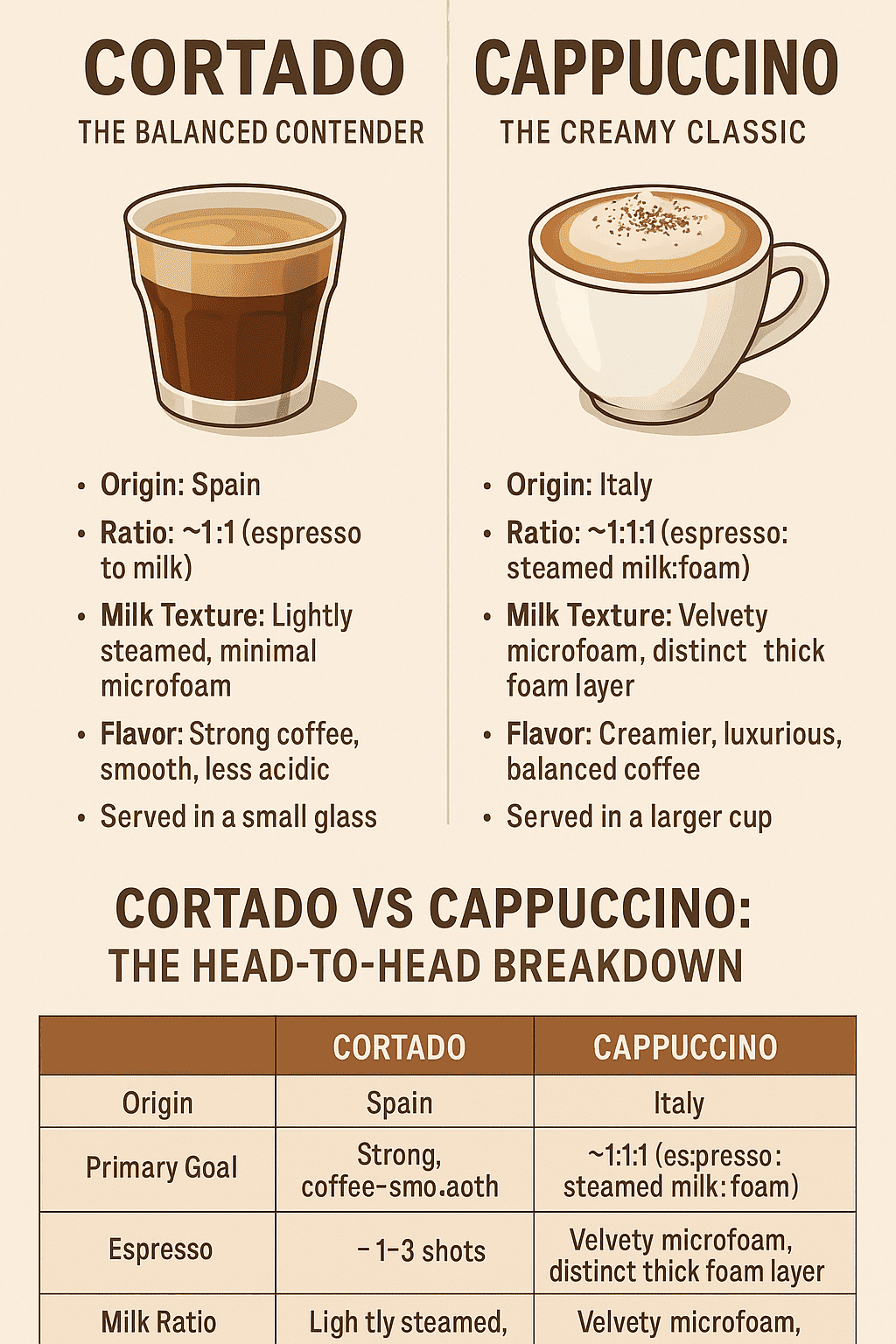
What Exactly is a Cortado? The Balanced Contender

Hailing from Spain, the name “cortado” comes from the Spanish word “cortar,” meaning “to cut.” This name is wonderfully descriptive because a cortado coffee is essentially an espresso “cut” with an equal amount of warm, steamed milk.
- The Core Idea: Balance. The milk isn’t there to overwhelm the espresso but to mellow its acidity and intensity, creating a harmonious blend where the coffee flavor still shines brightly.
- Ratio is Key: Typically, a cortado boasts a 1:1 ratio of espresso to milk. This means if you have a double shot of espresso (around 2 ounces), you’ll get roughly 2 ounces of steamed milk.
- Milk Texture: The milk is steamed, but not overly frothy. You’re looking for a smooth, velvety texture with just a thin layer of microfoam, if any. It’s about integrating the milk with the espresso seamlessly.
- Serving Style: Traditionally, cortados are served in a small glass, often a “Gibraltar” glass, which holds about 4.5 ounces. This smaller serving size emphasizes the drink’s potent, coffee-forward nature.
- Flavor Profile: Expect a robust coffee flavor with a smooth, rounded finish. The milk softens the espresso’s edges without diluting its character. It’s a punchy yet refined drink.
Think of the cortado as a focused, intense coffee experience. It’s for those moments when you want the pure taste of quality espresso, gently softened. It’s less about milky indulgence and more about appreciating the nuances of the coffee bean itself. You might even consider how different roasts impact this when you roast coffee beans at home, as the cortado will let those subtle notes come through.
Unpacking the Cappuccino: The Creamy Classic
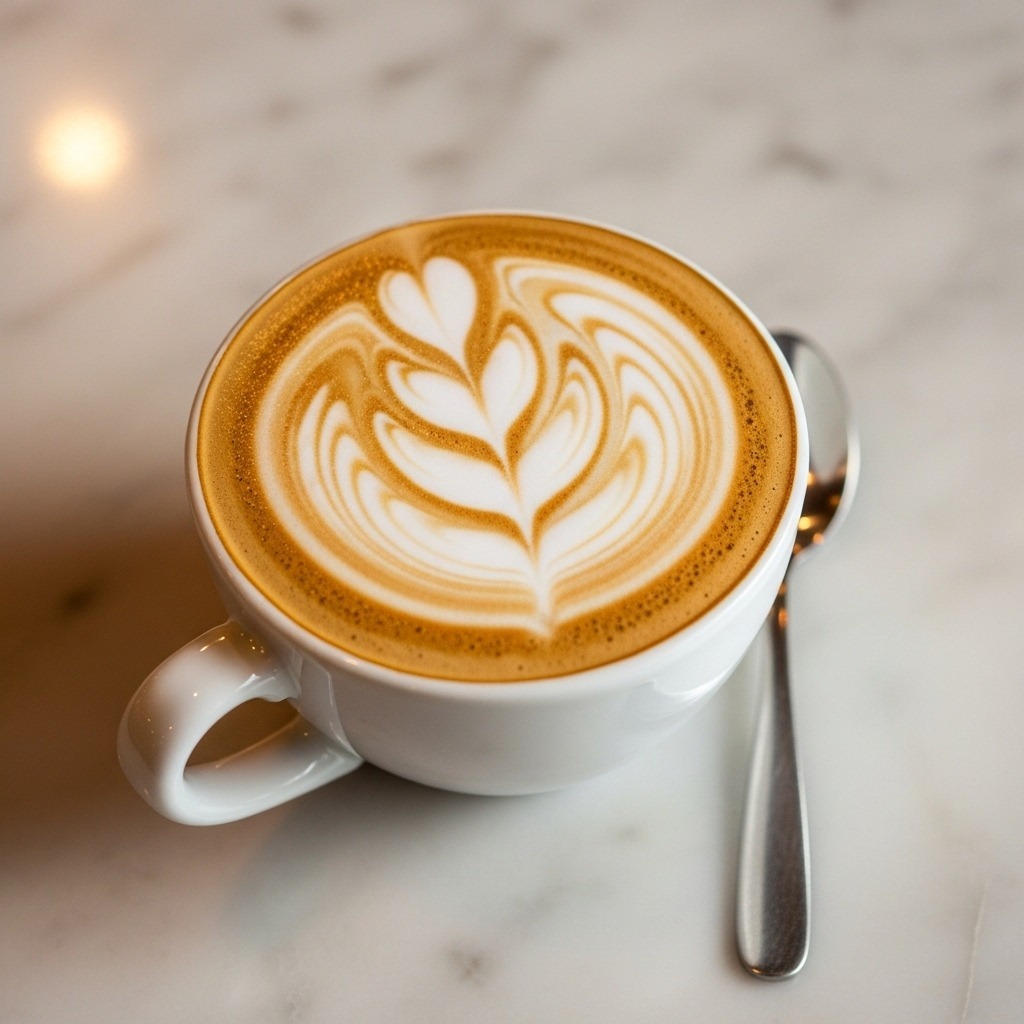
The cappuccino, a world-renowned icon, has its roots in Italy. Its name is charmingly thought to be inspired by the Capuchin friars, as the color of the espresso mixed with frothed milk supposedly resembled the color of their robes.
- The Core Idea: Texture and layers. A cappuccino is a more voluminous and luxurious drink, celebrated for its distinct layers of espresso, steamed milk, and airy foam.
- The Classic Ratio (Traditionally): Often described as equal thirds: 1/3 espresso, 1/3 steamed milk, and 1/3 milk foam. However, modern interpretations can vary, often with a bit more milk.
- Milk Texture: This is where the cappuccino truly distinguishes itself. The milk is steamed to create a rich, velvety microfoam that forms a substantial, cloud-like cap on top of the drink. This foam should be smooth and glossy, not bubbly or dry.
- Serving Style: Cappuccinos are typically served in a larger ceramic cup (around 5-7 ounces) with a handle, which helps retain heat and provides a comforting hold.
- Flavor Profile: While the espresso is the foundation, the cappuccino offers a creamier, more decadent experience. The foam provides a light, airy start, followed by the smooth blend of milk and coffee. The coffee flavor is present but softer and more integrated with the milk compared to a cortado.
The cappuccino is your go-to for a more leisurely, comforting coffee break. It’s a textural delight, perfect for those who enjoy a richer, milkier drink where the foam is an integral part of the experience. If you’re exploring coffee types, understanding the difference between espresso and coffee in its base form will help you appreciate how these drinks are constructed.
Cortado vs Cappuccino: The Head-to-Head Breakdown
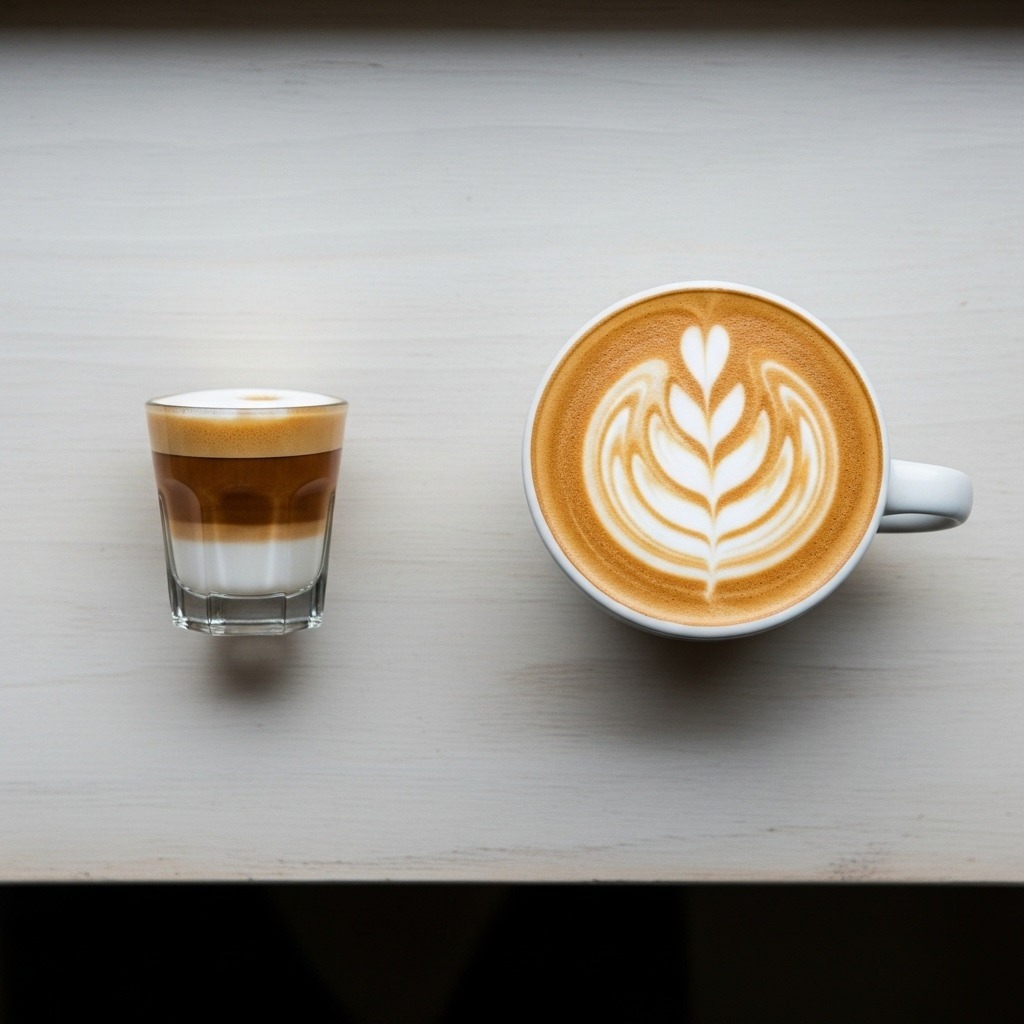
Now that we’ve met our contenders, let’s put the cortado vs cappuccino side-by-side to highlight their crucial differences:
| Feature | Cortado | Cappuccino |
| Origin | Spain | Italy |
| Primary Goal | Balance, coffee-forward | Texture, layered, creamy |
| Espresso | Typically 1-2 shots | Typically 1-2 shots |
| Milk Ratio | ~1:1 (espresso to milk) | ~1:1:1 (espresso:steamed milk:foam) or more milk |
| Milk Texture | Lightly steamed, minimal microfoam | Velvety microfoam, distinct thick foam layer |
| Taste | Strong coffee, smooth, less acidic | Creamier, luxurious, balanced coffee flavor |
| Serving Size | Smaller (around 4-5 oz) | Larger (around 5-7 oz) |
| Vessel | Small glass (often Gibraltar) | Ceramic cup |
| Mouthfeel | Silky, less textured | Airy foam, then creamy liquid |
| Caffeine | Depends on espresso shots (often same) | Depends on espresso shots (often same) |
The Espresso Base: A Shared Foundation
It’s important to note that both the cortado and cappuccino begin with the same heart: one or two shots of quality espresso. Understanding what is espresso is crucial, as the quality of this base ingredient will significantly impact the final taste of either drink. A poorly pulled shot will be noticeable, no matter how perfectly the milk is prepared.
Which One Should You Choose? Navigating Your Coffee Desire
Okay, the million-dollar question: in the cortado vs cappuccino showdown, which drink should you order? Here are some pointers to guide your decision:
Choose a Cortado if:
- You love the taste of espresso: You want the coffee to be the star, with milk playing a supporting role.
- You prefer a less milky drink: You’re not looking for a big, frothy concoction.
- You want a quick, potent coffee hit: Its smaller size makes it ideal for a swift, satisfying caffeine boost.
- You appreciate subtlety: You enjoy the nuanced flavors that a balanced milk-to-espresso ratio can highlight.
- You’re trying a new coffee shop or new beans: The cortado is an excellent way to assess the quality of their espresso and the barista’s skill in balancing flavors.
Opt for a Cappuccino if:
- You crave a creamy, luxurious texture: The rich foam cap is a big part of the appeal for you.
- You prefer a milder coffee experience: The higher milk and foam content softens the espresso’s intensity.
- You’re settling in for a relaxing break: The larger size and comforting warmth invite you to sip and savor.
- You enjoy the art of foam: A well-made cappuccino with beautiful microfoam is a treat for the eyes and palate.
- You’re in the mood for a classic: It’s a timeless choice for a reason. Perhaps you’re considering alternatives like a breve coffee if you want an even richer, creamier experience using half-and-half.
Don’t be afraid to experiment! What you prefer might change based on your mood, the time of day, or even the weather. Trying both is the best way to discover your personal favorite in the ongoing cortado vs cappuccino comparison.
Beyond the Basics: Customization and Considerations
While the classic cortado and cappuccino have their defined structures, the world of coffee is wonderfully flexible.
- Milk Alternatives: Both drinks can be made with non-dairy milks like oat, almond, soy, or coconut. Keep in mind that different milks steam and taste differently. Oat milk, for instance, is a popular choice for its creamy texture and ability to create good foam, making it a great option for a dairy-free cappuccino.
- Sweeteners & Flavors: Traditionally, neither a cortado nor a cappuccino is served with added sugar or flavorings, as the goal is to appreciate the coffee and milk interplay. However, if you have a sweet tooth, you can certainly request sugar or a syrup. Just know that it will alter the intended flavor profile.
- The Barista’s Skill: The quality of both a cortado and a cappuccino heavily depends on the barista’s skill in pulling a good espresso shot and steaming milk to the correct texture. Don’t hesitate to ask your barista about their preparation – a passionate coffee professional will be happy to share.
- Regional Variations: While we’ve focused on the common US interpretations, you might find slight variations in coffee shops, especially those with strong international influences.
Thinking about your coffee journey, perhaps you’ve even mastered how to make French press coffee at home. Applying that same curiosity to espresso drinks can be incredibly rewarding.
Making Cortados and Cappuccinos at Home

Feeling adventurous? If you have an espresso machine with a steam wand, you can try your hand at making these drinks yourself.
For a Cortado:
- Pull a double shot of espresso into your small glass.
- Steam your milk (about 2-3 oz) until it’s warm and has a very thin layer of microfoam. You want it heated and slightly aerated, but not frothy.
- Gently pour the steamed milk over the espresso. Aim for that 1:1 ratio.
For a Cappuccino:
- Pull a double shot of espresso into your cappuccino cup.
- Steam your milk (about 4-5 oz), focusing on incorporating more air to create a thick, velvety microfoam. The volume of the milk should increase significantly.
- Gently pour about 1/3 of the steamed milk (the liquid part) into the espresso.
- Spoon the remaining 1/3 (the thick foam) on top to create that signature cap.
Practice makes perfect! Don’t be discouraged if your first few attempts aren’t cafe-quality. Enjoy the process of learning and refining your technique. Understanding the basics, like how to grind coffee beans properly for espresso, will also make a huge difference in your home creations.
The Cortado vs Cappuccino Verdict: It’s All About Your Preference
So, when it comes to the cortado vs cappuccino, there’s no ultimate winner. The best drink is the one you enjoy the most.
- The cortado offers a direct, potent, and beautifully balanced espresso experience, softened just enough by an equal measure of milk. It’s a statement of sophisticated simplicity.
- The cappuccino provides a more decadent, textured, and comforting sip, with its luxurious layers of espresso, steamed milk, and airy foam. It’s a classic for a reason.
Next time you’re pondering the coffee menu, you’ll be armed with the knowledge to choose confidently. Why not try one this week and the other next? Your taste buds might surprise you! Happy sipping!
Frequently Asked Questions (FAQ) – Cortado vs Cappuccino
Q1: Is a cortado stronger than a cappuccino?
A: In terms of coffee-forward flavor, yes, a cortado typically tastes stronger. Both usually start with the same amount of espresso (e.g., a double shot), but the cortado has less milk to dilute that espresso taste, resulting in a more intense coffee flavor.
Q2: Does a cortado have more caffeine than a cappuccino?
A: Not necessarily. If both are made with the same number of espresso shots (e.g., both with a double shot), they will have the same amount of caffeine. The difference lies in the milk content and overall volume, not the caffeine per se, unless one is made with significantly more espresso shots.
Q3: What’s the difference between a cortado and a flat white?
A: This is a common point of confusion! A flat white is similar to a cortado but generally has a bit more milk and a thinner, more integrated layer of velvety microfoam than a cappuccino. A cortado is typically a strict 1:1 espresso-to-milk ratio with very little foam, while a flat white is slightly milkier and emphasizes that smooth, “flat” layer of microfoam. Cortados are also often smaller than flat whites.
Q4: Can I add sugar or flavors to my cortado or cappuccino?
A: Traditionally, neither is served with added sweeteners or flavors, as the focus is on the natural taste of the coffee and milk. However, coffee is personal! You can absolutely request sugar or a flavored syrup if that’s your preference.
Q5: What is a Gibraltar coffee?
A: A Gibraltar is essentially another name for a cortado, served specifically in a 4.5-ounce Libbey “Gibraltar” glass. The name became popular on the West Coast of the United States and is often used interchangeably with “cortado.”
Q6: Is there less milk in a cortado or cappuccino?
A: A cortado has significantly less milk overall than a cappuccino. A cortado aims for an equal ratio of espresso to milk, while a cappuccino has a larger proportion of milk and a distinct layer of foam, making it a more voluminous and milk-heavy drink.