
I’ll never forget the first time I tried to grow flowers in my apartment. I had this tiny balcony—barely big enough for two chairs—and zero yard space. I assumed gardening wasn’t for people like me. Then I spotted my neighbor’s balcony bursting with color: cascading petunias, bright marigolds, and fragrant herbs spilling over mismatched pots. That’s when it hit me: you don’t need land to garden. You just need the right containers.
Container flower gardening opened up a world I didn’t know existed. It’s gardening without the commitment of permanent beds, the backache of tilling soil, or the space requirements of traditional gardens. Whether you’re working with a postage-stamp balcony, a sunny apartment window, or a sprawling patio, container gardening lets you grow stunning flowers anywhere you have a bit of sunlight and a few square feet.
If you’ve been hesitating because you think you need a green thumb or acres of property, I’m here to tell you: you don’t. Let’s dig into everything you need to know about container flower gardening, from choosing the perfect pots to creating magazine-worthy arrangements that’ll make your neighbors wonder how you did it.
What Is Container Flower Gardening?
Container flower gardening is exactly what it sounds like—growing flowers in pots, planters, baskets, or any vessel that can hold soil and drainage holes. Instead of planting directly in the ground, you create miniature gardens in portable containers. This approach gives you complete control over soil quality, plant placement, and growing conditions.
The beauty of container gardening lies in its flexibility. You can experiment with different flower combinations, rearrange your display on a whim, and even bring tender plants indoors when temperatures drop. It’s gardening on your terms, scaled to fit your lifestyle and available space.
Why Container Flower Gardening Changes Everything
You Can Garden Anywhere
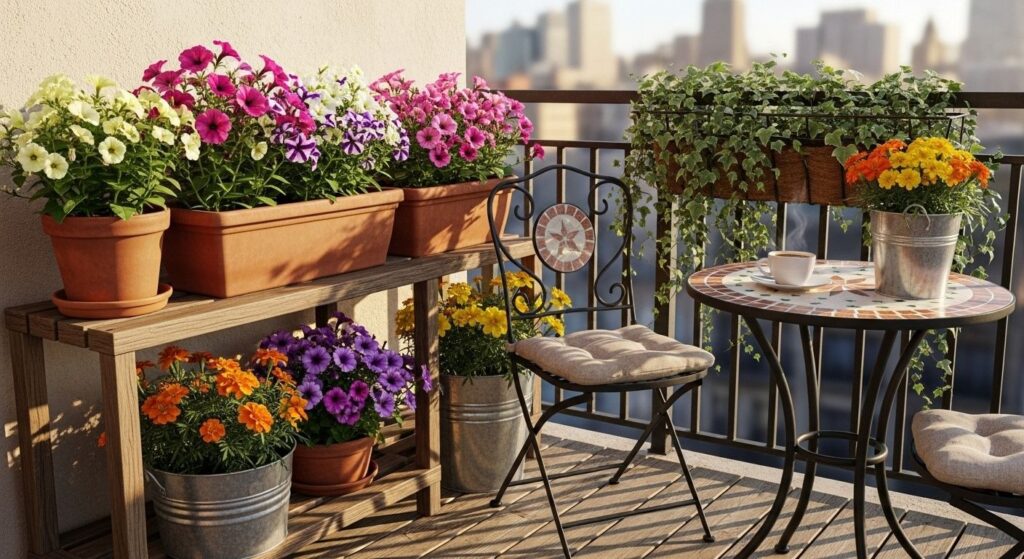
The most obvious benefit? Location independence. A sunny balcony, a front stoop, a deck, or even a bright windowsill becomes your garden. Renters who can’t modify landscaping, urban dwellers without yards, and anyone with mobility issues that make ground-level gardening difficult can all participate.
Total Control Over Growing Conditions
When you garden in containers, you control everything. You choose the exact soil mix your plants need, adjust watering schedules precisely, and position containers to catch optimal sunlight. If your in-ground soil is heavy clay or poor quality, containers let you bypass that problem entirely. Quality potting mix gives your flowers the perfect growing environment from day one.
Season Extension and Flexibility
Container flower gardening lets you cheat the seasons. When frost threatens in fall, you can move tender annuals under cover or bring them indoors. In spring, you can start blooms earlier by placing containers in protected sunny spots. This portability means you’re not locked into planting zones the same way in-ground gardeners are.
Less Maintenance, More Enjoyment
Compared to traditional flower beds, containers require significantly less maintenance. There’s minimal weeding since you’re using sterile potting mix. Pest problems are easier to spot and manage in a contained space. You’re working at a comfortable height rather than kneeling or bending constantly. For someone juggling outdoor adventures and limited gardening time, this efficiency matters.
Choosing Your Containers: More Than Just Pretty Pots
Not all containers are created equal. The right pot can mean the difference between thriving flowers and a frustrating flop.
Size Matters
Bigger is almost always better in container gardening. Larger pots hold more soil, which means better moisture retention and more stable temperatures for roots. As a rule of thumb, choose containers at least 10-12 inches in diameter for most annual flowers. For perennials with deeper root systems, go even larger—14 to 18 inches.
Tall plants need substantial containers for stability. A good guideline: your tallest plant should be about 1-2 times the height of the container.
Drainage Is Non-Negotiable
Every container must have drainage holes. Without them, water accumulates at the bottom, suffocating roots and creating root rot—the number one killer of container plants. If you fall in love with a container without holes, either drill them yourself (works for wood, plastic, and some ceramics) or use it as a decorative outer pot with a draining inner pot inside.
Material Options
Terra cotta: Classic and breathable. Clay pots allow air and moisture to pass through the walls, which prevents overwatering. They’re heavy and can crack in freezing temperatures, but they’re my go-to for herbs and flowers that prefer slightly drier conditions.
Plastic: Lightweight, affordable, and moisture-retentive. Modern plastic containers come in attractive designs that mimic more expensive materials. Perfect for balconies where weight is a concern or if you need to move containers frequently.
Ceramic/Glazed: Beautiful and often decorative, glazed pots retain moisture well. Make sure they have drainage holes, and be aware they can be heavy and may crack in hard freezes.
Galvanized metal: Trendy and durable. These containers heat up in direct sun, so they work best with heat-tolerant flowers or in partially shaded locations.
Don’t overlook creative options: wooden crates, vintage buckets, balcony railing planters, or hanging plant baskets all work beautifully once you add drainage.
The Best Flowers for Container Gardening
Not all flowers adapt equally well to container life. The best choices are compact, prolific bloomers that don’t mind the confined root space.
Top Annual Flowers
Petunias: These workhorses bloom nonstop from spring through frost. They come in trailing varieties perfect for hanging baskets and upright types ideal for mixed containers. Petunias handle heat well and come in nearly every color imaginable.
Marigolds: Bright, cheerful, and nearly indestructible. Marigolds tolerate heat, resist pests, and bloom prolifically with minimal care. French marigolds stay compact, making them ideal container candidates.
Zinnias: If you want cut flowers and vibrant color, zinnias deliver. Dwarf varieties like ‘Profusion’ or ‘Thumbelina’ work perfectly in containers. They thrive in hot weather and attract butterflies.
Impatiens: The go-to choice for shade. While many flowers demand full sun, impatiens bloom enthusiastically in partial to full shade, making them perfect for north-facing balconies or shaded patios.
Pansies: Cool-season champions. Plant pansies in fall or early spring for cheerful color when most other flowers aren’t blooming. They handle light frosts and add charm to seasonal displays.
Perennial Flowers Worth Growing
Lavender: Fragrant, drought-tolerant, and deer-resistant. English lavender varieties work beautifully in containers and can overwinter in many climates if you choose a large enough pot.
Black-eyed Susans: Compact varieties like ‘Goldsturm’ bring sunny yellow blooms to containers. These North American natives attract pollinators and tolerate heat.
Coneflowers (Echinacea): Bold daisy-like blooms in purples, pinks, and oranges. Coneflowers are tough, long-blooming, and surprisingly happy in large containers.
Bulbs for Seasonal Drama
Don’t overlook bulbs. Tulips, daffodils, crocuses, and dahlias all work in containers. For spring bulbs, plant in fall in pots at least 12 inches deep. Dahlias need containers at least 30cm (about 12 inches) deep and will reward you with spectacular summer blooms.
The Thriller-Filler-Spiller Formula
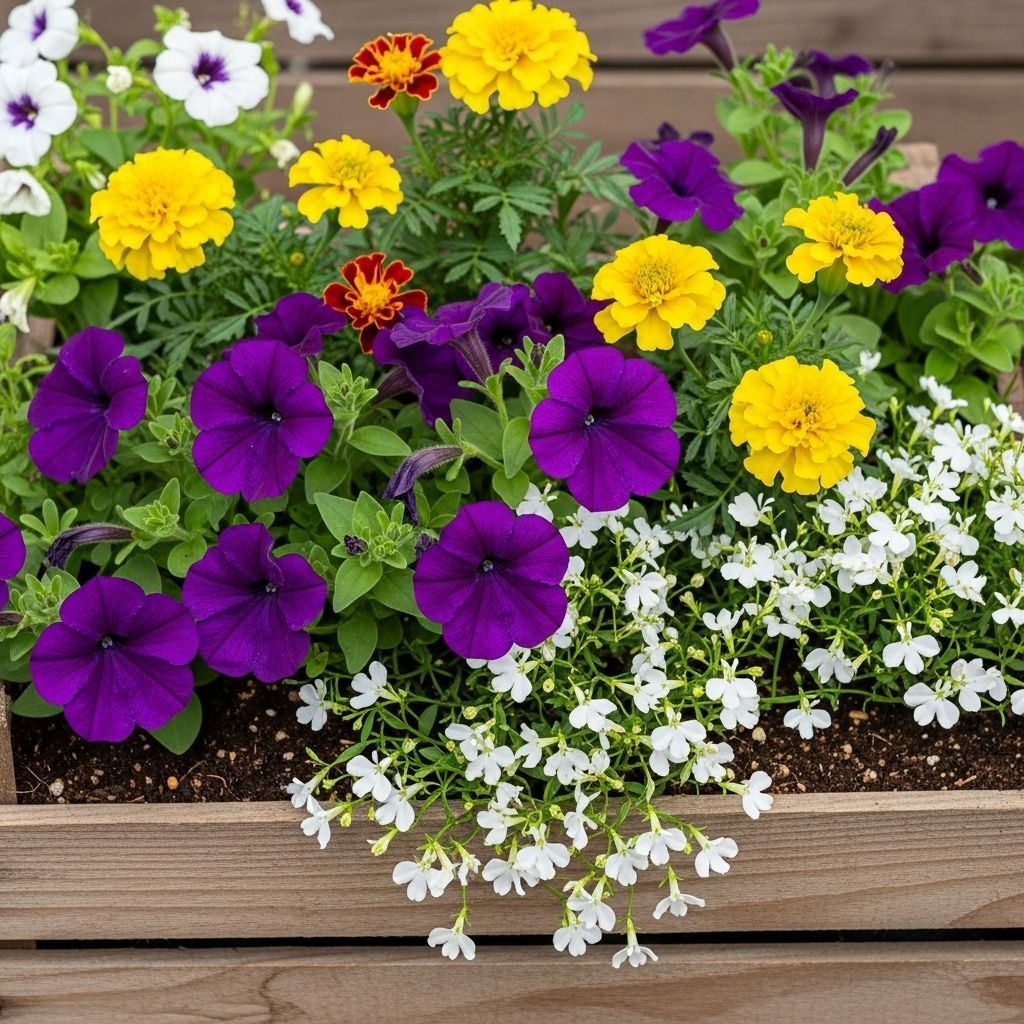
This design principle has transformed container gardening from random plant groupings into intentional, professional-looking arrangements.
Thriller: The Star of the Show
Your thriller is the tall focal point—usually the tallest plant, placed in the center (or back if the container is viewed from one side). Good thriller options include tall grasses, spike plants, or upright flowers like salvias or tall zinnias.
Filler: The Supporting Cast
Fillers are medium-height, bushier plants that add volume and fill space around the thriller. They should be about 1/3 to 2/3 the height of your thriller plant and contrast in color, texture, or shape. Petunias, marigolds, and begonias all make excellent fillers.
Spiller: The Finishing Touch
Spillers cascade over the container’s edge, softening hard lines and adding movement. Plant them near the rim of your container. If your pot will be viewed from all sides, plant spillers all around; if it’s backed against a wall, place spillers in front. Sweet potato vine, trailing petunias, bacopa, and ivy all work beautifully.
Putting It Together
For your first container, try this combination:
- Thriller: Purple fountain grass
- Filler: Hot pink petunias and white lantana
- Spiller: Lime green sweet potato vine
Make sure all plants share similar light and water requirements. This is crucial—you can’t pair a moisture-loving impatiens with a drought-tolerant lavender and expect both to thrive.
Soil & Feeding Your Container Flowers
Skip the Garden Soil
Never use straight garden soil in containers. It compacts in pots, prevents drainage, and often carries weed seeds and diseases. Instead, invest in quality potting mix—it’s formulated specifically for container growing with ingredients like peat moss, perlite, and vermiculite that provide drainage while retaining appropriate moisture.
Pre-moisten your potting mix before planting. Dry potting mix can be hydrophobic and resist water absorption. Add water gradually and mix until the soil is evenly damp—like a wrung-out sponge.
Feed Your Flowers
Container plants are entirely dependent on you for nutrients. The soil volume is limited, and frequent watering leaches nutrients away faster than in-ground gardens.
At planting time, mix slow-release fertilizer granules into your potting soil. These pellets release nutrients gradually over months. Additionally, supplement every 1-2 weeks during the growing season with liquid fertilizer—organic fertilizer options like fish emulsion and seaweed blends work beautifully.
I also add a layer of compost to the top of my containers each spring. It feeds plants, helps retain moisture, and looks tidy—a triple win. Having the right garden tool set makes mixing soil and amendments much easier.
Planting & Care Essentials
Step-by-Step Planting
- Choose your location: Observe sunlight patterns. Most flowering plants need 6-8 hours of direct sun daily. Shade lovers (like impatiens) thrive with 2-4 hours or dappled light.
- Prep your container: Cover drainage holes with a coffee filter or small piece of newspaper to prevent soil from washing out while still allowing water drainage.
- Fill with soil: Add pre-moistened potting mix, leaving 1-2 inches of space below the rim. This prevents overflow when watering.
- Arrange plants: Before removing plants from nursery pots, arrange them in your container to visualize spacing. Thriller in center or back, fillers around it, spillers at edges.
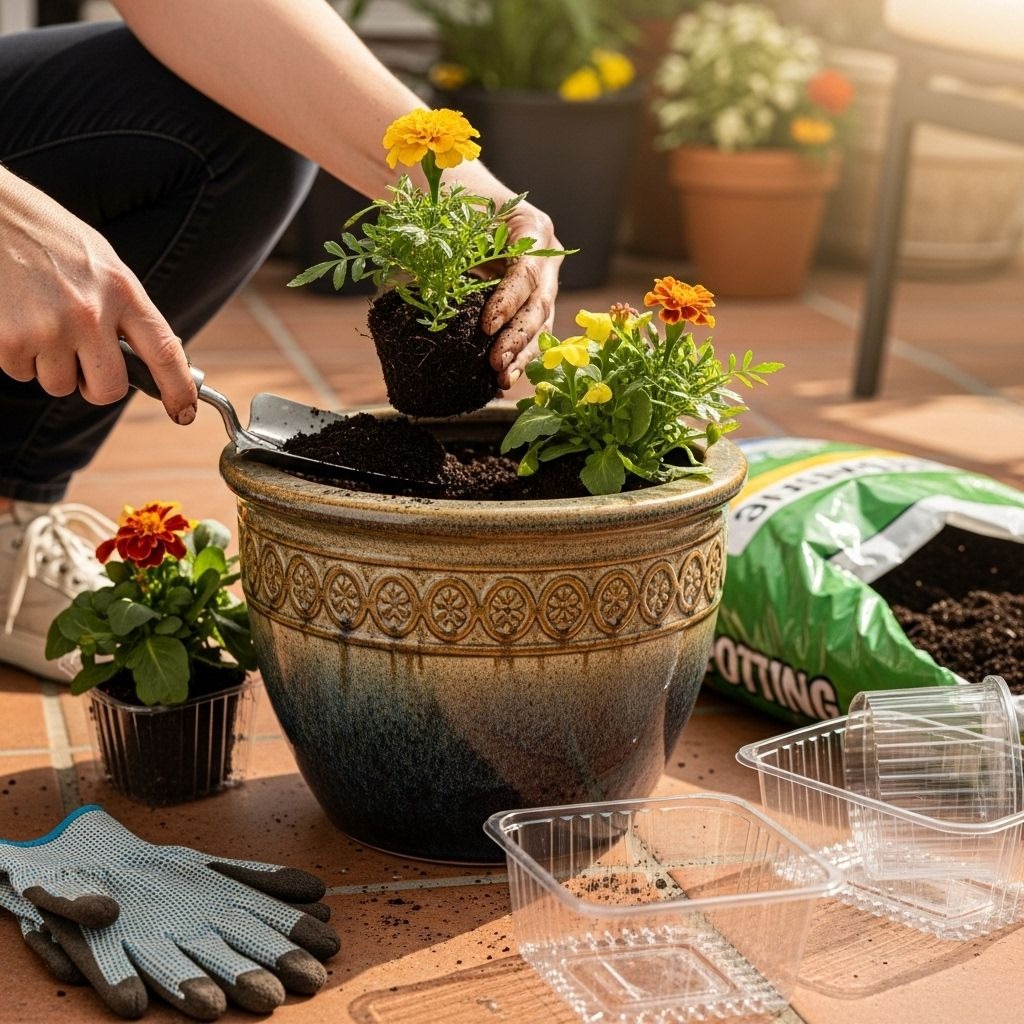
- Plant: Gently remove each plant from its nursery pot and tease roots loose if they’re circling. Place in the container and backfill with more potting mix. Firm gently and water thoroughly.
Watering Wisdom
Container flowers typically need watering more frequently than in-ground plants—sometimes daily in summer heat. Stick your finger 1-2 inches into the soil; if it feels dry, water deeply until water runs from drainage holes.
Self-watering planters can be a game-changer if you travel frequently or struggle with consistent watering. They have built-in reservoirs that wick moisture to roots as needed. A watering spray mister also helps deliver gentle water to seedlings and delicate flowers.
For busy gardeners, consider grow bags as an alternative to rigid pots. They’re breathable fabric containers that prevent overwatering and air-prune roots naturally. Using a soil pH/moisture meter takes the guesswork out of when to water.
Maintenance Matters
Deadheading: Remove spent blooms regularly to encourage more flowers. Most annuals will stop blooming if you let them go to seed.
Pruning: Pinch back leggy growth to encourage bushier, fuller plants. This is especially important for petunias and coleus.
Monitoring: Check plants regularly for pests or disease. Containers make problems easier to spot and address before they spread. When you’re tending to your container garden, it’s a peaceful ritual—much like enjoying your morning cowboy coffee while planning the day’s outdoor adventures.
Common Mistakes (And How I Learned From Them)
Mistake #1: Overcrowding
My first container looked spectacular at planting time—I crammed in every flower that caught my eye. Within weeks, it was a tangled mess competing for light, water, and nutrients. Follow spacing recommendations on plant tags. It’s tempting to overplant for instant fullness, but flowers need room to grow.
Mistake #2: Ignoring Drainage
I once planted gorgeous begonias in a ceramic bowl without drainage holes. Within two weeks, the roots rotted, and the plants died. Every container needs drainage. No exceptions. If you love a pot without holes, drill them or use it as a decorative cache pot only.
Mistake #3: Inconsistent Watering
Container plants can’t send roots deeper to find moisture like in-ground plants. They rely entirely on you. Establish a routine—check containers daily during hot weather. Wilted plants can often recover from a single dry spell, but repeated stress weakens them permanently.
Mistake #4: Wrong Plant, Wrong Place
I planted sun-loving zinnias on my north-facing, shaded balcony. They never thrived. Match plants to your actual light conditions, not your wishful thinking. Be honest about the sunlight your space receives, and choose accordingly.
Seasonal Container Gardening Tips
Spring: Fresh Starts
Plant cool-season flowers like pansies, violas, and snapdragons early for immediate color. As temperatures warm, gradually introduce heat-lovers like petunias and marigolds. Refresh potting soil annually—dump old soil into garden beds (not back into containers) and start fresh with new potting mix.
Summer: Peak Bloom
This is showtime for container gardens. Water daily or even twice daily during heat waves. Feed regularly with liquid fertilizer. Deadhead spent blooms every few days. Protect containers from intense afternoon sun if plants show heat stress—moving them to partial shade can save struggling flowers.
Fall: Transitional Beauty
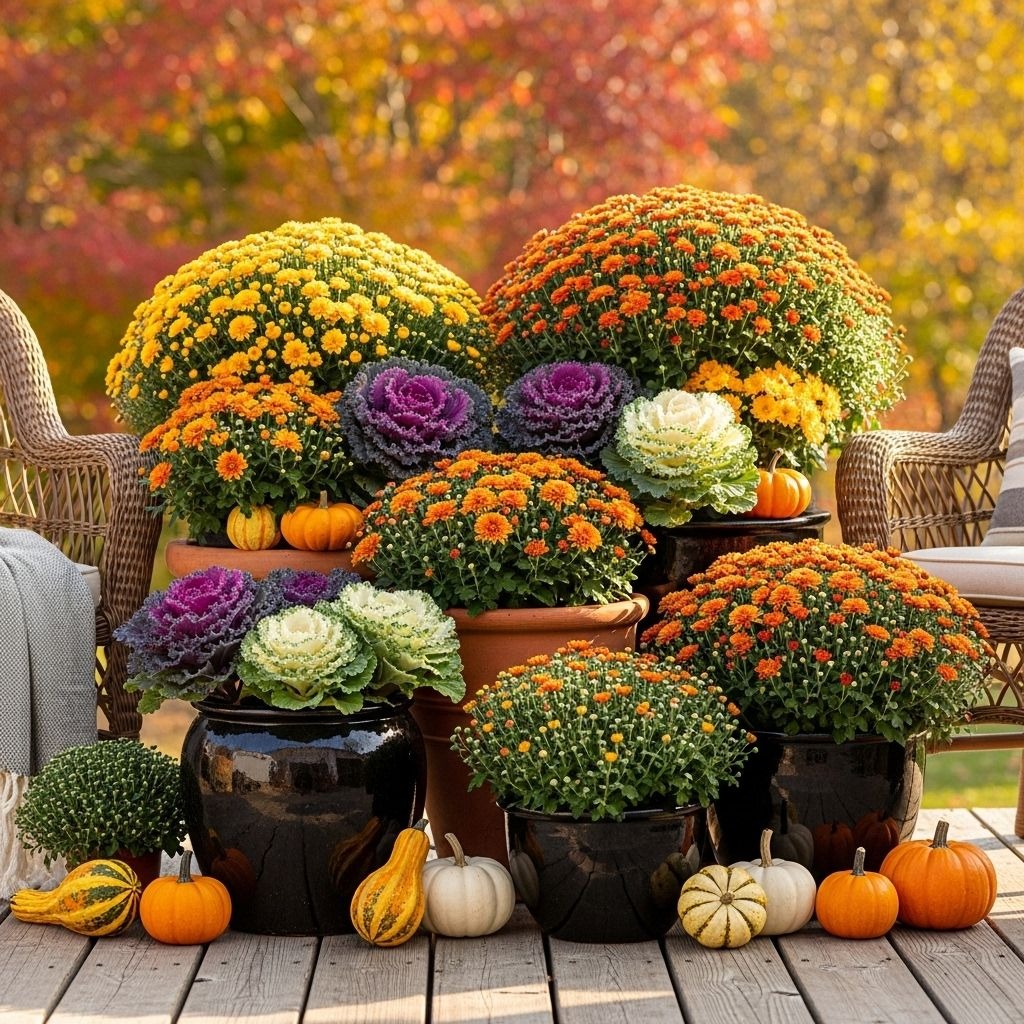
As summer annuals fade, swap them for fall favorites like chrysanthemums, ornamental kale, and pansies. This is also the perfect time to plant spring bulbs in containers. Layer tulip, daffodil, and crocus bulbs at different depths for a long succession of spring blooms.
Winter: Rest and Plan
In cold climates, empty containers of annuals and store cleaned pots to prevent cracking. Perennials in containers need extra protection—move them to sheltered locations, group them together, or wrap pots with insulation. Use this downtime to plan next year’s combinations and order seeds for unique varieties.
Just like preparing for changing weather on outdoor trips—understanding how to stay warm while camping—anticipating seasonal shifts keeps your container gardens thriving year-round.
Beyond Flowers: Creative Container Ideas
While this guide focuses on flowers, don’t limit yourself. Mixing edibles into flower containers creates beautiful, functional displays. Compact herbs, leafy greens, and dwarf vegetables pair beautifully with ornamentals. Imagine a container with red geraniums, trailing rosemary, and purple basil—gorgeous and practical.
For indoor enthusiasts or those without outdoor space, indoor plant stands maximize vertical space for displaying container gardens inside. Pair them with decorative ceramic plant pots to create an indoor garden aesthetic. If you’re growing flowers indoors or extending the season, an indoor plant LED grow light ensures adequate light even in darker months.
Some gardeners are exploring hydroponics for flowers and herbs. Compact hydroponic kits with hydroponic nutrient solutions offer soil-free container gardening that’s surprisingly beginner-friendly.
Making Container Gardening Part of Your Outdoor Lifestyle
Container flower gardening fits seamlessly into an outdoor-focused life. It’s gardening that travels with you—move containers to catch the best light, create instant patio ambiance for gatherings, or rearrange for fresh inspiration whenever the mood strikes.
The ritual of morning coffee on the deck while deadheading petunias and checking soil moisture becomes a grounding practice. It’s meditation with dirt under your fingernails. Having camping breakfast ideas ready doesn’t mean you can’t enjoy fresh herbs from containers to elevate those outdoor meals.
When you return from weekend camping trips or hiking adventures, your container garden welcomes you home with color and life. Unlike a high-maintenance landscape, a well-planned container garden tolerates brief neglect better than you’d expect—especially if you’ve set up self-watering planters before leaving.
FAQ: Your Container Flower Gardening Questions Answered
Q1: How often should I water my container flowers?
Most container flowers need watering when the top 1-2 inches of soil feel dry to the touch. In summer heat, this might mean daily watering or even twice daily for smaller pots. Larger containers retain moisture longer. Check daily and water thoroughly until it runs from drainage holes—shallow watering encourages weak, shallow root systems.
Q2: Can I reuse potting soil from last year’s containers?
It’s better to start fresh each season. Used potting soil becomes depleted of nutrients, may harbor diseases or pest eggs, and often becomes compacted. If you must reuse it, refresh it by mixing in 50% new potting mix, adding compost, and incorporating slow-release fertilizer. Never reuse soil from containers that had diseased plants.
Q3: What’s the best fertilizer for flowering container plants?
A combination approach works best. Mix slow-release granular fertilizer into your potting soil at planting time for steady baseline nutrition. Then supplement every 1-2 weeks during the growing season with liquid fertilizer like fish emulsion or a balanced water-soluble fertilizer (look for formulations higher in phosphorus—the middle number—to promote blooms).
Q4: Can I grow perennials in containers year-round?
Yes, but with considerations. Perennials in containers are less cold-hardy than those in-ground because roots are more exposed to temperature swings. Choose perennials rated for at least two zones colder than your area, use large containers (bigger pots insulate better), and provide winter protection—group containers together, move to sheltered locations, or wrap with insulation. Some gardeners sink the entire container into the ground for winter.
Q5: Why are my container flowers leggy and not blooming well?
The most common cause is insufficient light. Most flowering plants need 6-8 hours of direct sunlight daily. If they’re stretching toward light sources with weak stems and sparse blooms, they’re not getting enough sun—move containers to a brighter location. Other causes include too much nitrogen fertilizer (promotes foliage over flowers) or failure to deadhead spent blooms (plant thinks it’s completed its reproductive mission).
Your Container Garden Awaits
Container flower gardening isn’t just a space-saving compromise—it’s gardening elevated. It’s flexibility, creativity, and beauty rolled into portable packages you can design, rearrange, and enjoy anywhere you have a sunny spot.
You don’t need experience, expensive equipment, or even a yard. Start small: one container, three plants following the thriller-filler-spiller formula, and consistent watering. You’ll be amazed how quickly success builds confidence and inspires you to expand.
The mistakes I made—and you’ll probably make a few too—are just lessons disguised as wilted petunias. Every season teaches something new about drainage, plant pairings, or which varieties thrive in your specific conditions. That’s the beauty of container gardening: it’s forgiving, adaptable, and endlessly rewarding.
So grab some pots, quality soil, and a few plants that spark joy. Your container flower garden is waiting to transform your balcony, patio, or doorstep into a personal outdoor sanctuary. And when you’re not tending your blooms, you’ll have more time for the hiking trails, camping adventures, and outdoor moments that feed your soul—knowing your portable garden is there, blooming patiently, whenever you return home.