

There’s a feeling every fly angler knows all too well: you’re on the water, the sun is just right, you see a fish rise, and you make what feels like the perfect cast. But then, disaster strikes. Your line lands in a tangled heap, it won’t turn over your fly, or it sinks like a stone when it should be floating high. I’ve been there more times than I care to admit, and that frustration is what led me down the rabbit hole of understanding just how critical the right fly line is.
It’s easy to get obsessed with rods and reels, but the fly line is your direct connection to the fish. It’s the unsung hero that can make or break a day on the water. A good line will make you a better caster, while a bad one will make even the most expensive rod feel clunky and unresponsive.
But with all the different tapers, coatings, and cores out there, how do you choose? That’s why I’ve put together this guide. After countless hours of casting, mending, and fishing various lines—and talking with fellow anglers—I’ve narrowed down the best fly fishing lines for 2025. Whether you’re a seasoned pro or just starting out, this list will help you find the perfect line to elevate your fishing game.
Buyer’s Guide: How to Choose the Right Fly Fishing Line
Fly line anatomy 101
Every fly line has three parts working together. The core is the inside of the line, usually braided nylon or monofilament, and it’s what gives the line its strength. The coating is the outer layer, typically PVC, and it decides whether the line floats or sinks and how it feels running through your fingers. The taper is the change in diameter along the line’s length, and it’s the single biggest factor in how the line casts.
Choosing a taper: WF, DT, Skagit, Scandi and more
- Weight Forward (WF): The most versatile taper and the right call for most anglers. The first 30 feet or so carry extra weight to load the rod and punch out longer casts.
- Double Taper (DT): Symmetrical on both ends, built for delicate presentations and roll casting on smaller streams.
- Aggressive front taper: A short, heavy front section that turns over big, wind-resistant flies like streamers and builds line speed fast. You trade away some delicacy for that power.
- Delicate front taper: A long, gradual front section that lands softly, ideal for spooky trout and small dry flies.
- Sinking and sinking tip: A full sinking line gets flies down in deep lakes, while a sinking tip pairs a floating body with a sinking tip, which is what most streamer fishing in rivers calls for.
- Skagit and Scandi (spey and switch rods): Skagit heads are short and heavy, built to punch big flies and sink tips with minimal false casting, a good match for winter steelhead water. Scandi heads are longer and lighter, tuned for smaller flies and a more traditional, waterborne spey cast. Both are shooting heads, meaning a short, weighted head loop-connects to thin running line, letting you carry far more line off the reel than a standard taper would allow.
Matching line weight to your rod
Your rod carries a weight number, like 3wt, 5wt or 8wt, and your line should match it. A 5wt line on a 5wt rod loads the rod the way it was designed to, which is where good casting starts.
Freshwater vs. saltwater lines
Freshwater lines generally use a monofilament core built for cooler water. Saltwater lines use a stiffer core to hold up in warm climates and resist the corrosive effects of salt. Run a freshwater line in saltwater and it turns limp and gummy fast, and it gets miserable to cast.
Does line color matter?
Bright colors like orange or yellow make it easier to track your line and see strikes, which matters most on floating lines for dry fly and nymph fishing. Some anglers prefer duller or clear-tipped lines for spooky, clear-water trout, on the theory that a bright line overhead can put fish down. In practice, the leader and tippet in front of the fly matter far more to a trout than the color of line sitting well behind it, so don’t overthink this one.
Is a cheap fly line worth buying?
Budget lines, often $20 to $30, tend to have inconsistent tapers, coatings that crack within a season, and coarser finishes that reduce casting distance and create noise shooting through the guides. Mid-range lines in the $60 to $90 range close most of that gap. Premium lines above $90 usually add smoother coatings, more consistent tapers, and better floatation and durability that holds up over years, not months. A good line is one of the cheapest ways to improve your casting, and skimping here is a false economy.
Setting up your line: backing, leader and tippet
Backing goes on the reel first, usually 20 to 30lb braided Dacron, to give you line capacity if a fish runs. Your fly line loop-to-loop connects to the backing, then to a tapered leader, typically 7.5 to 9 feet. Tippet, the thinnest section, ties to the end of the leader and to your fly. This setup lets you replace worn tippet without cutting into your leader or line.
By skill level and situation
- New to fly fishing: A WF floating line matched exactly to your rod weight, nothing fancier needed yet.
- Streamer or lake fishing: A sinking tip or full sinking line to get flies in front of fish holding deep.
- Small stream, technical trout: A double taper or delicate-front WF line for soft presentations.
- Spey or switch rod anglers: A Skagit head for big flies and sink tips, a Scandi head for lighter presentations.
Common mistakes to avoid
- Going cheap: A bargain-bin line usually casts worse and wears out fast.
- Using an old line: Cracked, dirty line won’t float well and drags down your casting. Clean it regularly and replace it once it shows wear.
- Mismatching: The wrong line weight for your rod, or the wrong taper for the water you’re fishing, leads to frustration fast.
Editor’s Picks: The Best Fly Fishing Lines of 2025
| Category | Product | Why We Picked It |
| Best Overall | Rio Premier Gold Fly Line | Unmatched versatility and performance for a wide range of freshwater applications. |
| Best Value | CORTLAND 444 Peach Fly Fishing Line | A classic, reliable line that offers fantastic performance at a great price point. |
| Best for Tech & Innovation | SA Amplitude Smooth Infinity Glow | Advanced texturing for improved casting distance and a glow-in-the-dark tip for low-light conditions. |
| Best for Big Flies | AIRFLO Ridge 2.0 Superflo Streamer Max Short | Effortlessly turns over large, wind-resistant streamers. |
Top 10 Fly Fishing Lines – Ranked by Quality & Performance
1. Rio Premier Gold Fly Line

Check price: Rio Premier Gold Fly Line
🛍️ Best For: All-around trout fishing and general freshwater use.
My Rating: 4.9/5
🔍 Overview:
The Rio Gold has been a benchmark for trout lines for years, and the Premier version takes it up a notch with RIO’s SlickCast technology, which is the slickest, most durable coating on the market. It has a unique taper that is a phenomenal all-purpose tool for a variety of situations. It handles everything from small dry flies to moderately sized streamers with ease. The weight is slightly heavier than the AFTMA standard, which helps in loading modern, fast-action rods. It’s the line I find myself recommending most often to friends who need one line to do it all.
| ✅ What We Loved | ❌ What to Watch Out For |
| Incredibly slick and durable coating | Premium price point |
| Versatile taper for a wide range of flies | May be slightly too aggressive for very delicate presentations |
| Excellent loop stability for long, controlled casts | |
| Dual-tone color for identifying the sweet spot |
📣 Real-World Insights:
Many anglers praise the Rio Gold for its “shootability,” noting that it flies through the guides with minimal effort. One reviewer mentioned that it “brought his favorite 5-weight rod to life,” highlighting its ability to load rods effectively. Another user commented on its durability, saying it held up exceptionally well after a full season of heavy use.
2. SA Amplitude Smooth Infinity Glow Fly Line

Check price: SA Amplitude Smooth Infinity Glow Fly Line
🛍️ Best For: Anglers who fish in low-light conditions and want the latest in line technology.
My Rating: 4.8/5
🔍 Overview:
Scientific Anglers has packed a ton of technology into this line. The AST Plus slickness additive provides excellent shooting and durability. The “Infinity” taper is a half-size heavy, making it a great match for modern fast-action rods, and it’s designed to be a versatile, do-it-all line. The standout feature is the glow-in-the-dark tip, which is surprisingly useful for fishing during a late evening hatch or at dawn. I’ve found it helps in tracking my fly’s drift when visibility is poor.
| ✅ What We Loved | ❌ What to Watch Out For |
| Glow-in-the-dark tip is a game-changer for low light | The glow feature is a bit of a gimmick for some |
| Extremely slick and durable | Higher price point |
| Versatile taper for various fly sizes | |
| Half-size heavy for easy rod loading |
📣 Real-World Insights:
Users are impressed with the line’s slickness and casting distance. One angler noted that the glow tip was “incredibly helpful for mending and strike detection during the evening caddis hatch.” Another commented that it “effortlessly turns over nymph rigs and small streamers.”
3. CORTLAND 444 Peach Fly Fishing Line

Check price: CORTLAND 444 Peach Fly Fishing Line
🛍️ Best For: Anglers looking for a high-quality, reliable line without the premium price tag; excellent for medium to slow-action rods.
My Rating: 4.7/5
🔍 Overview:
The Cortland 444, often called the “Peach” line, is a true classic, and for good reason. It has been a favorite for generations of anglers. It’s known for its supple feel and its excellent performance on more traditional, slower-action rods. While it may not have the latest slickness additives, it is a fantastic floating line that is a joy to cast. I often use this line on my fiberglass and bamboo rods, and it performs beautifully. It’s a testament to the fact that a good design stands the test of time.
| ✅ What We Loved | ❌ What to Watch Out For |
| Excellent value for the price | Not as slick as more modern, high-end lines |
| Supple feel and very little memory | May feel a bit sluggish on very fast-action rods |
| Performs exceptionally well on medium and slow-action rods | |
| Durable and long-lasting |
📣 Real-World Insights:
Many long-time anglers swear by this line, with some saying they’ve used it for decades. One reviewer mentioned, “It’s the most reliable, no-frills line on the market.” Another praised its “lack of memory even in cold water,” making it a great choice for early and late-season fishing.
4. Rio Elite Perception Slick Cast Fly Line

Check price: Rio Elite Perception Slick Cast Fly Line
🛍️ Best For: Anglers who prioritize line control, mending, and strike detection.
My Rating: 4.7/5
🔍 Overview:
The Rio Elite Perception is built for the technical angler. Its low-stretch core provides incredible sensitivity for detecting subtle takes when nymphing. The SureFire tri-color marking system helps with casting accuracy and distance control. Like the Premier Gold, it features the SlickCast coating for top-tier performance. I’ve found this line to be exceptional for nymphing, as the low-stretch core allows me to feel everything that’s happening at the end of my line.
| ✅ What We Loved | ❌ What to Watch Out For |
| Low-stretch core for enhanced sensitivity | Low-stretch core can be less forgiving of casting mistakes |
| SlickCast coating for distance and durability | Not the best for very large, heavy flies |
| Tri-color system for casting accuracy | |
| Excellent for nymphing and technical presentations |
📣 Real-World Insights:
Users frequently praise the line’s sensitivity, with one stating, “I’m detecting strikes I never knew I was missing.” The color-coding system is another popular feature, with one angler noting it “took the guesswork out of how much line to have out.”
5. Scientific Anglers Mastery MPX Taper Floating Weight Forward Fly Fishing Line

Check price: Scientific Anglers Mastery MPX Taper Floating Weight Forward Fly Fishing Line
🛍️ Best For: Anglers with fast-action rods who need a versatile, slightly more aggressive line.
My Rating: 4.6/5
🔍 Overview:
The Mastery MPX (Multi-Presentation Taper) from Scientific Anglers is a step up from a standard all-purpose line. It’s built a half-size heavy, similar to the Amplitude Infinity, which helps to quickly load fast-action rods. The “Mastery” series offers excellent performance without the top-tier price of the Amplitude lines. I find the MPX to be a fantastic line for when I need a bit more power to punch through wind or to turn over a heavier nymph rig.
| ✅ What We Loved | ❌ What to Watch Out For |
| Half-size heavy for loading fast-action rods | Might be too aggressive for delicate dry fly presentations |
| Versatile taper for a mix of fly sizes | Not as feature-rich as the Amplitude series |
| Great performance for the price | |
| Improved slickness and durability |
📣 Real-World Insights:
Many users comment that this line is the “sweet spot” in the Scientific Anglers lineup for price and performance. One reviewer said, “It made my fast-action rod feel much more responsive and easier to cast.” Another noted its versatility, using it for everything from dry flies to streamers with success.
6. AIRFLO Ridge 2.0 Superflo Streamer Max Short Fly Line

Check price: AIRFLO Ridge 2.0 Superflo Streamer Max Short Fly Line
🛍️ Best For: Dedicated streamer anglers who need to cast large, heavy flies.
My Rating: 4.5/5
🔍 Overview:
When it’s time to throw big, meaty streamers, a standard trout line often won’t cut it. That’s where the Airflo Streamer Max Short comes in. It has a very short, aggressive front taper that is designed to turn over heavy, wind-resistant flies with authority. The “Ridge” technology reduces friction, helping to add distance to your casts. I’ve used this line when targeting large, predatory brown trout, and it makes casting big flies all day much less of a chore.
| ✅ What We Loved | ❌ What to Watch Out For |
| Effortlessly turns over large streamers | Not a versatile, all-purpose line |
| Short, powerful head for quick loading | Lacks finesse for delicate presentations |
| Ridge technology for improved shooting | |
| Durable construction |
📣 Real-World Insights:
Streamer enthusiasts love this line. One user commented, “It’s like having a V8 engine for my fly rod.” Another said, “I can cast flies I used to struggle with all day long.” The common theme is its power and ability to handle flies that other lines can’t.
7. RIO Products Avid Series Trout Fly Line

Check price: RIO Products Avid Series Trout Fly Line
🛍️ Best For: Beginners or anglers on a budget who still want a quality, modern fly line.
My Rating: 4.4/5
🔍 Overview:
The RIO Avid series is designed to offer many of the benefits of RIO’s premium lines at a more accessible price point. It has a slick coating and a user-friendly taper that is easy for novice casters to handle. It’s a significant step up from the very basic, entry-level lines that often come with starter kits. I often recommend this as a first upgrade for new anglers.
| ✅ What We Loved | ❌ What to Watch Out For |
| Great performance for the price | Lacks the advanced features of the Premier and Elite series |
| Easy-casting, user-friendly taper | Not as specialized as other lines on this list |
| Slick coating for good shooting | |
| Durable and reliable |
📣 Real-World Insights:
Beginner anglers find this line to be a huge improvement over their starter lines. One reviewer said, “This line made learning to cast so much easier.” Another noted, “It’s a workhorse line that does everything I need it to without breaking the bank.”
8. SA Amplitude Textured Trout Standard Freshwater Fly Line

Check price: SA Amplitude Textured Trout Standard Freshwater Fly Line
🛍️ Best For: Anglers who want maximum casting distance and line speed.
My Rating: 4.3/5
🔍 Overview:
The key feature of this line is Scientific Anglers’ “Textured” surface. This pattern of small dimples reduces friction as the line shoots through the guides, resulting in longer casts. It also helps with line flotation. The trade-off is that the line makes a “zinging” sound as it moves through the guides, which some anglers dislike. I’ve found that the extra distance is noticeable, especially when trying to reach a distant riser.
| ✅ What We Loved | ❌ What to Watch Out For |
| Textured surface for increased casting distance | The textured surface makes a sound that some find annoying |
| Excellent flotation | Can be rough on the hands when stripping line all day |
| AST Plus for slickness and durability | |
| Designed specifically for trout fishing |
📣 Real-World Insights:
Anglers who prioritize distance casting rave about this line. “The extra 10 feet of distance I get with this line is a game-changer,” said one user. However, the noise is a common point of discussion. As another reviewer put it, “You’ll either love the texture or you’ll hate it, but you can’t deny its performance.”
9. Tenkara USA Fly Fishing Fluorocarbon Level Line

Check price: Tenkara USA Fly Fishing Fluorocarbon Level Line
🛍️ Best For: Tenkara anglers.
My Rating: 4.2/5
🔍 Overview:
This is a specialized line for Tenkara fishing, a traditional Japanese method of fly fishing that uses only a rod, line, and fly (no reel). This fluorocarbon level line is designed to be very thin and light, allowing for delicate presentations. Its density helps it to cut through the wind. This is not a line for a traditional fly rod and reel setup, but for those who practice Tenkara, it is a top choice.
| ✅ What We Loved | ❌ What to Watch Out For |
| Excellent for Tenkara fishing | Only for Tenkara fishing |
| Thin and light for delicate casts | Has some memory that needs to be stretched out |
| Cuts through wind well | |
| Easy to see |
📣 Real-World Insights:
Tenkara enthusiasts appreciate the performance of this line. One user noted, “It’s the perfect balance of weight and visibility for my Tenkara rod.” Another commented on its “ability to make precise, accurate casts.”
10. RIO Products Mainstream Saltwater Fly Line
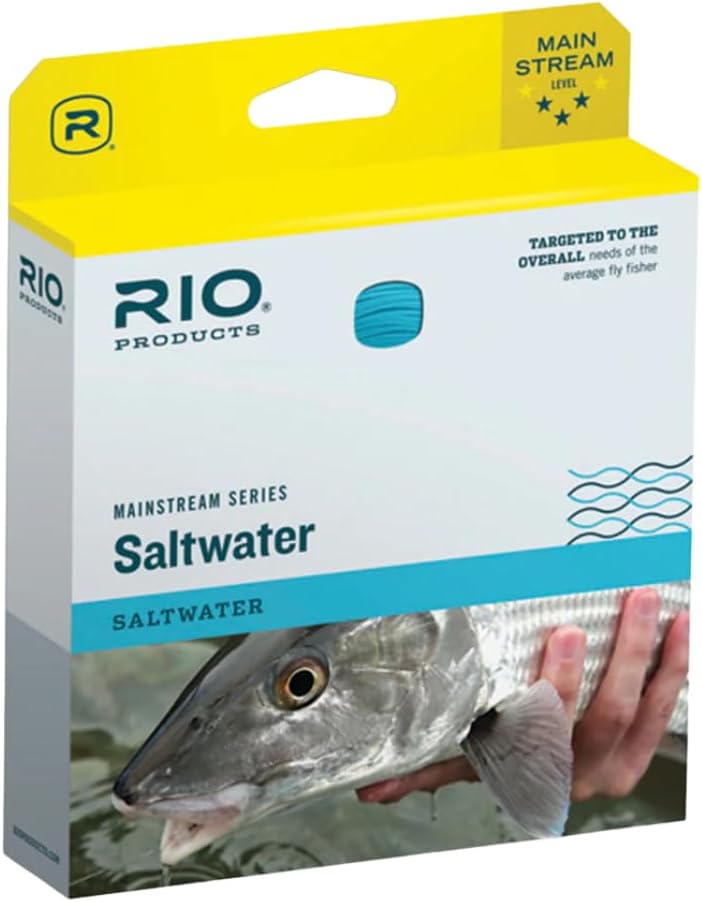
Check price: RIO Products Mainstream Saltwater Fly Line
🛍️ Best For: Anglers making their first foray into saltwater fly fishing.
My Rating: 4.1/5
🔍 Overview:
For the angler who occasionally fishes in saltwater and doesn’t want to invest in a top-tier saltwater line, the RIO Mainstream Saltwater is an excellent choice. It features a hard, saltwater-friendly coating and a taper designed to handle the larger flies and windy conditions often found in a saltwater environment. It’s a dependable, entry-level saltwater line.
| ✅ What We Loved | ❌ What to Watch Out For |
| Affordable entry into saltwater lines | Not as slick or high-performing as premium saltwater lines |
| Hard coating for warm climates | Can have more memory than more expensive options |
| Taper designed for saltwater flies and conditions | |
| Durable construction |
📣 Real-World Insights:
Users find this to be a great value for occasional saltwater use. “It performed well on my trip to the coast and didn’t wilt in the heat,” said one reviewer. Another noted, “It’s a solid, no-frills line that gets the job done for redfish and speckled trout.”
Read more: Top 10 Bass Fishing Lures in 2025 (Tested & Reviewed)
Top 10 Fly Fishing Lines Comparison Table
| # | Fly Line | Taper | Best For | Price Tier |
| 1 | Rio Premier Gold | Weight Forward | All-round trout fishing | Mid |
| 2 | SA Amplitude Smooth Infinity Glow | Weight Forward | Low-light and early/late sessions | Premium |
| 3 | Cortland 444 Peach | Double Taper | Delicate presentations | Mid |
| 4 | Rio Elite Perception Slick Cast | Weight Forward | Distance and reduced drag | Premium |
| 5 | SA Mastery MPX | Weight Forward | Versatile floating setups | Mid |
| 6 | Airflo Ridge 2.0 Superflo Streamer Max Short | Weight Forward, Short Head | Streamer fishing | Premium |
| 7 | Rio Avid Series Trout | Weight Forward | Budget-friendly trout fishing | Budget |
| 8 | SA Amplitude Textured Trout Standard | Weight Forward | Freshwater trout, added grip | Mid |
| 9 | Tenkara USA Fluorocarbon Level Line | Level | Tenkara-style fishing | Budget |
| 10 | Rio Mainstream Saltwater | Weight Forward | Saltwater flats and inshore | Budget |
I built this table because I get tired of scrolling through ten reviews just to remember which line was the streamer one. Taper tells you how the line loads and casts, best-for tells you where it actually earns its keep on the water, and price tier gives you a rough idea of what you’re getting into before you commit. Use it to narrow things down, then read the review for the one that fits your kind of fishing.
❓ FAQ Section
How long do fly fishing lines last?
A quality fly fishing line that’s properly cared for can hold up for several seasons of regular use, sometimes 200 to 250 days on the water. Cheaper lines tend to wear out after a single season, especially if you fish often or in rough conditions. Watch for cracking, sinking sections, or a sticky feel when you strip line in, those are the signs it’s time for a replacement rather than trying to squeeze out one more trip.
Can I use a freshwater line in saltwater?
It’s not a good idea. Freshwater lines have a softer coating that turns limp and tacky in warm saltwater conditions, which makes casting frustrating fast. Saltwater lines are built with a harder, more temperature-stable coating designed to hold up against sun, salt, and heat, so it’s worth matching the line to the water you’re actually fishing.
What’s the best all-around fly line weight for trout?
A 5-weight line is the go-to choice for most trout fishing and for good reason. It handles a wide range of fly sizes, from small dries to modest streamers, and adapts well across different rivers and conditions. If you’re only going to own one fly fishing line, this is the weight most anglers land on.
Is a more expensive fly line really worth it?
In most cases, yes, and it’s one of the upgrades that actually shows up in your casting. Pricier lines use coating technologies for slickness and durability, similar to what you’ll find in RIO’s SlickCast or SA’s AST Plus, which translate into longer casts, better flotation, and a line that lasts longer before it needs replacing. It’s a more noticeable improvement than people expect, often more than upgrading the rod itself.
How do I clean my fly line?
Give your fly line a wipe down every few outings using a soft cloth with warm water and a bit of mild soap. Once it’s clean and fully dry, apply a line dressing to keep it slick and floating high on the water. This small bit of maintenance takes a few minutes but makes a real difference in how long the line performs before it starts dragging or sinking.
What is the best line to use for fly fishing?
There’s no single best fly fishing line, it depends on what you’re targeting and where. For general trout fishing, a weight-forward floating line in 5-weight is the safest bet, while saltwater or streamer fishing calls for different tapers and coatings built for those conditions. The right line is really about matching it to your rod weight, your target species, and the water you fish most often.
What is the best fly line for value?
The best value fly fishing line is one that balances a reasonable price with the kind of coating technology that keeps it casting well and lasting a full season or more. You don’t need to buy the most expensive line on the shelf, but going too cheap often means dealing with cracking, stickiness, or poor flotation within a few months. Mid-range lines from established brands tend to hit that sweet spot of performance without the premium price tag.
Are cheap fly lines any good?
Cheap fly lines can work fine for occasional or beginner use, but they usually show their limits quickly. They tend to wear out faster, lose their slickness sooner, and can be noticeably harder to cast, especially in wind or with delicate presentations. If you’re fishing regularly, spending a bit more upfront usually saves money over time since you won’t be replacing the line every few months.
How do I set up a fly fishing line?
Setting up a fly fishing line starts with attaching the backing to your reel, then connecting the fly line to the backing with a knot or loop-to-loop connection. From there, you attach a leader to the front end of the fly line, usually with a loop-to-loop connection as well, and finally tie on your tippet and fly. Getting the line weight matched to your rod is just as important as the setup itself, since a mismatch will hurt your casting no matter how well everything is connected.